
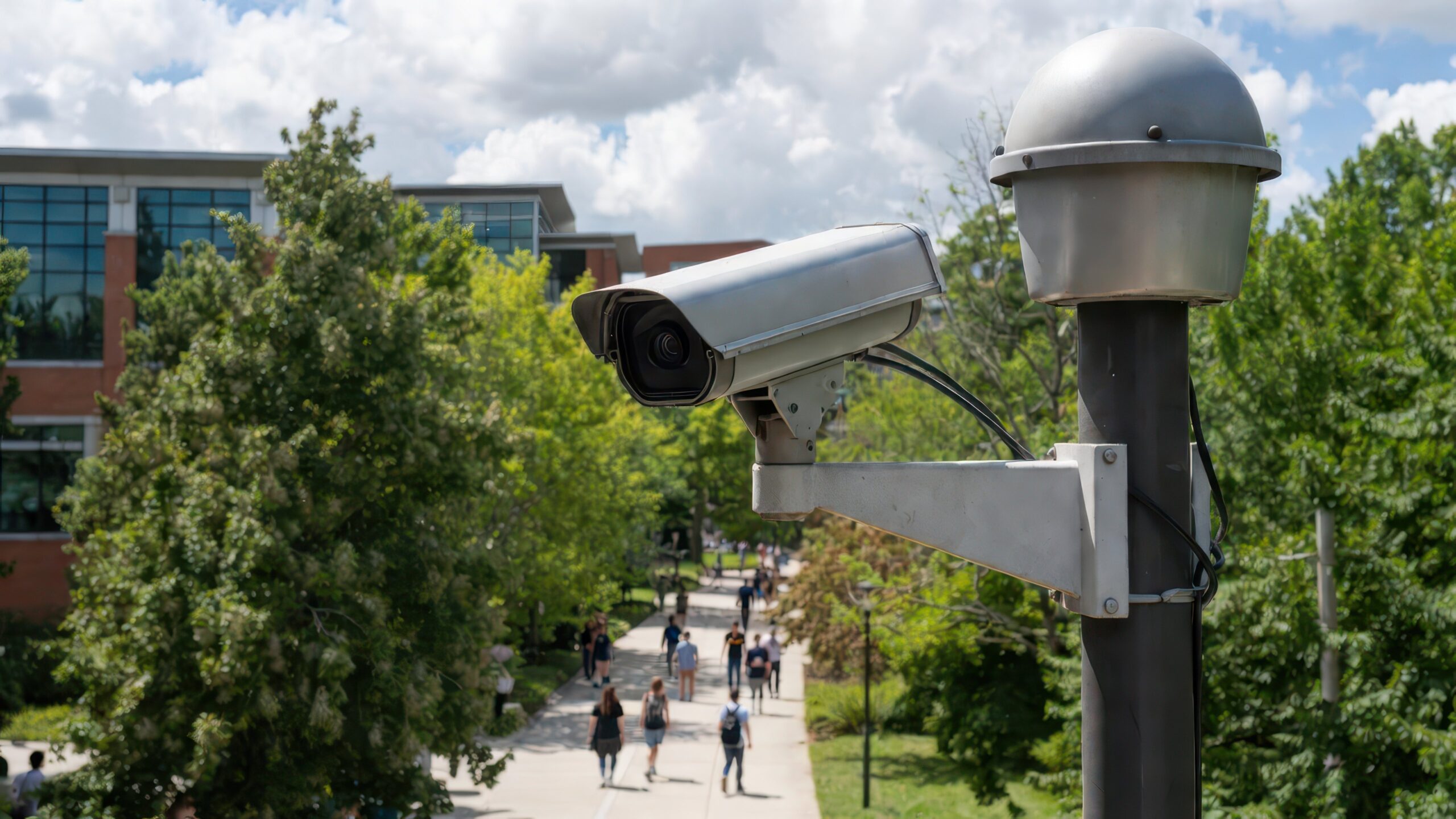
Automated cameras now read and record license plates on roads across Virginia, and the technology has become one of the most argued-about tools in local policing. Here in the Shenandoah Valley, Staunton ended its contract with Flock Safety in early 2026, and Harrisonburg removed its cameras later the same year. Those were local policy choices, not court rulings.
Supporters say the cameras help solve crimes. Critics say they track ordinary people going about their lives.
If an officer has told you that a Flock camera “caught” your car, set the debate aside for a moment. What matters for you is narrower and more practical: what that camera actually recorded, what it can and cannot prove, and what your rights are right now. At Cook Attorneys, we help Virginians answer questions like those every week.
What Flock cameras actually are
Flock Safety is a company that makes automated license plate readers, often shortened to ALPRs. A Flock camera is a small, solar-powered camera mounted on a pole near a road. As cars pass, it photographs each license plate and records the plate number, the date, the time, and the camera’s location. Many of these systems also record details about the vehicle itself, such as its make, color, and distinctive features like a roof rack or a bumper sticker. Flock cameras are not speed cameras; they are surveillance cameras.
Two things make these cameras different from an officer watching traffic.
First, the readings are stored in a searchable database, so police can look back in time and ask where a vehicle has been seen.
Second, many agencies share their data on a national network, which means a plate photographed in one town can be searched by police elsewhere.
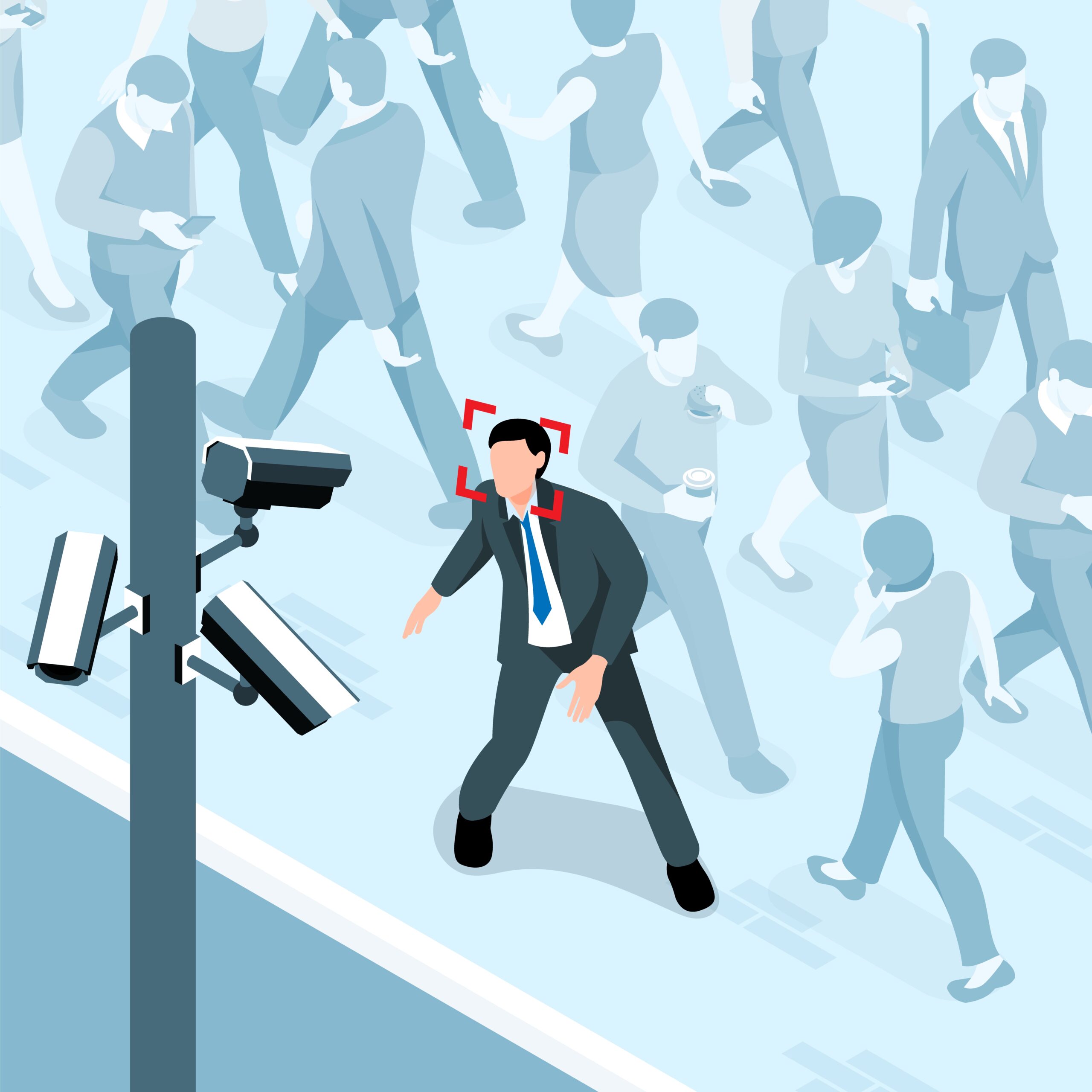
How long the data is kept varies by agency and by contract, and the companies have been changing their own default settings as the debate grows. The important point for you is simple: a Flock camera does not just watch you, it surveils you and takes notes, making a record of your vehicle’s location.
What a Flock camera can, and cannot, prove
It’s important to be aware of what Flock cameras can, and absolutely cannot prove. The gap between those could be key for your case.
For example, a license plate reading can place a vehicle at a location at a time. That is actually evidence, and prosecutors use it. But notice what it might not show on its own:
- It does not necessarily show who was driving. The camera photographs a plate, a vehicle, and not necessarily a face. A car registered to you may have been driven by a family member, a friend, or someone who took it without permission.
- It does not show intent or a crime. Being on a road is not a crime. The reading is a dot on a map, not proof of what happened.
- It is not always right. Readers misread plates. A dirty plate, a partial view, or a lookalike number can tie the wrong car to an event.
None of this means the evidence is worthless or inadmissible, but evidence from a Flock camera is still just one piece of evidence, and a singular piece can be questioned. A good defense looks hard at the space between “your car was photographed near there” and “you committed this crime.”
Where the law stands in Virginia
As of late 2026, courts have mostly allowed these cameras so far, and the fights over them are still ongoing. Be careful of anyone who tells you the evidence is simply illegal. That is not where the law is.
Neal v. Fairfax County Police Department
Virginia’s Supreme Court has looked closely at the data these cameras collect, in a case called Neal v. Fairfax County Police Department. In 2018 the court agreed that license plate reader data, the plate image together with the date, time, and location, is “personal information.”
But when the case came back in 2020, the court held that the police department’s system was not a regulated “information system” under Virginia’s Government Data Collection and Dissemination Practices Act, often called the Data Act (Va. Code § 2.2-3801), because it did not link the plate data to a specific person by name. The result is that the Data Act did not, by itself, stop the practice. How that law applies to any particular system remains a fact-specific question.
The Fourth Amendment question is still live too.
In Norfolk, drivers argued that a dense network of these cameras is an unreasonable search under the U.S. Constitution. In January 2026 a federal judge disagreed and allowed the system to continue, finding it did not track “the whole of a person’s movements.” That decision is being appealed, so it is not the last word.
The broader question draws on Carpenter v. United States, a 2018 U.S. Supreme Court decision holding that police generally need a warrant to obtain long stretches of a person’s cell-phone location history. Whether that reasoning reaches license plate cameras is exactly what the courts are still working out.
For you, the takeaway is not that the cameras are illegal, because so far the courts have said they are not. It is that how the data was collected, kept, and used in your specific case is a fair question, and the rules may keep shifting while your case is pending.
Your rights if police say a camera caught you
Whatever the camera recorded, your core rights do not change.
You do not have to answer questions
The Fifth Amendment protects you from being forced to be a witness against yourself. You do not have to explain where you were, whose car it is, or who was driving. You should say, calmly, that you would like to speak with a lawyer before answering questions. That is not an admission of guilt. It is you exercising a right that exists precisely for moments like this.
You can decline a search
The Fourth Amendment protects you from unreasonable searches. If an officer asks to search your phone, your car, or anything else, you can decline. You might say, simply, “I do not consent to a search.” Police may still act if they have other legal grounds, such as a warrant, but you are not required to give your permission, and you should not feel pressured into it.
You have the right to a lawyer
You can ask for an attorney, and you should. If you are in police custody and being questioned, clearly asking for a lawyer should stop the questioning until your attorney is present. A lawyer can then deal with the police and the prosecutor on your behalf, which keeps you from saying something that gets used against you later.
Our take: the single most common way a manageable case gets harder is a worried person trying to talk their way out of it. You do not have to lie, and you should never lie to an officer or interfere with one. You simply do not have to explain yourself on the spot. Stay calm, stay polite, and ask for a lawyer then remain silent.
What to do if police contact you about a camera hit
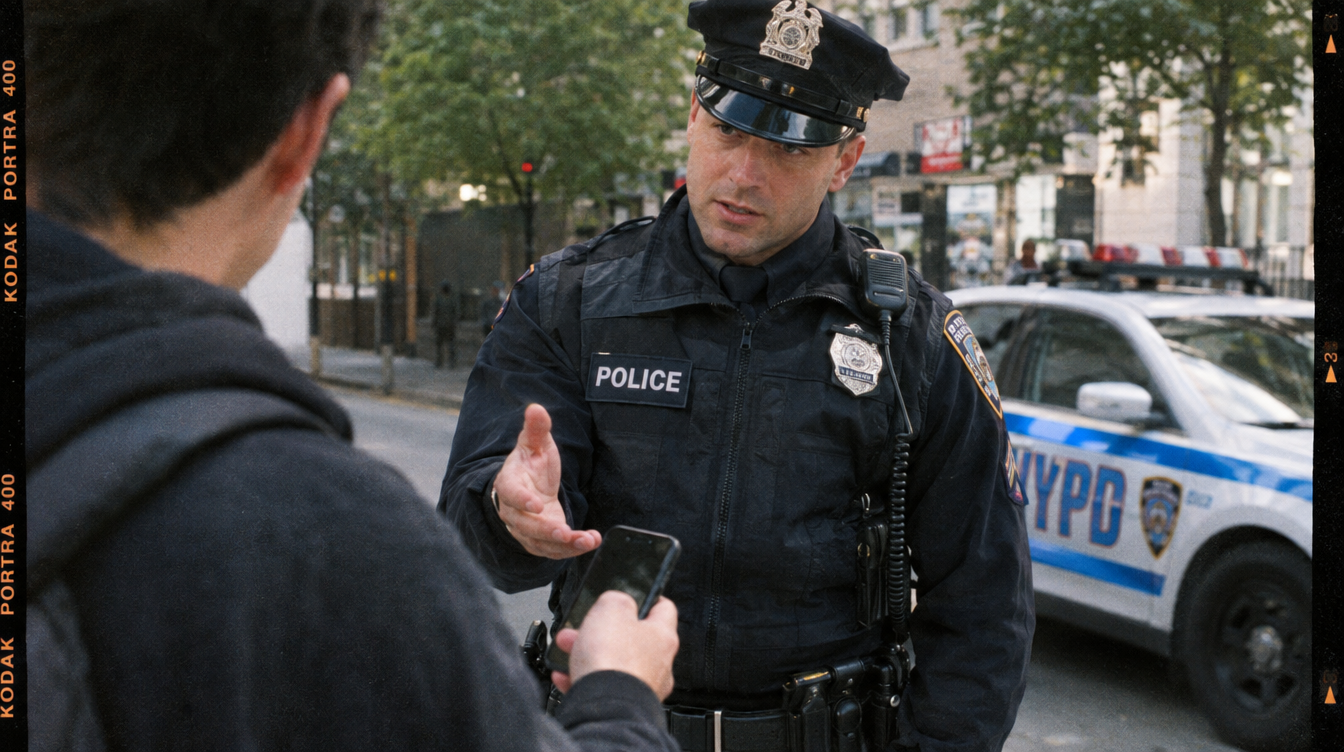
A few steps protect you without breaking any law:
- Stay calm and courteous. You can protect your rights and still be polite.
- Do not answer questions about your whereabouts or who was driving. Those are the exact questions a plate reading cannot answer on its own, and your words can fill the gap for the prosecution.
- Do not consent to a search of your phone, your car, or your home.
- Do not try to hide or destroy anything. That can create a new and more serious charge on top of whatever started this.
- Write down what happened while it is fresh: the date, the officer, what was said, and what you were asked.
- Call a lawyer before you say anything substantive.
How a defense lawyer challenges camera evidence
When license plate evidence is part of a case, there is more to examine than most people expect:
- Who was actually driving. The reading identifies a car, not a person.
- Accuracy. Was the plate read correctly? Is there a clear photo, or a guess?
- How the data was obtained and kept. How Virginia police collected, shared, and retained the data can matter, and the rules are still developing.
- Whether a warrant was needed. As the law develops, how police pulled historical location data on a vehicle may be open to challenge.
- The whole chain. How the data traveled from a camera to a prosecutor’s file, and whether anything is missing.
The earlier a lawyer sees the case, the more of these questions are still open.
Common questions
Can police use a Flock camera to track where I’ve been?
They can search stored plate readings to see where a plate has been photographed. How far back they can look, and whether that requires a warrant, is being tested in the courts right now.
Does a plate reading prove I was driving?
No. It shows a vehicle, not a driver. Who was behind the wheel is a separate question the camera cannot answer.
Are Flock cameras legal in Virginia?
Yes, as the law stands today. Some Virginia localities, including Staunton and Harrisonburg, have chosen to drop them, but that was a local policy decision, not a court ruling that the cameras are illegal. Legal challenges are still working through the courts.
Can I get the camera footage in my own case?
Often your lawyer can request it as part of the evidence. What exists and what must be turned over depends on the case.
Were Flock cameras removed in Harrisonburg?
Yes. Harrisonburg removed its cameras in 2026, and Staunton ended its Flock contract earlier that year.
Talk to a Shenandoah Valley criminal defense lawyer
If police have told you a camera ties your vehicle to a crime, the smartest next move is to talk to a lawyer before you talk to them. What you do in the first days often shapes everything that follows.
At Cook Attorneys, we handle criminal defense across Harrisonburg, Rockingham County, and the Shenandoah Valley. Our office is at 71 Court Square, next to the courthouses. We will look at what the evidence actually shows, explain your options in plain language, and deal with the police and prosecutor so you do not have to.
Call (540) 564-9699 or request a free consultation. The conversation is confidential, and there is no obligation.
You may also want to read about your rights when police want to search your phone, which comes up often in these same cases.
This article is general information about Virginia law, not legal advice. The law on license plate cameras is developing and may change. Reading this post does not create an attorney-client relationship with Cook Attorneys. For advice about your situation, please speak with a licensed attorney.