Out-Of-State Traffic Tickets


Can a Virginia Traffic Ticket Affect A License In Another State?

The consequences of traffic violations vary state-by-state in the US, but that doesn’t mean the states aren’t coordinated in their effort to monitor traffic tickets. If you’re issued a traffic ticket in Virginia and your driver’s license is from another state, you may be subject to penalties from both states. Therefore, it’s essential that if you’re ticketed, you familiarize yourself with the policies in your home state as well as in the state where you’ve received a traffic citation. The consequences of reckless driving in VA are particularly serious and are best handled by lawyers who handle traffic tickets. This article will help to provide you with more information about Virginia speeding tickets out of state. 
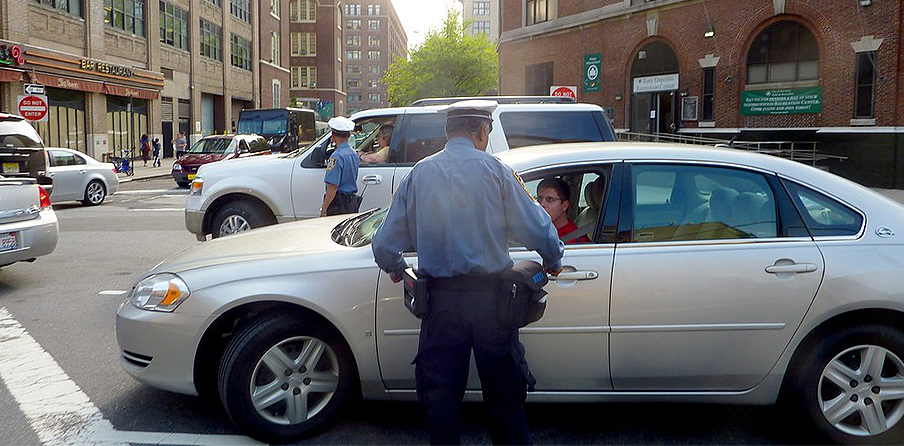
Reckless Driving misdemeanor


How states share driver information

More than 50 years ago in the 1960s, the Driver’s License Compact was formed to enable and encourage states to share driver information. Today, all states keep information on your license and vehicle in nationally-linked databases such as the National Driver Register and the Driver License Compact.

Once the state of Virginia reports your VA traffic violation to your home state, it will depend on your home state’s policies whether it gets added to your home state driving record. Immediately following receipt of a VA traffic ticket, we recommend you consult with a traffic attorney in your home state who is familiar with your local DMV’s procedures and can advise you on the pros and cons of fighting the ticket in Virginia versus prepaying the ticket.


Virginia speeding tickets VS other states’ laws

Since every state has its laws, you should be familiar with your own state’s rules and regulations about traffic violations, speeding tickets, and “point systems” (whether or not they have demerits and safe driving points like Virginia does).

Most states do not have as strict speeding laws as the Commonwealth of Virginia. If you live in some states, you may be used to driving 15+ miles over the speed limit, or you may be used to an 85 mph speed limit on highways. Now, is reckless driving a misdemeanor? Yes, it can be, and in Virginia, going 85 mph on the highway is considered reckless driving. While in other states it would still just be a speeding ticket.

To find out your state’s traffic rules and regulations, check out this helpful article on State Traffic Laws written by FindLaw.


WHAT IF YOU RECEIVE AN OUT-OF-STATE TRAFFIC TICKET IN VA?

Many out-of-state drivers are alarmed to learn that on the interstate in Virginia (which has some of the strictest traffic laws in the country), a speeding violation for traveling a mere 20 miles per hour over the speed limit (or above 85 mph) can result in a reckless driving charge and a license suspension in your home state. 

In VA, reckless driving and driving on a suspended license are both classified as misdemeanor crimes. We strongly advise you to talk to an attorney about contesting these charges.


CAN A LAWYER IN VIRGINIA GO TO COURT ON YOUR BEHALF FOR YOUR OUT-OF-STATE TRAFFIC TICKET?

The short answer is, yes. If you are not able or willing to come back to Virginia for your court date, you are allowed to hire a lawyer to do so. This option can save you time and money! Some exceptions apply, so consult a lawyer for details.

This would only be necessary if you plan to contest the ticket. Another option is to pay for the ticket online. A Virginia lawyer would be aware of other options available to you, so it would be worth talking to a lawyer if you believe you can get the ticket off your record.
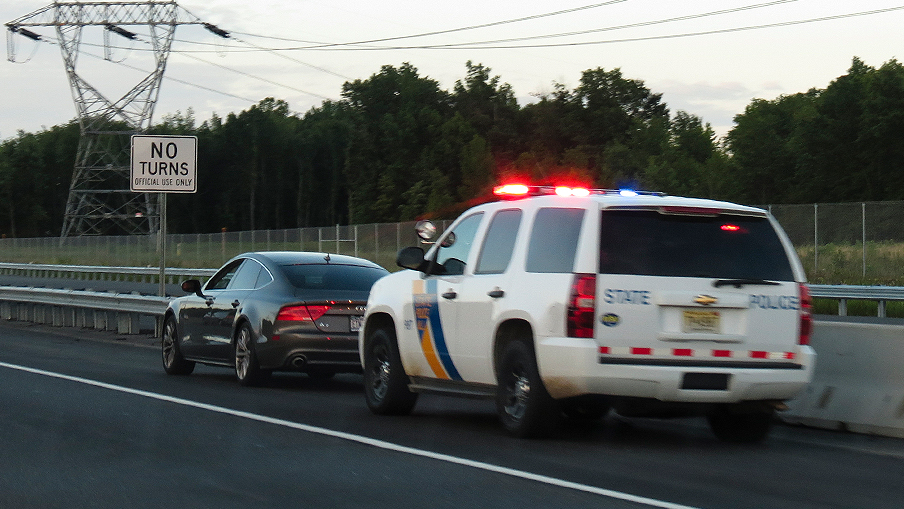
Virginia Traffic Ticket


POINTS ON DRIVER’S LICENSE AND CAR INSURANCE FOR OUT-OF-STATE SPEEDING TICKET

As we said earlier, Virginia does report traffic and moving violations to the national database. It is up to your state whether or not that violation goes on your record in your home state. 

However, if you do not pay for your ticket, or if you accrue too many tickets in Virginia in a short amount of time, your right to drive in Virginia may be revoked (even if it is not revoked in other states). 


OUR HARRISONBURG, VIRGINIA TRAFFIC TICKET LAWYERS CAN HELP YOUR CASE 

If you live out of the area and have been issued a moving violation on Interstate 81 in the Shenandoah Valley, our Harrisonburg VA traffic attorneys at Cook Attorneys can offer you a free traffic defense consultation by telephone. It may be able to appear in your place on the court date. In most situations, you will not need to return to Virginia to contest your ticket. Most initial consultations regarding traffic cases take less than twenty minutes. Let us reduce your worry and free up your time. 
What Does It Mean to Yield the Right of Way and More!


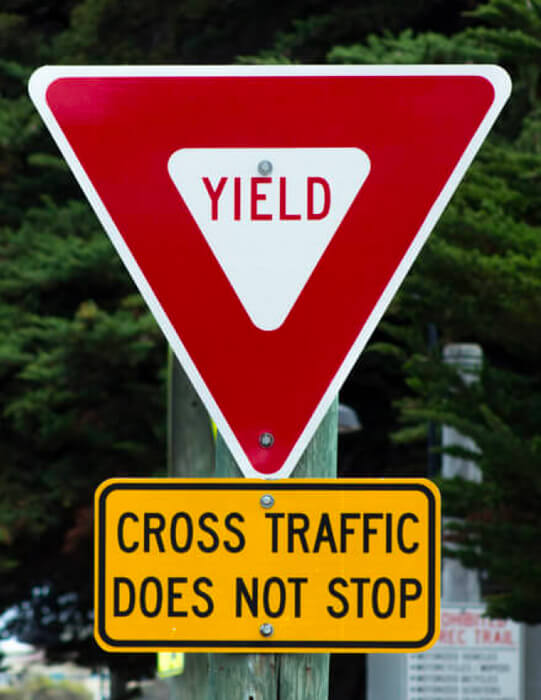
What are traffic yielding laws in Virginia? What does it mean to yield the right of way, and what are the potential penalties for failing to yield? If you have received a failed to yield ticket, you may have questions and need an attorney to look at your ticket with you. The term, “yield the right of way,” simply means to allow other vehicles, pedestrians, or bicycles to move or pass in front of you. Violations and punishments may vary, and Cook Attorneys are here to help if you have received a ticket for failing to yield.

What does it mean to yield the right of way?

What does it mean to yield the right of way?

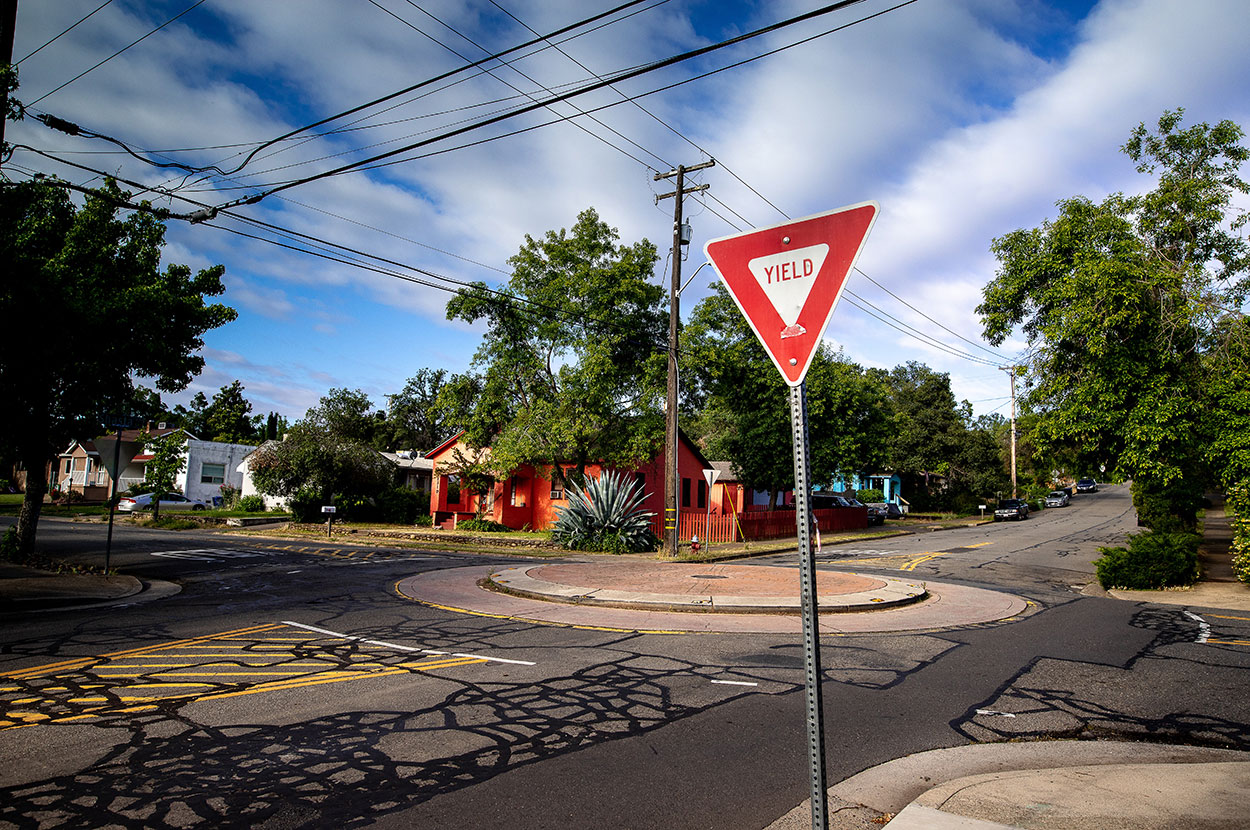
In the Commonwealth of Virginia and all other US states, to yield the right of way is to allow another vehicle, pedestrian, bike, or other transportation means to pass before you. Yielding the right of way applies mostly at intersections or highway entrance ramps and will often be clearly marked with a yield sign. 

A failure to yield is a form of reckless driving and is thus a Class 1 Misdemeanor. According to Virginia law code, failure to yield violations can occur when someone fails to:

1. Does not bring his/her vehicle to a stop before entering the highway where there is traffic approaching on highway within 500 feet of the entrance

Or 
2. When a yield right-of-way sign is posted, a person fails to yield the right-of-way to a vehicle approaching on the highway from either direction.

In order to charge an individual with reckless driving for failure to yield, the state must prove one of these above situations. Oftentimes, reckless driving charges will be assessed for a failure to yield resulting in an accident and can become a point of great dispute if civil action is taken. If you receive a reckless driving charge for a failure to yield resulting in an accident, we highly recommend hiring an experienced legal counsel to assist in potential litigation. 


How much is a failed-to-yield ticket? 

Because a failure to yield is a form of reckless driving, it is considered a Class 1 misdemeanor in the state of Virginia. In Virginia, the potential penalties for this infraction are confinement in jail for up to 12 months and a fine of up to $2500. Moreover, reckless driving is a crime and will remain on your permanent criminal record and can result in up to 4 DMV demerit points. 

Often, you can take drivers training courses to get the demerit points off your record. For more on demerit points, see our blog post about driving record and point assessment in Virginia.

If you are concerned that the charge is inaccurate, you want to avoid points on your license, or you simply need a lawyer’s set of eyes on the ticket, feel free to contact Cook Attorneys at any time for quick and helpful lawyer advice. We offer free consultations on traffic cases.


The Bottom Line

If your ticket requires that you appear in court, or if you decide to challenge it in court, Cook Attorneys can appear for you so that you may not have to take off work. We may also be able to keep you from having to return to Virginia if you live out of state. 

We will talk to you ahead of time about what we will ask the judge for, and then we will let you know right away what the judge said—as well as what (if anything) you owe for your ticket or court fees. 

If this sounds appealing to you, don’t hesitate to call today for a free consultation! Cook Attorneys has been serving Harrisonburg and all surrounding counties in Virginia for over two decades, and we would love to help you.

Failure to Observe Traffic Control Device – What’s Next?


If you have received a ticket for “failure to observe traffic control device,” you may have questions and need an attorney to look at your ticket with you. The term, “failure to observe traffic control device,” simply means that you did not follow a sign or light on the road, but it is sometimes possible for you to get the charges reduced or dropped if there was any confusion about the sign or rules.


A good lawyer will be able to help you with terminology, confusion of signage, and reduction of charges, if possible.

failure to observe traffic control device

The basics

As a driver, you are legally responsible to follow all the posted traffic signs and traffic lights—also known as “traffic control devices.” In the Commonwealth of Virginia, you can be cited for not following the signs. This charge comes with three demerit points on your record.

Often, you can take drivers training courses to get the demerit points off your record. For more on demerit points, see our blog post about driving record and point assessment in Virginia.

Most of the time, if you are cited for “fail to obey traffic control device” it simply means that you did not come to a full stop at a stop sign. It could also mean that you failed to yield at a yield sign or something similar.

If you are concerned that the charge is inaccurate, you want to avoid points on your license, or you simply need a lawyer’s set of eyes on the ticket, feel free to contact Cook Attorneys at any time for quick and helpful lawyer advice. We offer free consultations on traffic cases.


The law

The law of Virginia, of course, requires your obedience to traffic control devices. This means that you must follow all posted signs on “highways” (which, for the purposes of the law, is any road open to the public anywhere in the state).

There is a sentence at the end of the statute that states you are off the hook if the sign is not posted, has fallen down, or is otherwise obscured. It states,

“No provision of this section relating to the prohibition of disobeying traffic control devices or violating local traffic control devices shall be enforced against an alleged violator if, at the time and place of the alleged violation, any such traffic control device is not in proper position and sufficiently legible to be seen by an ordinarily observant person.”

For the full text of this law, see § 46.2-830.


An exception

Sometimes, where it is applicable, a lawyer can make a case that you were sleeping or resting on the side of the road, and that is why you were not complying with the law. If the judge or prosecutor accepts this explanation, you could still be convicted of a traffic infraction, but you would get no demerit points on your driving record.

Cook Attorneys would be happy to look at your case, hear your story, and let you know if you are likely to have this outcome. Check out our website today and contact us to get started.

For the full text of the “Sleeping violation” clause, see the Virginia Code.

obedience to traffic control devices

The fine print

There is one section of the law (§ 46.2-833.1.) that says you cannot evade any signs by driving off the road to get around them. So you cannot drive up on your neighbor’s grass, through the parking lot of a corner gas station, or onto the beach (for instance) just to get out of obeying traffic signs. Doing so is the same as failure to obey the signs, and you can be ticketed.


The court case

If your ticket requires that you appear in court, or if you decide to challenge it in court, Cook Attorneys can appear for you so that you may not have to take off work. We may also be able to keep you from having to return to Virginia if you live out of state. 

We will talk to you ahead of time about what we will ask the judge for, and then we will let you know right away what the judge said—as well as what (if anything) you owe for your ticket or court fees.

If this sounds appealing to you, don’t hesitate to call today for a free consultation! Cook Attorneys has been serving Harrisonburg and all surrounding counties in Virginia for over two decades, and we would love to help you.

Illegal Car Mods – VA Car Modification Laws


If you own your car, you might think you can make any changes to it that you like—after all, it’s your car! But did you know that car modifications must fall within the laws? 


If there were no laws regarding vehicle modifications, some cars would end up with dangerous features that would pose a hazard to their drivers or others on the road. Illegal car mods are no laughing matter in Virginia.

So, what can and can’t you do with your vehicle modifications? Are train horns legal on cars? Can your tail lights be blue? Read along and find out!

illegal car mods

What are Some Illegal Car Mods in Virginia?

The following is an incomplete list of car mods that are illegal in the Commonwealth of Virginia. These are commonly seen, but check with the police department or DMV for a complete list. 


Bumper height limits (frame and suspension)

If you plan to lift your car, the lower edge of the bumper must be 14-22 inches above the ground. Vehicles with a higher GVWR (like trucks) have higher limits. 

You are also not allowed to make the frame/body touch the ground or windows, and you cannot expose the fuel tank to damage from a crash. 

For more information, see the Virginia code.


Window tints

According to Virginia window tint law, tinting is legal as long as you allow at least 50% of light into the front windows and 35% of light into the back windows. Reflective tint also has regulations, and some non-regulation window tint is allowed with a physician waiver. 


Sirens and whistles

You are allowed to make your vehicle make any sound you like, as long as it is in “Park.” If you are planning to use unusual sounds on your car while it is in motion, they must be authorized by the State Superintendent.

For more information, see the Virginia code.


Mufflers

You are not allowed to make your car exhaust louder on purpose. Cars in Virginia are required to have interior baffle plates, gutted mufflers, muffler cutouts, or a straight exhaust. Keep in mind that there are noise restrictions in certain places in Virginia, too.


Tires

Tires must be in accordance with regulations established by the Society of Automotive Engineers, the American National Standards Institute, Inc., or the federal Department of Transportation. Any other tires, and you could end up with a Class 1 Misdemeanor.


Lights

Front fog lights are only allowed in amber or clear; rear lights are only allowed in red. You may not add any other color of lights, flashing lights, or rotating lights. Red and blue flashing lights are reserved for emergency vehicles.


Unapproved equipment

Unlike what you see in some spy shows and James Bond movies, you are not allowed to add flamethrowers, radar detectors, smoke projectors, or a list of other things to your car. Other equipment like safety glass requires approval from the government first.


Engine

Any engine modifications should follow the Virginia emissions standards. See the Virginia DMV website for more information.


Hood scoops

Hood scoops should be equal to or less than 38 inches wide by 50.5 inches long by 1.125 inches tall. For more information, see the Virginia laws about hood scoops.


Antique/classic car

You can use antique or vintage plating on vehicles that are over 25 years old, as long as you use them for shows, parades, etc. only. You are allowed to drive with those plates up to 250 miles from your home, as long as you do not use the car for daily driving. 

If you go to a show or parade farther than 250 miles from your home with that vehicle, you need to find a different way to transport it.


What are the Penalties for Breaking Virginia Car Modification Laws?

car mod that breaks virginia car modification laws

In most illegal car accessories cases, it is most likely that you will get a “fix-it ticket” wherein you will have to prove that you unmodified the car or adjusted it to be within standard parameters. You may also be required to pay a fine, depending on the modification and what the judge determines at your court hearing.


Certain tire violations will be cause for a Class 1 Misdemeanor, meaning you could pay a fine of up to $2,500 or serve up to 1 year in jail. Other violations could cause your car to be immediately impounded by highway police. 


What do I do if I’ve Been Cited for an Illegal Car Mod?

If you have received a ticket for an illegal car modification in Harrisonburg or in the Shenandoah Valley, and you feel that the ticket was not warranted, or you would like a lawyer on your side throughout the process, contact Cook Attorneys. Our traffic attorneys have been working with drivers like you for years and would love to lend our expertise to your case.


Fill out the form below to request more information about how we can serve you. We look forward to hearing from you!

All Explained: Driving on a Suspended License – VA Code 46.2 301


There are many reasons in the Commonwealth of Virginia that you might find yourself with a suspended license. If you do, you should not drive until you get it sorted out and get your license reinstated. 

No matter what reason you were caught, the penalty for driving with a suspended license could include jail time, a fine, car impoundment, and/or a longer license suspension. Let’s look at the answers to some common questions about driving with a suspended license.

driving on a suspended license in va


What is a Suspended License?

A suspended license means that you cannot drive a car or other motor vehicle for a certain amount of time. (This is in contrast to a revoked license, which means you cannot drive for the foreseeable future, maybe forever.)


To find out if your license is suspended in VA, visit the Virginia DMV’s official “DMV Now” website. It is a good idea to do this regularly since there are many reasons your license can be suspended. Common ones include:

  • Reckless driving on your record
  • Too many demerit points 
  • Other convictions like failure to pay child support, failure to pay jail fees, or at-fault in a motor vehicle crash
  • Lapsed insurance or not proper insurance
  • A health condition that impairs your ability to drive.


What happens if you drive on a suspended license?

Driving on a suspended license in VA is a Class 1 Misdemeanor, which means you could end up with 

  • Up to $2,500 fine
  • Up to 1 year in jail
  • All the fees to get your car free from the impound lot
  • All the fees to get your license reinstated after the allotted time. 


That is for driving with a suspended license first offense or second offense. For a third offense within a 10-year period, in addition to the above, it is mandatory that you spend 10 days (minimum) in jail. 

For the full text of the VA law, see § 46.2-301.


Are there ever mitigating circumstances?

The short answer is yes. It is possible to get the charges dismissed if:

  • You did not know your license was suspended.
  • There is an emergency situation (such as a medical emergency) where you had no option but to drive, and no one else was there who could drive in your place.
  • There was a clerical error (for instance, you filed the paperwork to get your license suspension resolved, but it wasn’t processed timely).

In any of these scenarios, it is imperative to contact a good traffic defense lawyer. Cook Attorneys can help with that or any other defense against your charge.


What does the prosecutor need to prove to convict you of driving on a suspended license?

driving with a suspended license


If you get a ticket for driving with a suspended license, the police officer is alleging that you:

  • Were driving the vehicle in question.
  • Had a suspended license at the time.
  • Knew your license was suspended.


A good attorney can help you challenge any one of those elements:

  • The first one only applies if YOU were driving. If someone else hands your suspended license to the police officer even though they were driving, or if you were driving a moped, the charge shouldn’t stick.
  • The second one applies if all the clerical data is up to date and accurate at the time of the charge. If the DMV made a mistake, if you had already rectified the suspended license, or if you can prove other paperwork inaccuracy, then you should get the charge dismissed.
  • The hardest one to dispute is the third one. It is hard, but not impossible to prove that you did not know your license was suspended—for instance, if you were notified at an old address.


How do you get “driving with suspended license” dismissed?

As we said above, one way to get the charge dismissed is to show that you actually didn’t know about the license suspension. Another way is to show that the police had no just cause for pulling you over in the first place.

There are other defenses against the charge, and many cases like this are thrown out for various reasons. That is why a traffic defense lawyer can make all the difference.


Who do I contact for help?

Cook Attorneys has been helping clients with traffic defense for decades, and we have seen it all. Call us any time to get a free consultation on your case.


Fill out the form below to request more information about how we can serve you. We look forward to hearing from you!

Illegal U-turns in Virginia and Intersection Traffic Rules


U-turn laws are different everywhere you go. If you drive in Virginia, it will be helpful for you to know where you are and are not allowed to do a U-turn. 

Read along to learn all you need to know about legal and illegal U-turns, Virginia right of way laws, and intersection traffic rules.


ARE U-TURNS LEGAL IN VIRGINIA?

are u turns legal in virginia?

Yes, U-turns are legal at intersections where you are visible for 500 ft, and there are no signs prohibiting U-turns.

U-turns are illegal where there are signs posted that they are illegal (this is usually in high traffic areas or other places where U-turns would be unsafe). They are also illegal in the middle of the street where you are not at an intersection.

The illegal U-turn ticket cost in Virginia is $81 but could be more or less, depending on what you are charged with, or what the judge decides if you go to court. 


For the full text of the law about U-turns, see the
Virginia U-turns Law.


CAN YOU TURN RIGHT ON RED IN VIRGINIA?

Yes, you can turn right on red if:

  • There are no signs prohibiting you from doing so.
  • The light is a red circle, not a red arrow.
  • You have come to a full stop at the light before proceeding.
  • You can do so safely (no oncoming automobile or foot traffic).

can you turn right on red in virginia?

How much is a ticket for turning right on red when it is unsafe? $101, but it could be more or less, depending on what you are charged with, or what the judge decides if you go to court. 

For the full text of the law about right turns, see the Virginia Right Turn On Red Light Law.


WHAT ARE INTERSECTION RIGHT OF WAY RULES IN VIRGINIA?

Right-of-way rules come into play when two or more vehicles enter an intersection. Most of the laws are common sense, but read along in case there’s something you didn’t know before!


Right of way at a stop sign

If you are at a 2-way stop, cross-traffic has the right of way. Once there is no cross traffic, the driver who stopped first has the right of way. 


If you are at an all-way stop, the driver who stopped first has the right of way. Should two or more drivers stop at the same time, the driver who is on the right has the right of way. 


Right of way at a yield sign

If you approach an intersection with a yield sign, you must yield until you can safely traverse the intersection. 

Sometimes, this means slowing down and continuing on your way. Other times, this means coming to a complete stop to allow the traffic with the right of way to pass safely.

virginia right of way laws

Right of way at an uncontrolled intersection or highway on-ramp

Whenever traffic merges or crosses without any signs, such as in parking lots, on highways, and in neighborhoods, the driver who arrives first has the right of way. Everyone else must yield until it is safe to move forward. 


Other yield situations

Virginia law states that if you are driving at an unlawful speed, you forfeit your right of way. It also states that you must yield when it is most safe to do so. 

So let’s say you think it’s your turn to go at a stop sign, but the other driver goes anyway; if you go just to prove that you had the right of way and end up in an accident, you could still get ticketed. It’s your job as a driver to make a safe decision at all times.

The failure to yield right of way in Virginia ticket cost is $81 but could be more or less, depending on what you are charged with, or what the judge decides if you go to court. 


For the full text of the law about yielding (or taking) right of way, see the Virginia Right of Way law.


CAN A TRAFFIC ATTORNEY HELP ME IN VIRGINIA?

Yes! If you think you have been wrongfully ticketed, if you are wondering how to fight an illegal U-turn ticket, or if you have been summoned to court but need someone else to attend on your behalf, you can call a traffic attorney.

At Cook Attorneys, we have decades of experience in traffic court, and we know all the best defenses to help you get the best possible outcome for your case. If you’re not sure how we can help, please feel free to schedule a free consultation today!


Fill out the form below to request more information about how we can serve you. We look forward to hearing from you!


46.2 862 Code – Virginia Exceeding Speed Limit


The Commonwealth of Virginia is home to some of the strictest speeding laws in the country. Most people who move here are surprised by the laws, and many learn the hard way that Virginia police officers take speeding very seriously. 

One very important question to answer is, how many miles over the speed limit is reckless driving? 


Read along to find out what speed is considered reckless driving, how you can avoid a ticket or criminal charges, and what to do if you find yourself summoned to court due to a speeding violation.


SPEEDING LAWS EXPLAINED

If you are caught exceeding the Virginia speed limit, you can expect to be fined a minimum of $6 per mph you were going over the limit. You will also earn demerit points that will go on your Virginia driving record. 

You can learn more about speeding ticket fines and demerit points.


We will focus mostly on reckless driving in this post. What is the reckless driving speed in Virginia? Virginia code § 46.2-862 says, 

[seadev_quote id=”reckless-driving-speed-virginia” cite=”https://www.google.com/url?q=https://cookattorneys.com/46.2-862-Code-Virginia-Exceeding-Speed-Limit/?reckless-driving-speed-virginia&sa=D&source=docs&ust=1645786466671384&usg=AOvVaw3lUeQhTDkGKyikXsxsRxad”]A person shall be guilty of reckless driving who drives a motor vehicle on the highways in the Commonwealth 

  • (i) at a speed of 20 miles per hour or more in excess of the applicable maximum speed limit or
  • (ii) in excess of 85 miles per hour regardless of the applicable maximum speed limit.[/seadev_quote]


How fast is reckless driving in Virginia?


RECKLESS DRIVING VS GENERAL SPEEDING

Is all speeding considered reckless driving? No. Reckless driving is driving in a manner that endangers life or property, and speeding alone can be charged as reckless driving if the speed is excessive.


The traffic infraction we call “speeding” is typically charged if you are going 84 mph or less, or 1 to 19 miles over the posted speed limit.  If you are caught going any number of miles over the speed limit in any zone on any street or highway, you could be pulled over and ticketed. The best way to avoid a ticket is to drive the speed limit or under; if you are caught speeding, be polite and cooperate with the officer. 


However, if you are caught going 20 miles per hour (or more) over the speed limit or over 85 miles per hour, you may get a summons to court for reckless driving, which is a Class 1 misdemeanor. 

If you feel you have received the ticket or summons in error and should not have to pay it or show up in court, call the experienced Virginia traffic attorneys at Cook Attorneys and talk to us about your defense options.


PENALTIES FOR RECKLESS DRIVING

Because reckless driving is a misdemeanor, you cannot prepay a reckless driving ticket; you (or your lawyer) have to show up in court. If the judge finds you guilty, you will face some or all of the following:

  • A fine—up to $2,500
  • Jail time—up to 12 months
  • Driver’s license suspension—10 days to 6 months
  • Demerit points—6 points


Additionally, being convicted of a misdemeanor gives you a criminal record. This can make it harder to pass background checks for work, school, the military, or rental applications. 


CAN YOU GO TO JAIL FOR SPEEDING?

chances of going to jail for reckless driving in virginia


Can you get arrested for speeding? No police officer will arrest you for simply violating Virginia speeding laws. They will issue you a ticket and expect you to pay it in due course or appear in court.  If you are pulled over for speeding, and it turns out that you are driving under the influence or have outstanding warrants for your arrest, you could end up being arrested on the spot. But you won’t be arrested or do jail time for a simple speeding ticket.


If you are pulled over for reckless or aggressive driving, however, you could end up serving jail time. In some counties in Virginia, you get “automatic” jail time for going over 90 mph, period. 


The chances of going to jail for reckless driving in Virginia are slim for a first offense, but you shouldn’t risk going to court without a lawyer. If this is not your first reckless driving offense, there is a higher chance of doing jail time.


The best way to avoid jail time is to abide by the speed limit. But if you are pulled over, be polite to the police officer.  If you are summoned for reckless driving, call Cook Attorneys as soon as you can so we can advocate for you.


WHEN TO GET A LAWYER INVOLVED IN A SPEEDING CASE

You should call the seasoned traffic defense lawyers at Cook Attorneys in Harrisonburg, VA whenever you think you’ve been wrongly ticketed or summoned. And you should especially call whenever you are facing reckless driving charges. 


In order for charges to stick, the prosecutor must prove beyond a reasonable doubt that you broke the law. Our experienced lawyers know the defenses you can use against reckless driving charges, and can help you come up with the most effective defense plan. 

We can work to get your sentence reduced or waived, and we will be on your team when you go to court.


Fill out the form below to request more information about how we can serve you. We look forward to hearing from you!

Can You Get A DUI on a Bike? Bicycle Laws in Virginia


Can you get a DUI on a bicycle in Virginia?

[seadev_quote id="can-you-get-a-dui-on-a-bike" cite="https://cookattorneys.com/can-you-get-a-dui-on-a-bike-bicycle-laws-in-virginia/?can-you-get-a-dui-on-a-bike%22]The answer is no. Bikes are not considered motor vehicles, so you can’t get a DUI for biking under the influence of drugs or alcohol. 

However, you can still be ticketed for certain behaviors on a bicycle, and some of those behaviors are more likely to occur if you are drunk or drugged.[/seadev_quote]


Is it illegal to wear headphones while riding a bike? 

Who is required to wear a bicycle helmet? 

We answer these questions and more, so read on to learn the basics about Virginia bike laws.

can you get a dui on a bike in virginia?

Is “Reckless biking” a charge in Virginia?

While bicycles are not “motor vehicles,” they are “vehicles” subject to most of the rules of the road, including the prohibition on reckless driving.  And since being under the influence of drugs or alcohol makes you more likely to violate the law, it is a good idea to consider locking up your bike and catching a ride home with a sober driver.


Reckless driving a bike charges may include:

  • Endangering life, limb, or property of yourself or someone else.
  • Losing control of the bike because of faulty brakes.
  • Failing to follow proper passing laws at railroad crossings.
  • Passing a stopped school bus.
  • Forgetting to give proper signals.


Can you get a ticket for not wearing a helmet in Virginia?

If you are 14 years old or younger and riding a bicycle—or if you are any age and riding a class 3 electric power-assisted device on any street, sidewalk, or public bike path—Virginia cities and counties can require you to wear a helmet. 


In places where helmets are required, if you are caught without a helmet you can be ticketed $25. For your first offense, that fee usually gets waived. And if you purchase a legal helmet between the time you get the ticket and the time you have to pay it, the fee is usually waived as well. 


For more on helmet laws in Virginia, see the Virginia bike helmet law.


What to do after a bike accident or bike crash in Virginia?

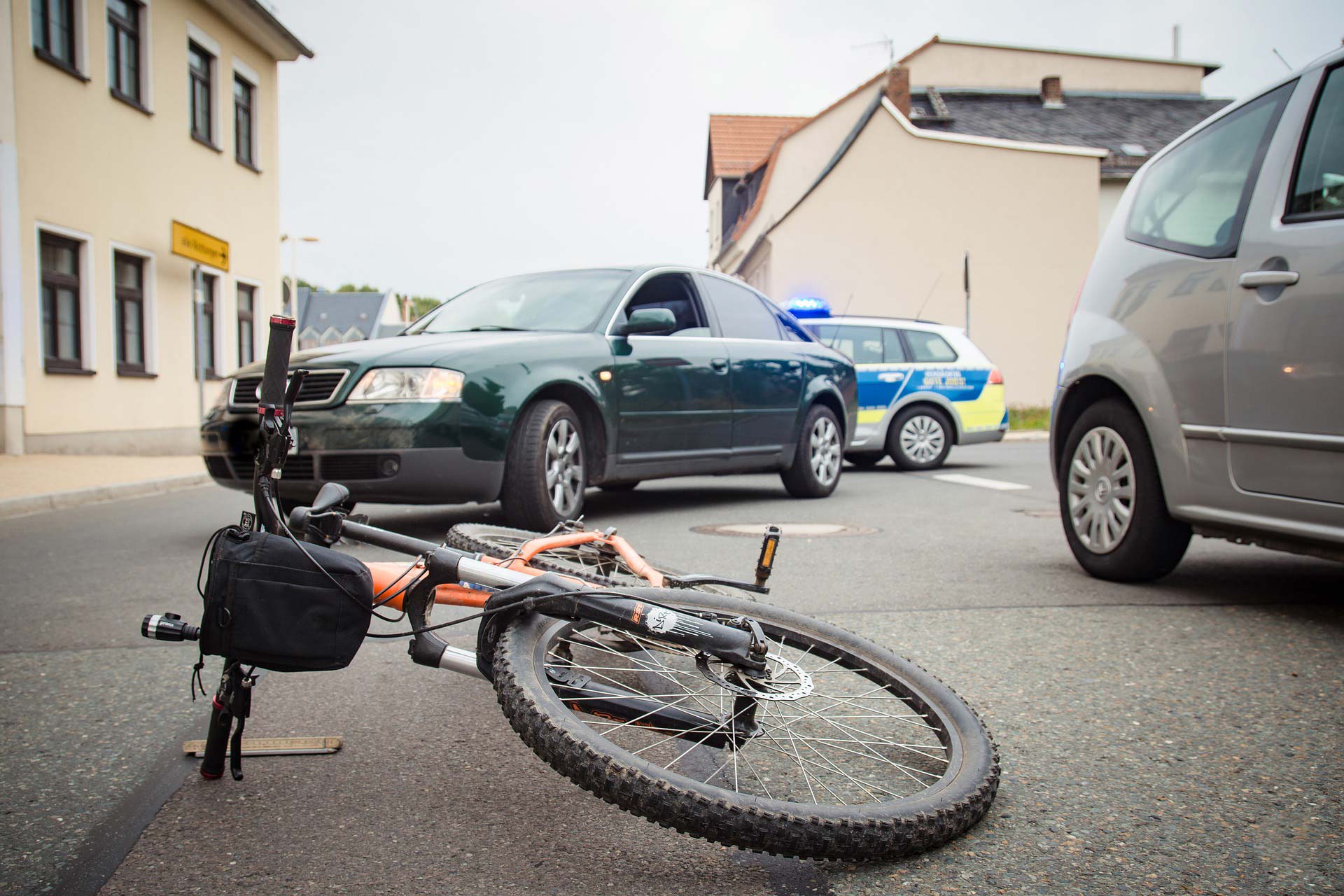
If you are in an accident where property is damaged or another person is injured or killed, you are required to stop. The police will take down your name and address and provide it to the other parties involved or the property owner. 


If the accident isn’t bad enough for police to be called, and you have damaged someone’s property, you must leave a note for the property owner and/or make a reasonable effort to find the owner. 


Some other good ideas for if you are involved in a bike crash or accident:

  • Leave your bike in the same state it crashed in; if the police come, it will be best if the scene isn’t disturbed.
  • Take pictures of the bike and any damaged property or injuries.
  • Obtain contact information of any witnesses, and provide your contact information.
  • If necessary, seek immediate medical attention.
  • If a car or other vehicle is involved, do not negotiate with the driver; just get their information and provide to your insurance.
  • Do not make any statement to insurance without first consulting a lawyer.

If you have been in a bike accident or bike crash in Virginia, please do not hesitate to contact Cook Attorneys. We can obtain the best possible outcome for you and help you know how to talk to your insurance company.

bike accident

What are the Virginia bicycle laws regarding safety?

If you are cycling anywhere in Virginia, you must follow these safety rules:

  • Do not carry anything that prevents you from keeping at least one hand on the handlebars. 
  • Do not carry more people than there are seats on the bicycle. The exception is if you have a child (5 years old or younger) securely attached in a special child’s bicycle seat or trailer.
  • Do not attach yourself or your bike to any other vehicle on the roadway while you are on it. 
  • Do not wear earphones in both ears while riding a bicycle.


What is the Virginia Bicycling Safety Act?

As of July 1, 2021, the following things are true:

  • Drivers of cars and other vehicles must change lanes to pass bicycles where there is not 3 feet of space between the car and the cyclist.
  • Cyclists are allowed to ride two abreast (rather than in single file, like before).
  • The government created a workgroup to look into the possibility of having cyclists treat stop signs as yield signs.


Conclusion

If you have been pulled over on a bicycle, or if you have been involved in an accident resulting in injury or property damage, our trained traffic lawyers are standing by to help you navigate the legal process. 

Call Cook Attorneys any time to schedule a free consultation.


Fill out the form below to request more information about how we can serve you. We look forward to hearing from you!

Driving Without License in Virginia – VA Code 46.2-300 & More


What happens if you drive without a license, drive alone with a permit, drive with a suspended license, get a DUI with a revoked license, etc.? All of these things are illegal, but they all have different definitions and various consequences. We look at each here.


Driving Without a License in Virginia

It’s illegal in all states to drive without having obtained a valid driver’s license, and the Commonwealth of Virginia is no exception. 

In Virginia, you have to apply for a license, pass the test, and obtain a valid Virginia license before driving legally. The consequences of driving without a license are serious.


Exceptions to this rule apply if you are:

  • driving tractors or certain other farm equipment on the road.
  • in the military, driving an official military vehicle.
  • active duty military (or the spouse or dependent of an active duty military person), and you have a valid, up-to-date license from your home state or country.
  • temporarily visiting from another state or country, and you have a valid up-to-date license from there.


If you have recently moved to Virginia, you have 60 days by law to obtain a valid VA driver’s license. If you are pulled over after the 60th day of living in VA, then you may end up ticketed for driving without a license.

driving without a license in virginia

The penalty for driving without a license in Virginia the first time is a Class 2 Misdemeanor; you may end up with a fine up to $1,000 or a jail sentence of up to 6 months. 

However, most judges do not impose the full penalty of the law for first-time violators. You will also end up with demerit points on your driving record.


The second time you are caught violating this law, it is considered a Class 1 Misdemeanor; you may end up with a fine up to $2,500 and jail time up to 12 months. You will also end up with demerit points on your driving record.


But what happens if you forget your license and get pulled over? You will be ticketed for $10 and will have to go to court to prove you had a valid license at the time. You may also be responsible for some court fees.


Some readers ask, “Can you go to jail for driving without a license?” While the answer is technically yes, it’s more likely that you will pay a fine unless you repeatedly violate the law within a short time frame.


For more information about driving without a license in Virginia, read the law §46.2-300.


Driving With a Suspended/Revoked License in Virginia

A “suspended” license means that your driving privileges have been suspended for a certain length of time. Once that time has passed, assuming your license has not expired, you may resume driving as usual. 

Licenses are usually suspended for legal reasons (such as too many driving infractions in a certain amount of time).


A “revoked” license means that your driving privileges have been removed, and you are not eligible to drive until they have been reinstated. You must wait the required amount of time, meet the qualifications of a safe driver, re-apply for a license, and pass the driver’s test again. 

Licenses can be revoked for legal or medical reasons. 


Driving with a suspended or revoked license is a Class 1 Misdemeanor. If you are caught a second time, your vehicle could be impounded. 

If you have a 3rd offense driving on a suspended license in Virginia or driving on revoked license within 10 years, you will serve at least 10 days in jail, but it could be up to a year. 


However, getting a DUI on a suspended license is a whole other case; read the section later in this blog about DUIs and suspended licenses.


Driving With an Expired License in Virginia

Licenses expire after a certain number of years, so be sure to keep an eye on your expiration date and go to the DMV with all the necessary paperwork to renew your license well in advance of its expiration date. 


What happens if I drive with an expired license? The penalty for an expired license while driving is the same as driving without a license:


  • The first time you are caught violating this law, it is considered a Class 2 Misdemeanor; you may end up with a fine up to $1,000 or a jail sentence of up to 6 months. 
  • The second time you are caught violating this law, it is considered a Class 1 Misdemeanor; you may end up with a fine up to $2,500 and jail time up to 12 months. 


Driving Alone With a Learner’s Permit in Virginia

Let’s answer some questions we frequently get asked about learner’s permits:

  • What happens if you get pulled over with a permit over 18?
  • What is the penalty for driving without a license under 18?
  • Can you drive alone with a permit in VA?


Virginia learners permit restrictions to govern your ability to drive when you have a learner’s permit. We won’t go into all the laws here, but the main one is that you must have a licensed driver with you whenever you are driving with a permit. 

Driving with a learner’s permit alone is illegal. It does not matter how old you are; you could be 16, 18, 35, or 60, and you would still need a licensed driver with you.

what happens if you get pulled over with a permit over 18?

There is one exception to this law: if you are between the ages of 16.25 years and 18 years old, you are driving to or from school, you have had your permit for at least nine months, AND you have parental and driving school permission to drive alone. Only then can you drive alone with a permit.


Generally speaking, if you get pulled over with a learner’s permit, you should treat it like any other traffic stop: be cordial, keep your hands where the cop can see them, and provide your permit when they ask for your license. 

It can be scary to be pulled over as a new driver, and you may get a ticket (if you were speeding, for instance). But there is no reason for it to escalate as long as you are following all other traffic and driving laws.


The penalty for “driving with permit alone” is a driving suspension for up to 6 months, and you may be subject to other penalties.


DUI Without a License in Virginia

If your license has been suspended or revoked due to a DUI, the charges will be added to your DUI charge, and the judge will hear both charges together. 

The judge may or may not decide to treat them as separate offenses; in most cases, they get combined together for a combined sentence. 

If you commit a DUI while your license is suspended for a prior DUI, you will likely end up with jail time. 


Whenever a DUI is involved, you should hire a lawyer immediately. Cook Attorneys has traffic defense lawyers standing by to help you obtain the best outcome for your case.


Fighting Driving Charges in Virginia

While you could look up standard driving defenses, it is always smarter and safer to at least consult with a lawyer if you have been charged with any of the offenses above. Cook Attorneys can help you with avoiding things like jail time, suspended licenses, car impoundment, etc. 


Contact Cook Attorneys today to set up a free consultation about your case.


Fill out the form below to request more information about how we can serve you. We look forward to hearing from you!

Police HeadLights at Night: Can Cops Hide With Their Lights Off?


You are zooming along a 2-lane road at night, with no other cars in sight. Maybe you are going a little faster than the speed limit, but you believe you are being safe. 

Suddenly, you look behind you and see those dreaded red and blue police flashing lights. Where did a cop come from? You pull over to the shoulder. What now? 


Did the police officer ambush you by remaining hidden in the dark? Is it legal for cops to sit with their lights off? What should you say and do once they walk up to your car?


Read along for the answers to all these questions and more, so you can know your rights when pulled over—whether you saw the cop ahead of time or not.

cop headlights at night

CAN COPS HIDE WITH THEIR LIGHTS OFF?

You might be wondering, “Do cops have to have their lights on at night?” The short answer is, “No.” 

Cops do not have to have their lights on at night. They can legally hide with their lights off. And they can pull you over for violating the law, whether they advertised their presence or not. 

It is not considered entrapment in a court of law.


WHAT SHOULD I DO IF I’M BEING PULLED OVER AT NIGHT?

Being pulled over by police at night is not really different than being pulled over during the day. The light or lack thereof does not change your rights or the police’s authority.


  1. Pull over in a safe place.
    If it is night, look for a well-lit area. If there is nowhere to pull over for miles, continue driving the speed limit and pull over as soon as practicable.
    Then call 9-1-1 and let them know you are aware that you are being pulled over, and you will stop at the next populated, well-lit option (gas station, fast food restaurant, etc.). They can communicate with the cop pulling you over.
  2.  Cooperate, but do not incriminate.
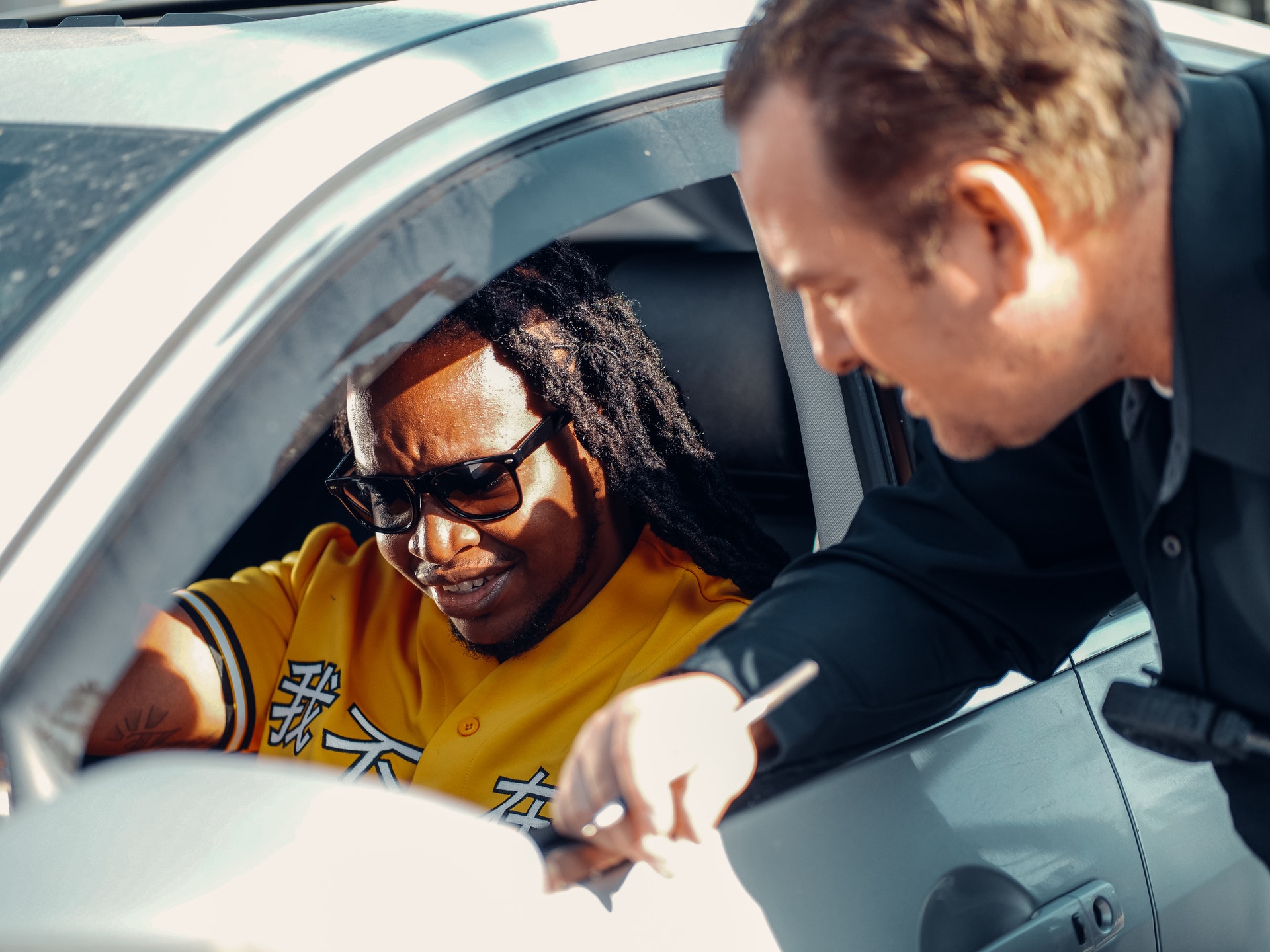
    Roll down your window, and make sure your hands are where the officer can see them. You have the right to turn on your internal car overhead lights.
    Don’t use quick movements, and do let the officer know what you are doing with each movement. For instance, “My registration is in the glove compartment. Is it okay if I reach over there?”
    Most police will ask you two questions: “Do you know why I pulled you over?” and “Do you know how fast you were going?”
    We recommend answering the first one with “No,” so that you don’t incriminate yourself. And whether or not you know how fast you were going, you do not have to tell the police officer. Let them tell you.
  3. Know your rights.
    Your rights when pulled over include:
    1. the right to remain silent, though you should tell the police verbally that you are exercising that right. 
    2. in the Commonwealth of Virginia, the right to film the interaction with the police, without police consent; they cannot confiscate the video later. 
    3. the right to know why you are being detained. 
    4. the right to not be pulled over without a legal reason. A police officer cannot pull you over and say, “I assumed you were breaking the law” or, “You look suspicious.” They have to have a reasonable suspicion of illegal activity.
    5. the right to refuse a search. However, if the police perform an illegal search of your person or your car, do not stop them; let a lawyer sort that out later. 


For more information on what to do when pulled over, check out What to Do if You’re Questioned by the Police and Can the Police Search Your Car?

pulled over by police at night


WHAT DOES IT MEAN WHEN A COP FLASHES HIS LIGHTS AT YOU?

If a cop pulls up behind you and continuously flashes his lights at you, he or she is pulling you over, whether or not the siren is on.


If a cop pulls up behind you or drives past you and quickly flashes his lights and turns them off, it is probably a courtesy or warning. Check your own headlights and speed, and make sure your gas tank is closed, just in case any of those things are the issue.


WHAT HAPPENS IF I AM TICKETED OR CHARGED?

Virginia traffic laws state that you can be charged a monetary amount (a fine) for traffic violations. You may also end up with demerit points on your DMV record. 


There are common defenses against traffic tickets, and Cook Attorneys are standing by to help you build your defense. 

Some tickets can be fought against because you cannot be pulled over for those things alone. Others can be fought if you were pulled over or searched illegally.

And many times we can discuss with the police officer and the prosecutor a resolution of the case that minimizes the negative consequences to you and can even avoid you having to attend the court hearing.

Let our experienced traffic defense lawyers fight on your behalf and challenge any ticket that was issued improperly.


Fill out the form below to request more information about how we can serve you. We look forward to hearing from you!