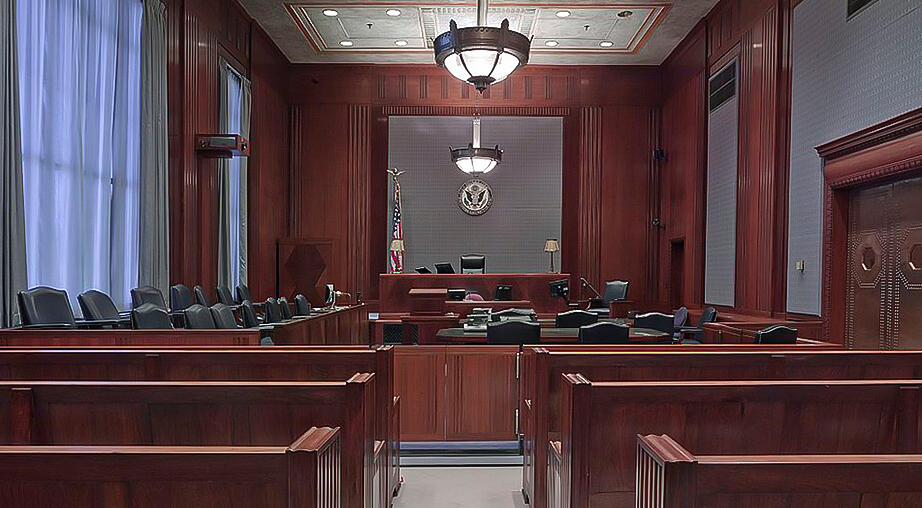
Prepare For Trial: What to Expect During a Criminal Trial Process?


As criminal defense lawyers in Harrisonburg, VA, our team at Cook Attorneys tries cases for those in our community who need legal defense. However, until the time comes when someone is going to attend a trial and needs legal representation, most individuals are unaware of what happens during a trial.

This blog will focus on the criminal trial process. In a criminal case, a trial determines whether the accused is guilty or not guilty. Every defendant is presumed to be innocent until he is proven guilty. 

Read on to learn more about the steps of a trial and how to prepare for trial.


THE KEY PLAYERS IN A TRIAL

trial participantsCriminal cases are officially brought to court by the government. The lawyer who represents the government in the trial is known as a prosecutor. The role of the prosecutor is to present evidence sufficient to prove the guilt of the person or business accused of the crime. 

The prosecutor holds the responsibility of proving the defendant’s guilt beyond a reasonable doubt. Conversely, the defendant is not required to prove his innocence. If the prosecutor is unable to prove the guilt of the defendant beyond a reasonable doubt, the accused will be found not guilty.


The attorney who represents the accused is the
defense attorney. While those who cannot afford an attorney are assigned a defense attorney by the court, many defendants choose to retain (hire) a criminal attorney to defend them against the charges brought by the prosecutor.

Criminal trials in the General District Court and the Juvenile and Domestic Relations Court are bench trials; that is, the case is decided by a judge. In the Circuit Court, the case may be tried as a bench trial or as a jury trial. 


In a jury trial, members of the community decide whether the prosecutor has proven that the accused is guilty. Virginia is one of the few states where, if the defendant requests it, the jury also makes a recommendation regarding the sentence. In most cases in Virginia, however, as in most states and in federal court, the judge, not the jury, determines the sentence.


WHAT HAPPENS DURING A TRIAL? OVERVIEW OF A CRIMINAL TRIAL PROCESS


As one of the first steps in the
criminal trial process, opening statements are given by one or both sides by the prosecution and/or defense. These statements sometimes provide an overview of the case and summarize the evidence and sometimes alert the judge or the jury to the important issues they need to watch for during the trial.

Because the burden of proof rests on the prosecution, they are given the first opportunity to present evidence, usually the testimony of witnesses and the presentation of physical evidence. 


The defense is given the opportunity to present evidence; but in a criminal case, there is no requirement that evidence be presented.

After the presentation of closing statements by both the prosecution and the defense, the judge or the jury will consider all the evidence and the law of the case before rendering a verdict.


If the defendant is found guilty of the charges, the judge or the jury will consider additional evidence—such as the defendant’s prior record, evidence of the defendant’s character, or victim impact evidence—before announcing the sentence. Of course, if the person is found not guilty, then he is free to go.


HOW TO PREPARE FOR TRIAL?

A good lawyer will help you prepare for trial, but there are things you can do for maximum preparedness. 

  • Read the complaint. This is the document that is accusing you of something. Knowing what it says in detail will help your defense and make sure you’re not wasting time. 
  • Gather evidence and prepare witnesses. Your attorney will be very helpful during this phase of preparing for trial, but you will still probably need to gather documents, provide financial evidence, etc.
  • Consult with your lawyer. You are not alone. Your attorney will be invaluable as you prepare for trial, helping you understand where to focus your attention and preparing you for anything the prosecution might throw your way.


Just remember as you
prepare for trial that a lot of the outcome depends on your preparedness. Cook Attorneys is available to help along each step of the way and coach you for the best possible outcome.

WHAT IS THE ROLE OF LAWYERS IN A TRIAL?

what is the role of lawyers in a trial?

During a trial, lawyers are the ones who call witnesses, and cross-examine the witnesses for the prosecution. They are well-versed in the law and can help you execute the strategy you put together before the trial.

You will have a choice in your defense. So what is the difference between a court appointed attorney vs private attorney?

  • Court-appointed attorneys are public defenders who are often pressed for time, overworked, and under-resourced. Whether they have a year of experience or several decades, they don’t always have the resources they need to spend as much time as necessary on your case to get you a great outcome.
  • Private attorneys are ones that you hire based on your need. They usually have more time and resources to focus solely on your case, and they will work for you to get the best possible results.


GET HELP FROM AN EXPERIENCED CRIMINAL DEFENSE ATTORNEY

As you can see, a good defense lawyer can make the criminal trial process easier for you. Experienced lawyers like those at Cook Attorneys can help you have a higher chance to dismiss the charge or reduce it to a less serious offense.


We offer free criminal case consultations for most criminal cases. If you’re ready to get started, please fill out the form below to request more information about how we can serve you. We look forward to hearing from you!

Can a Person Who Has Been Convicted of a Felony Have Their Firearms Rights Restored in Virginia? (How to Get Gun Rights Restored in VA)

THE RIGHTS YOU LOSE FOLLOWING A FELONY CONVICTION

When someone is convicted of a felony in the State of Virginia, they automatically lose their civil rights. These rights include:

  • The right to vote
  • The right to serve on a jury
  • The right to run for elected office
  • The right to become a notary public
  • The right to carry a firearm

How to get civil rights including gun rights restored in VA

Our team of attorneys in Harrisonburg VA are frequently asked about the process for how to get gun rights restored in VA.


RESTORATION OF VIRGINIA FIREARMS RIGHTS

Following a felony conviction in a Virginia state court, before you can request the restoration of your right to purchase and possess a firearm, you must first petition the Governor of Virginia for the restoration of the other rights lost as a result of the conviction, rights such as the right to vote, the right to hold public office, and the right to sit on a jury.  


The Constitution of Virginia gives the Governor (and only the Governor) power to have those civil rights restored. 


This first step in the process can be taken by contacting the Secretary of the Commonwealth’s office which you can do online. 


Here, you can check the status of your civil rights, print a restoration of rights contact form and request for your rights to be restored.


Individuals requesting restoration of their civil rights following a felony conviction in Virginia will be considered by the Secretary of the Commonwealth’s office in the order in which the felon was released from supervision.


However, the Governor does not have the power to return gun possession rights to citizens. To be considered for gun rights restoration, once you have received the restoration of your civil rights, and if you are eligible, you must next make an application to either the Circuit Court where you live or the Circuit Court where you were convicted. 

Virginia gun rights restoration


CONVICTIONS FOR WHICH THE PROCESS WON’T WORK

Not everyone who has been convicted of a felony will be eligible to have their firearms rights restored, even after their other civil rights are restored by the Governor. Virginia will not consider restoring your gun rights if your felony conviction is from another state or from federal court (even a federal court in Virginia).  Because there is no process in federal law to obtain restoration of gun rights after a federal court felony conviction, the only path available is a Presidential Pardon. Click here for more information on the federal pardon process.


Individuals who have been convicted of a misdemeanor crime of domestic violence cannot possess a firearm under federal law.  There is currently no process for such persons to request restoration of gun rights. This area of the law is complicated by the interplay of federal and state law in a way that likely was unintended but has not yet been addressed by the Virginia legislature.  If you have been convicted of assault and battery on a family member or a similar offense, speak with a lawyer for further information regarding you right to possess a firearm.


Attorneys in Harrisonburg VA to support gun rights restoration


WE CAN SUPPORT YOU 

If you’re looking for a Harrisonburg VA lawyer who can assist you with your Virginia gun rights restoration petition, our attorney Scott T. Hansen has helped numerous clients successfully regain their right to possess a firearm.  We can help you to determine your eligibility, file your petition, guide you through the process, and advocate for your gun rights restoration.


Contact us for a consultation. We will work to achieve the best possible outcome for your case.

Felony Charges in Virginia: What to Expect?

Understanding the difference between a misdemeanor and a felony

The most serious crimes are classified as felonies, which carry significantly greater potential consequences to the accused than misdemeanors. A misdemeanor is a crime for which a person can be sentenced to no more than 12 months in jail; a felony is a crime for which a person can be sentenced to more than a year.  In most cases in Virginia, a person sentenced to a misdemeanor jail sentence must serve 50% of the length of his sentence while a person serving a felony sentence will serve about 85% of the sentence.

If you or a loved one needs a criminal defense attorney in Harrisonburg VA, we invite you to learn more about our free criminal defense consultations.

Virginia’s process for felony charges


Remain Silent
If you’re being investigated for a criminal offense, you have the right to remain silent – USE IT!  Talking to law enforcement without first consulting a criminal defense attorney is almost always a bad idea that you will later regret.  Police are trained to make you feel that talking to them without consulting an attorney is your best option – perhaps your only option – but that is just not true.  You will have plenty of time to talk later if you and your lawyer think it would be beneficial, but many defendants destroy their shot at a favorable outcome by talking to the police without the benefit of counsel.

When you need a Harrisonburg criminal defense attorney, our team at Cook Attorneys has the experience you and your family needs to ensure the best possible outcome for your case.  If, after consulting with us, you decide to speak to law enforcement, we can be present with you during your questioning.


Arrest
If you’re arrested on felony charges, you will be taken before a magistrate.  The magistrate will determine whether you can be immediately released on bail or held over for an initial court appearance.  While the magistrate cannot testify against you later, what you tell the magistrate that is overheard by others present, including a police officer, may be used against you later.  You should answer the magistrate’s questions about your identity and your background, but it is usually a bad idea to talk to the magistrate about the facts leading up to your arrest.


Bond hearing
If you are not released on bail, you will be taken to either a General District Court or Juvenile and Domestic Relations District Court on the next day that court is open.  The judge at that time will ask if you want a court-appointed attorney and will schedule a preliminary hearing.  He may also conduct a bail hearing to determine if you can be released on bond or be held until trial. You can read more about the bail bond process in Virginia here. When you choose our firm to represent you, we will advise you whether you are eligible for bail and, if so, will advocate on your behalf for your release.


Preliminary hearing

The next significant hearing in the felony process is the preliminary hearing where the District Court judge will hear the prosecutor’s evidence to determine whether there is probable cause that the charged felony offense was committed.  This is an important hearing because it is your lawyer’s opportunity to cross examine the witnesses presented by the government and in some cases the charge will be reduced to a misdemeanor.  While it is possible to waive (or give up) your right to a preliminary hearing, it is almost never advisable unless you already have a plea agreement with the prosecutor to favorably conclude the case in Circuit Court.


Trial

After the preliminary hearing, the case is sent to the Circuit Court for trial.  Virginia’s Speedy Trial statute requires the Circuit Court to schedule felony trials within five months of the preliminary hearing for individuals who have been incarcerated (imprisoned) and within nine months for those not in custody.  Trials can be heard by juries or by judges (bench trial). Your criminal defense lawyer will help you to choose the most advantageous option for your case.

During the trial, evidence is presented and the jury and/or judge will decide whether the prosecutor has presented evidence that proves your guilt beyond a reasonable doubt. You will have 30 days to file an appeal if you are found guilty.


Sentencing

If you are found not guilty, the case is over.  However, if you are found guilty of any charge, the next step is a sentencing hearing. It is during this process that the judge and/or jury will determine the appropriate punishment for your crime(s).


Let our experienced team support you during this difficult process

An investment in our experienced team of criminal lawyers is an investment in your and your family’s future.

Contact us for a free criminal defense consultation so that we can explain your options and show you how we can help you. 


The Intake Process for Jail and Prison

The intake process for prison

Inmate processing, formally known as the prison intake process involves many steps. These will vary in each prison however generally, the following process to serve a prison sentence can be expected in some shape or form throughout Federal prisons.


Arrest and sentencing

If you’ve been arrested and jailed for a crime, you will first stay in a local jail during your court process until a jury and/or judge rules on your sentence. 


Determining your prison destination

Once you’ve received your court sentence, you will be evaluated to determine your prison destination based on your classification into one of six security levels which for the State of Virginia, are described in this link. The factors and steps involved in your classification will likely include:

  • Length of your sentence
  • Medical examination
  • Psychological examination
  • Drug test
  • Interview(s)


You may spend time in multiple facilities prior to your final prison destination including your local jail and the Federal Bureau of Prisons’ primary processing center in Oklahoma. A full list of the BOP’s locations can be viewed here.


The intake process

Once at your final prison destination, the personal property you’ve brought with you will be evaluated for its eligibility to remain with you versus put into prison storage or shipped to your home address (at your own expense). “Civilian clothing” which is any clothing not issued by the prison, is usually not allowed to remain with an inmate, nor is jewelry. If you’re preparing to go to prison, you can read our article “What Can You Bring to Jail or Prison?” here. 

You’ll receive an orientation to your prison facility’s rules, services, and procedures including the commissary where you can purchase basic items not otherwise provided by the prison, visitation rights, and the types of items you can receive from outside sources such as books, letters, etc. 


Treatment plans and programs

At your prison facility, you’ll be assigned to a counselor who will help you in preparing for prison by developing a personalized remediation treatment plan and assign you to recreation programs, health services, and other services as needed. Your cooperative participation in these programs will ensure a smooth transition process through your incarceration and can help you to quality for early or timely release for good behavior. 


We can help you to prevent incarceration

If you or someone you love needs lawyers in Harrisonburg VA with expertise in criminal cases, we invite you to schedule a FREE consultation with our bi-lingual English/Spanish team. We can also help you to hire a translator if you need legal assistance in any other language. Consultations typically require less than one hour during which time we will review your case and advise on next steps. 

Contact us to learn more about how we can help you to achieve the best possible outcome for your case.

What Can You Bring to Jail or Prison?

What is the difference between jail and prison?

Although the terms jail and prison used interchangeably in casual conversation, they’re two different types of institutions. Jails are smaller in scale and usually operated by a local Government or Sheriff’s Office. Their purpose is to hold people for a short period of time. For example: people waiting for trial or individuals who have been sentenced to less than one year of incarceration.

Prisons are run by Federal and State Governments and confine individuals who have been convicted of crimes and who’ve been sentenced to at least one or more years of incarceration.

You can read our article “The Intake Process for Prison” here.


The most frequently asked questions about preparing for prison or jail

A frequently asked question our Harrisonburg VA attorneys receive from potential clients facing jail and/or prison time is how to prepare for incarceration. Specifically, people want to know what they’ll be allowed to bring and keep with them after intake at Rockingham County Regional Jail, Middle River Regional Jail, Virginia Department of Corrections (VA DOC) or Federal Bureau of Prisons (BOP).


If you’re sentenced to time in jail or prison, what can bring with you?

Few jails or prisons publish a list of allowable items as the rules are subject to change and may be at the discretion of the intake team. While every facility will have different restrictions, it’s common (however there’s no guarantee) to be permitted to bring the following:

  • Prescription eyeglasses
  • Necessary prescription medications and/or proof of prescription
    Prescriptions should be current and in an authentic pharmacy-issued container displaying the patient’s name, date of RX, and any dosage instructions.
  • US dollars (less than $200 is recommended)
    Most jails and prisons deposit your money for you into a personal spending account usable for their in-house commissary. Commonly up to $300 USD can be maintained in your account.
  • Piece of paper containing the contact information of your legal team, family, and anyone else you want to be able to contact during your incarceration.
  • Foam earplugs
  • Flip flops made of rubber or foam (cannot contain metal) for showers 


We recommend leaving jewelry (yes, even wedding rings) behind as these, along with any other personal items or clothing that’s deemed non-permissible, may be required to be shipped back to your home address at your own expense.

Middle River Regional Jail also allows select undergarments if they adhere to the Jail’s guidelines, which are detailed here, on their website.


What items can you receive from visitors or acquire from the jail?

Jails and prisons will allow you to purchase personal items from their commissary that are not otherwise provided by the institution. As every institution’s rules differ, the following list is not a guarantee of permissibility, but a list of commonly acceptable items inmates may keep in their cells. 

  • Cards/letters
  • Photographs 
  • Magazines (non pornographic)
  • Newspapers
  • Books
  • Bibles
  • Puzzle or word find books


In what other ways should someone prepare for incarceration?

This article provides helpful recommendations for managing finances, family matters, communications with your employer and bank, and more.


We can help you to prevent prison time

If you or someone you love needs a criminal defense attorney in Harrisonburg VA, we invite you to schedule a FREE criminal consultation with our lawyers in Harrisonburg Virginia. We have Spanish speaking attorneys and can help you to hire a translator if you need legal assistance in any other language. Consultations typically require less than one hour during which time we will review your case and advise on next steps. 


Contact us to learn more about how we can help you to achieve the best possible outcome for your case.

What to Expect From Our Free Criminal Defense Consultation

What To Look For In A Criminal Defense Lawyer

If you or someone in your family has been accused of a crime, you’ll want to know what to look for in a criminal defense lawyer. The process isn’t complicated; however, your choice can dramatically impact the outcome of your case and thus your long-term future.

WHERE TO BEGIN?

When you’re at the beginning of your search for a criminal defense lawyer near you, such as for lawyers in Harrisonburg VA, we recommend the following resources:

Word of Mouth

Ask friends, family and coworkers if they have had personal experience with or know of a local lawyer who specializes in criminal defense. The personal endorsement of someone you trust is a great place to start.

Read Google, Facebook and other social media reviews

Many reputable firms, both small and large can be found through a Google or Facebook search. Read the reviews their past clients have posted on social media sites to get a sense of which criminal defense attorneys and/or law firms have a majority of positive reviews.

Search reputable online directories

There are many online directories that can help you find qualified criminal defense attorneys near you, such as Super Lawyers for example.

lawyer defends criminal charges

HOW TO NARROW YOUR OPTIONS?

Determine whether you will need a State or Federal attorney.

If your case is in Federal court, having an experienced criminal lawyer who practices regularly in Federal court is all the more important as many of the procedural rules are different than in State court, and the punishments for Federal crimes are typically much more severe than those for State crimes.

Meet for comparison consultations with several attorneys

Ideally, if you can make the time, you should meet with at least two, and better still, three or four defense attorneys near you. Many legal teams, such as our team of lawyers in Harrisonburg Virginia, will offer free consultations.

HOW TO PREPARE FOR YOUR CONSULTATION MEETINGS?

We recommend preparing a list of questions in advance of your meeting. This way, when your meeting occurs, you won’t forget key questions and will get the most out of the consultation. 

The following list is by no means comprehensive, as every case is different; however, these are a few questions you should consider asking during your consultation:

  • Will the attorney who meets with you during your initial consultation be the same attorney who would be assigned to your case?
  • How quickly can the attorney/law firm begin working on your case?
  • What information would they need to get started on your case if you choose to hire them?
  • What are the criminal lawyer’s/firm’s fees and payment schedules?
  • Can they provide a list of cases similar to yours that they’ve worked on?
  • What type of trial strategy does the attorney recommend (for example, plea bargains, negotiations, alternatives, etc.)?
  • Does the attorney you’re meeting with think he or she is a good fit to represent you for your case? And if so, why?
  • Can they provide you a sample contract to review before you consider signing with them?

It’s important to note that just as you are interviewing criminal defense attorneys, they are also evaluating you as a potential client. 

By arriving prepared with questions and in professional attire, you’ll make a good first impression.
Three people sitting around a table discussing something while the sun shines on the table.

THINGS TO CONSIDER IN MAKING YOUR FINAL DECISION

When choosing a criminal defense attorney, choose someone who is both comfortable with the nature of your case and who is someone that you feel comfortable partnering with. 

And of course, excellent communication skills and a successful track record for your type of case are huge assets.

Consider your preferences for working with a large versus a small legal firm. Smaller boutique firms are often more expensive, however one of the benefits you’ll receive is having consistent relationships with the same, manageable number of people. 

At larger firms, their size frequently enables them to offer lower rates; however, your case will likely be managed by a larger quantity of individuals, which can be less personal and sometimes confusing.

Many criminal defense attorneys require a significant amount of money from you up-front to handle your case. 

Be sure to ask questions about whether additional payments will be required and how funds would be returned to you if the representation were to be terminated. 

The fees for legal representation should be completely transparent.

Criminal defense attorneys will never make promises about what the outcome of a case will be.

What To Expect From Our Free Criminal Defense Consultation

WHY DO YOU NEED AN INITIAL CONSULTATION FOR YOUR CASE? 

When you’re in need of a Harrisonburg criminal defense attorney, you should take full advantage of free consultations offered by lawyers in the area in order to decide which criminal defense lawyer will be the best advocate for your case.

Here at Cook Attorneys, we offer free consultations to most individuals who have been charged with a crime. We’re committed to making your life easier during what can be an incredibly stressful time for you and your family. To help you prepare for what to expect during an initial consultation, whether it’s for a misdemeanor, reckless driving, DUI or DWI charge, a misdemeanor, sex crime, domestic violence, felony offense, assault and battery, or other criminal charge.

local criminal attorneys

OUR FREE CRIMINAL DEFENSE CONSULTATION PROCESS

  • Once you contact our office, we can typically schedule and initial consultation appointment within a few days, definitely before your next court date.
  • Our office hours are Monday – Friday, 8:30 a.m. to 4:30 p.m.
  • Initial criminal defense consultations usually last for 30-45 minutes but can be shorter or longer depending on the facts of the case.
  • If you need assistance in a language other than English, please let us know. We have a Spanish speaking lawyer and can arrange, at your cost, a local interpreter for other languages.
  • Unlike other law firms who provide initial consultations with heads of firms then hand you off to junior lawyers, at Cook Attorneys your initial consultation will be with the same attorney who will represent you if you choose to work with our team.
  • You should bring with you to the first meeting any documents you’ve received related to your case such as an arrest warrant, search warrant, summons, etc.
  • If the your loved one is being held at the Rockingham County Jail, our lawyers will go to the jail to meet with the client at no charge.  If the client is being held at a jail outside of Rockingham County, our lawyers will charge a one-time fee for traveling to the jail for the initial consultation.
  • Even during your initial consultation, your attorney is bound by a duty of confidentiality and anything you tell your attorney will remain confidential.  Therefore, when we are talking about the facts of your case, the attorney and the client will meet in private. However, if you bring a friend of family member with you the consultation, they can be invited into the meeting at the point when we will explain the charges, the legal process, the fees for representation, and answer additional questions.
  • If at the conclusion of your initial consultation you would like to hire Cook Attorneys to represent you, we will explain the next steps to you in detail at that time, including the amount of the fee for our services. We usually charge a flat (or fixed) fee for our services, a fee that is based on an estimate of the time and expertise deemed necessary to perform the service, regardless of the actual amount of time expended.
  • Payment for our services is required in full, in advance. It is placed in a trust account at a bank and is not earned by our team until your case is over or until certain agreed-upon stages of the case have been concluded.

About Attorney-Client Privilege

WHAT IS ATTORNEY-CLIENT PRIVILEGE?

If you’re looking for an immigration lawyer or criminal defense attorney in Harrisonburg VA, you may have questions about confidentiality and your visit to our office.

harrisonburg va lawyers


A foundational principle of the attorney-client relationship is that an attorney must keep his/her client’s secrets confidential. Period. This is an ethical rule that, if violated, can result in disbarment, civil liability, etc. An attorney is not allowed to reveal his client secrets.

A related legal doctrine is the attorney-client privilege, a rule of evidence that says that a lawyer cannot be compelled or forced to reveal client confidences (unless waived by the client). 

For example, the prosecutor or a judge cannot subpoena a lawyer to testify about what a client told him about a crime.

If you’re in a legal situation, you should at least talk to an attorney. To ensure your attorney is fully equipped to help you, it’s essential that you fully disclose to him what happened. 

Sharing such details can be intimidating or embarrassing, but that is why the rules regarding confidentiality were created: to make sure you can reveal everything to your attorney, with the assurance that he is legally bound to not tell anyone else.

local defense attorney

THE ATTORNEY-CLIENT RELATIONSHIP

Your lawyer needs to know the details of your case to properly represent you in the legal system. You count on him/her to be an expert in a complex field. 

Attorneys count on you to give them all the information they need to best represent you.


Unless a client decides to waive (give up) the attorney-client privilege, the privilege never expires (even after a client’s death). It’s important to keep in mind what qualifies as a “classified” communication to your attorney. 

For example, if you send an email to your lawyer from your work email address, and others at your work have access to that account, it’s not actually private and therefore cannot be covered within the attorney-client privilege. 

Do your best to limit your communications to your attorney through face-to-face or secure telephone conversations. 

Further, having another person present for a conversation with the lawyer might cancel the privilege because the communication was not intended to be secret.

lawyers harrisonburg va


Let us know if you have questions about attorney-client privilege. We’re the Harrisonburg Virginia attorneys who will make sure you’re fully informed about the legal process, ensuring you’re completely prepared before, during, and after your trial for what to expect and how to increase your chances for a positive outcome.

Our Harrisonburg lawyers offer free initial criminal defense consultations. And, yes, the initial consultation is protected by both confidentiality and by attorney-client privilege.

Please contact us for a quote. Se habla español. We hope to have the opportunity to support you.

Experienced. Local. Effective.

Everything You Need to Know About The Bail Process in Harrisonburg VA

“Bail” vs “Bond”

Criminal defense attorneys and judges often use the terms “bail” and “bond” interchangeably, but, technically, there is a difference. Bail is the process whereby an arrested person is released from jail while he awaits the trial of his case; bond is the property posted — that is,  deposited with the court — to satisfy the requirements of the bail. Once bail is set and a bond is posted, an accused person is freed throughout the court process unless he violates the conditions of his release and is reincarcerated.

The idea of bail as a financial incentive for a person charged with a crime to return to court came to the American colonies from England, and the Eighth Amendment of the U.S. Constitution guarantees that “excessive bail shall not be required.”

criminal defense

The Bail Process in Harrisonburg, Virginia

Here in Harrisonburg, Virginia, when someone is arrested, he is taken to the Rockingham County Jail where a magistrate will determine whether he should be released. During these initial bail hearings the magistrate must consider whether the accused is likely to return to court and whether he will be a danger to the community if released.  After making those determinations, the magistrate decides whether release is appropriate and how much money, if any, should be required to be posted as a bond.

If the magistrate sets bail, conditions of bail always include appearing in court when required and “being of good behavior”; that is, avoiding arrest for any other charges. The magistrate may set other special conditions of release, and those conditions often include remaining in the state of Virginia or reporting to a pretrial services officer at the Rockingham County Court Services Unit.  Conditions can also include a curfew, electronic monitoring, or keeping away from a particular person or a particular place.

For some more serious criminal charges listed in the Virginia Code there is a presumption that there should be no bail and the magistrate will not authorize release.  In that case, or if the person is not financially able to pay the amount set by the magistrate, the law requires that the accused be taken before a judge the next day for the Rockingham County General District Court judge to make his own determination regarding bail.

In less serious cases such as DUI or possession of marijuana where the accused has no criminal record and is likely to appear at trial, he is released on an “unsecured” bond; that is, he does not have to post any money and is released on his promise to pay the bond or return to jail if he violates the conditions of bond by reoffending or by failing to appear.  Sometimes this is called being “released on your own recognizance.”

When the bail set is a “secured” bond, then the amount of money set by the magistrate or the judge must be posted with the court before the individual is released from jail.  The bond can be posted in cash or by executing a lien on real estate property. If the accused fails to appear or otherwise violated the conditions of bail, the property can be forfeited to the government.  On the other hand, when the case is concluded the money posted is returned to the person who posted it or the lien is released.

criminal expungement lawyers

When the amount of the bail set by the magistrate or the judge is too expensive for individuals or their families, they can hire a bondsman who will pay the bond on the defendant’s behalf.  Usually the bondsman’s fee is 10% of the bail amount which he keeps even when the bond is returned to him at the end of the case.

Virginia is one of only a handful of states that does not have a “bail schedule” which determines the amount of monetary bail amount appropriate for each criminal offense. Instead, judges take a variety of factors into account before setting the bail amount, including the specific criminal charges, the person’s criminal history, and his ties to the Harrisonburg community.  There is anecdotal evidence that Harrisonburg may be slowly moving in the direction of an emerging national trend in which judges and magistrates are less likely to require large cash bonds that unfairly impact the poor who cannot afford to pay, thus remaining in jail and unable to work or care for their families while they await trial.

local criminal attorney VA

Given the devastating effect of being held in jail awaiting trial for months if bail is denied, you need an experienced local criminal defense lawyer to represent you at the earliest stages of your case to obtain the best possible bail amount and conditions during your bail hearing. If you or a loved one are arrested in Harrisonburg or in neighboring jurisdictions such as Shenandoah County or Augusta County, contact Cook Attorneys as soon as possible after the arrest so that we can represent you at your bond hearing.

Our experienced criminal defence attorneys are here to help: If you have any questions, please contact us. Se habla español.


Experienced. Local. Effective.

The Bail Process in Harrisonburg, Virginia

Criminal defense attorneys and judges often use the terms “bail” and “bond” interchangeably, but, technically, there is a difference. Bail is the process whereby an arrested person is released from jail while he awaits the trial of his case; bond is the property posted — that is, deposited with the court — to satisfy the requirements of the bail. Once bail is set and a bond is posted, an accused person is freed throughout the court process unless he violates the conditions of his release and is reincarcerated.


The idea of bail as a financial incentive for a person charged with a crime to return to court came to the American colonies from England, and the Eighth Amendment of the U.S. Constitution guarantees that “excessive bail shall not be required.”

Here in Harrisonburg, Virginia, when someone is arrested, he is taken to the Rockingham County Jail where a magistrate will determine whether he should be released. During these initial bail hearings the magistrate must consider whether the accused is likely to return to court and whether he will be a danger to the community if released. After making those determinations, the magistrate decides whether release is appropriate and how much money, if any, should be required to be posted as a bond.


If the magistrate sets bail, conditions of bail always include appearing in court when required and “being of good behavior”; that is, avoiding arrest for any other charges. The magistrate may set other special conditions of release, and those conditions often include remaining in the state of Virginia or reporting to a pretrial services officer at the Rockingham County Court Services Unit. Conditions can also include a curfew, electronic monitoring, or keeping away from a particular person or a particular place.


For some more serious criminal charges listed in the Virginia Code there is a presumption that there should be no bail and the magistrate will not authorize release. In that case, or if the person is not financially able to pay the amount set by the magistrate, the law requires that the accused be taken before a judge the next day for the Rockingham County General District Court judge to make his own determination regarding bail.


In less serious cases such as DUI or possession of marijuana where the accused has no criminal record and is likely to appear at trial, he is released on an “unsecured” bond; that is, he does not have to post any money and is released on his promise to pay the bond or return to jail if he violates the conditions of bond by reoffending or by failing to appear. Sometimes this is called being “released on your own recognizance.”


When the bail set is a “secured” bond, then the amount of money set by the magistrate or the judge must be posted with the court before the individual is released from jail. The bond can be posted in cash or by executing a lien on real estate property. If the accused fails to appear or otherwise violated the conditions of bail, the property can be forfeited to the government. On the other hand, when the case is concluded the money posted is returned to the person who posted it or the lien is released.

criminal expungement lawyers

When the amount of the bail set by the magistrate or the judge is too expensive for individuals or their families, they can hire a bondsman who will pay the bond on the defendant’s behalf. Usually the bondsman’s fee is 10% of the bail amount which he keeps even when the bond is returned to him at the end of the case.


Virginia is one of only a handful of states that does not have a “bail schedule” which determines the amount of monetary bail amount appropriate for each criminal offense. Instead, judges take a variety of factors into account before setting the bail amount, including the specific criminal charges, the person’s criminal history, and his ties to the Harrisonburg community. There is anecdotal evidence that Harrisonburg may be slowly moving in the direction of an emerging national trend in which judges and magistrates are less likely to require large cash bonds that unfairly impact the poor who cannot afford to pay, thus remaining in jail and unable to work or care for their families while they await trial.

local criminal attorney VA

Given the devastating effect of being held in jail awaiting trial for months if bail is denied, you need an experienced criminal defense lawyer to represent you at the earliest stages of your case to obtain the best possible bail amount and conditions during your bail hearing. If you or a loved one are arrested in Harrisonburg or in neighboring jurisdictions such as Shenandoah County or Augusta County, contact Cook Attorneys as soon as possible after the arrest so that we can represent you at your bond hearing.

Our experienced criminal defence attorneys are here to help: If you have any questions, please contact us. Se habla español.


Experienced. Local. Effective.

Expungement

A fresh start, free and clear of any burdens that may be holding you back.


Having a arrest record, no matter how small or severe, can be a burden to someone’s life, often causing financial and personal hardship as it can impact one’s ability to gain employment.


It’s sometimes possible to have a arrest record cleared, which is a process called expungement for which you’ll want to consult with a criminal expungement lawyer to clear a criminal record.

Unlike many other US states where a criminal record may be able to be expunged even in cases where the defendant was found guilty, the official policy here in Virginia is that expungement is available only to persons are found to be innocent of a crime or granted an absolute pardon. However, depending on how the court paperwork was processed, even if you were not totally innocent our experienced expungement attorneys at Cook Attorneys may be in a position to help.


Unburden yourself from the past.


If you were charged with a crime and your arrest record is now holding you back from job opportunities, you need a lawyer to expunge your criminal record. At Cook Attorneys we’re experienced expungement lawyers.


We invite you to contact us to schedule a consultation and review your case to determine whether you are a candidate for expungement. Se habla español. We look forward to supporting you.

Experienced. Local. Effective.

How to Obtain Expungement in Virginia (FREE consultation)

What is “Expungement”?

A fresh start, free and clear of any burdens that may be holding you back.

Having an arrest record, no matter how small or severe, can be a burden to someone’s life, often causing financial and personal hardship as it can impact one’s ability to gain employment.

It’s sometimes possible to have an arrest record cleared, which is a process called expungement for which you’ll want to consult with a criminal expungement lawyer to clear a criminal record.

expungement attorney

Expungement in Virginia

Unlike many other US states where a criminal record may be able to be expunged even in cases where the defendant was found guilty, the official policy here in Virginia is that expungement is available only to persons are found to be innocent of a crime or granted an absolute pardon. However, depending on how the court paperwork was processed, even if you were not totally innocent our experienced expungement attorneys at Cook Attorneys may be in a position to help.

Unburden yourself from the past.

We Can Help to Clear Your Record

If you were charged with a crime and your arrest record is now holding you back from job opportunities, you need a lawyer to expunge your criminal record. At Cook Attorneys we’re experienced expungement lawyers.

We invite you to contact us to schedule a consultation and review your case to determine whether you are a candidate for expungement. Se habla español. We look forward to supporting you.

criminal expungement attorneys


Experienced. Local. Effective.