White Collar Crime: Here’s The Complete Explanation

A hooded figure in dark background that represents blue collar crime.

Some law firms will advertise online that their criminal defense practice is limited to so-called “white collar crime” while others, like Cook Attorneys, include “white collar crime” in a list of many areas of criminal law in which we regularly work. 


Here in this article, our local criminal defense attorneys will briefly help you understand what is meant by the term “white collar crime.”


BLUE COLLAR VS WHITE COLLAR TERMS


The terms “white collar” and “blue collar” originated in the early 1900s as a generalization for job categories of the U.S. workforce.

“White collar” referred to the white dress shirts typically worn by professionals or office workers, whereas its counterpoint, “blue collar,” referred to individuals employed as manual laborers.

The term “blue collar” described the blue uniforms commonly worn by industrial and manual laborers; blue denim shirts and overalls helped to conceal dirt or grease stains from the workplace. 


These terms also implied socio-economic differences. It was once assumed that “white collar” workers were more highly educated or more affluent than “blue collar” workers.


These stereotypes are no longer accurate in our modern economy; low-paid office workers comprise a large percentage of the U.S. workforce, and highly skilled and compensated manual laborers are vital to countless industries. 


However, the terms “white collar” and “blue collar” are still commonly used in many situations, including in the use of the term “white collar crime.”

original meaning white and blue collar crime

BLUE COLLAR CRIME

Sometimes known as “street crimes,” blue collar crimes generally involve violence, sexual activities, and/or drugs. Generally, the stereotype is that blue collar crimes are committed by people in a lower economic class, and are powered by necessity and emotion/passion. 


The blue collar crimes definition can sometimes be hard to tell apart from white collar crimes, especially in mafia circles, but some standard blue collar charges are:

  • Arson
  • Assault
  • Burglary/shoplifting
  • Destruction of property
  • Drug crimes
  • Manslaughter
  • Murder
  • Prostitution
  • Retail fraud
  • Sex crimes


Most of these crimes are ones that police can see someone committing or have blatant evidence that someone committed, resulting in an arrest. They are not usually uncovered with some large, hidden scheme by detectives.


WHITE COLLAR CRIME

“White collar crime” is not a term you will find in the criminal code or elsewhere formally defined in the law. Rather, it is a designation in everyday English for financially-motivated, pre-planned, non-violent crimes. 


Referring back to the previously-mentioned white collar vs blue collar stereotypes of office workers versus manual laborers, we think of white collar crimes as tending to have been committed by professionals, often in the course of financial dealings, or a business enterprise. 


A white collar crime can be either a felony or a misdemeanor. 

Here are a few white collar crime examples :


  • Computer fraud
  • Conspiracy 
  • Corporate fraud
  • Credit card fraud
  • Embezzlement
  • Forgery
  • Identity Theft
  • Money laundering
  • Racketeering (RICO)
  • Securities fraud
  • Tax evasion
  • Wire fraud


Crimes like these, of course, can be committed by individuals of all socio-economic statuses, education levels, and working backgrounds, but we hear them called “white collar crimes” when they are committed by professionals, politicians, or businesses. 


And it is in that context that we turn to the investigation of white collar crimes. 

 

criminal defense attorney in Harrisonburg, VA


THE INVESTIGATION OF WHITE COLLAR CRIMES


One feature of most white collar criminal activity is that it normally requires extensive investigation to discover and to prove beyond a reasonable doubt. Additionally, white collar crimes require extensive investigation to defend.


White collar crimes in Virginia may be investigated by detectives in a local police department, at least initially; but many such investigations are referred to the Bureau of Criminal Investigation of the Virginia State Police. 


White collar investigations often include voluminous and technical documentation which most local police departments are not sufficiently staffed to handle, or require specialized training in fields such as accounting or banking, for example, which local police detectives do not have. 

At the federal level, white collar investigations are often conducted by the FBI, the Securities and Exchange Commission (SEC), the National Association of Securities Dealers (NASD), and other appropriate federal agencies.


Once a white collar investigation is underway, the target of the investigation should consult with a criminal defense attorney as soon as possible. 


The defense needs to investigate the accusation just as much (or more) than law enforcement does, because although a criminal defendant is not legally required to prove anything at trial, a thorough investigation is often required to mount an effective defense to the accusation of a white collar crime.   


Lawyers who advertise that they regularly defend white collar criminal cases are signaling that they are prepared and able to commit the resources to the investigation and defense of such cases. 


The fee the lawyer quotes will often include funds to pay expenses for experts such as forensic accountants or other expert witnesses. Most white collar crime lawyers cannot or are not willing to commit those resources, and you should not accept their representation in your case. Look for a lawyer like the ones at Cook Attorneys who will use all the resources they can to build your case.


When interviewing potential white collar crime lawyers at the outset of such cases, clients should discuss with the attorney the attorney’s experience with investigating and defending white collar crimes. Importantly, clients should also discuss the attorney’s experience with defending crimes generally; some lawyers who normally practice only civil law try their hand in white collar cases with disastrous outcomes. 


While many of the financial and documentary issues may look like those in a civil case, the world of criminal defense is quite different and full of pitfalls to an attorney who does not regularly practice criminal law or who does not normally work in a particular jurisdiction.


ENSURE THE BEST POSSIBLE OUTCOME FOR YOUR CASE


Our attorneys in Harrisonburg, VA bring decades of experience to our clients facing criminal charges, including white collar crimes.  If you’re searching for effective white collar crime attorneys  in western Virginia, we encourage you to contact us for a free criminal case consultation. Fill out the form below to request more information about how we can serve you. 


We look forward to hearing from you!


What is Worse: A DUI or DWI?

dui vs dwi

The shortcuts “DWI” and “DUI” are both frequently used when referring to drunk driving. Which one is worse? A DWI? Or a DUI?

“DUI” stands for the charge of Driving Under the Influence of alcohol or drugs, and “DWI” stands for Driving While Intoxicated by alcohol or drugs. So which one is more severe or of greater consequence?

This, of course, is a trick question. The terms are completely interchangeable and usually depend on how each state has written its drunk driving statute. Here in Virginia, the Code at 18.2-266 criminalizes operating a motor vehicle while “under the influence” of alcohol or drugs, and yet the heading or title of the code section refers to “driving while intoxicated.” Therefore, both terms equally apply to a drunk driving charge in Virginia, and local custom will likely determine which label is used by practitioners in a given jurisdiction or around a particular courthouse.

Our attorneys in Harrisonburg, VA regularly defend clients charged with driving while under the influence of alcohol and would be happy to meet with you if you have been charged here in Rockingham County or throughout the Shenandoah Valley.

OPERATING A MOTOR VEHICLE

The first element of the offense of DUI/DWI is the element of operation, which questions whether the accused was indeed ‘operating’ a motor vehicle. 

Operation has been defined quite broadly in Virginia to include not only driving a vehicle, but also sitting in the driver’s seat with the key in the ignition while the engine is off, grabbing the steering wheel while someone else was driving, or sitting behind the wheel of an inoperable motor vehicle.

UNDER THE INFLUENCE OR INTOXICATION

Being intoxicated or under the influence is defined in Virginia as “a condition in which a person has drunk enough alcohol beverages to observably affect his manner, disposition, speech, muscular movement, general appearance, or behavior.” 

Intoxication can be proven through the defendant’s statements, the observations of a witness (including a police officer), poor performance on standardized field sobriety tests, and/or an approved chemical test to show the amount of alcohol in the driver’s system.

Under Virginia law, if the chemical test indicates that a driver’s blood-alcohol content (BAC) is 0.08% or greater, the judge can use that information to infer that the driver was under the influence of alcohol at the time of the driving. 

If the driver’s BAC is greater than 0.15%, then Virginia law mandates certain minimum jail sentences that the judge must impose. For drivers under the age of 21, a BAC between 0.02% and 0.08% can result in a criminal conviction for a “baby DUI”—that is, for driving while alcohol is present even if the driver is not intoxicated.

difference between dwi and dui

DRIVING WHILE UNDER THE INFLUENCE OF DRUGS IN VIRGINIA

As mentioned previously, intoxication in Virginia may be the result of consuming alcohol, or it may be the result of using drugs, including prescribed medicine. If a driver knowingly takes medicine, even if legally prescribed by a doctor, and that medicine causes them to be “intoxicated” as defined above, that driver can be found guilty of DUI/DWI. And, of course, illegal drugs can cause a driver to be “intoxicated” as well.

While the chemical test for blood alcohol content has been part of the law for many years, the Virginia legislature in recent years has added rebuttable presumptions to the DUI/DWI statute for some illegal drugs, including methamphetamine (a blood concentration of .1 milligrams per liter or more), cocaine (a blood concentration of .02 milligrams per liter or more), PCP (a blood concentration of .01 milligrams per liter or more), and MDMA (a blood concentration of .1 milligrams per liter or more).

These Virginia DUI/DWI laws aim to prevent someone who is impaired by alcohol or drugs from unsafely operating their vehicle which could cause harm to themselves or others.

DRUNK DRIVING STATISTICS IN THE US

According to the CDC, every day, approximately 29 people in the United States die in motor vehicle crashes that involve an alcohol-impaired driver. This is one death every 50 minutes. The annual cost of alcohol-related crashes in the United States totals more than $44 billion.

which is worse dui or dwi

ARE YOU SEARCHING FOR THE BEST DUI/DWI LAWYERS IN THE SHENANDOAH VALLEY OF VIRGINIA?

When you need a Harrisonburg DUI Attorney

If you or someone in your family has been charged with Driving Under the Influence in the Shenandoah Valley, then you need to seek a Harrisonburg criminal defense attorney. 

WE CAN HELP YOU TO IMPROVE YOUR FUTURE OUTCOME

A first-time DUI arrest in Virginia is classified as a misdemeanor and can negatively impact your future in a variety of ways. Our team of DUI Lawyers in Harrisonburg, VA can help you achieve the best possible outcome for your case.

harrisonburg DUI lawyers

WHAT TO EXPECT FROM THE COURTS

Every state’s DWI rules are different, and Virginia is strict in its enforcement of drunk driving laws. If convicted, your driver’s license will be suspended and you could go to jail for up to 12 months and be fined up to $2,500. 

You will also be required to go to a remedial Virginia Alcohol Safety Action Program. If your blood alcohol level was more than 0.15% at the time of your arrest, your sentence will include mandatory jail time. 

Punishments are more severe if your drunk driving causes injury to someone or if you are a repeat offender. A third DUI within ten years is a felony.

HERE ARE THE EASY NEXT STEPS

We invite you to schedule a FREE initial consultation with our lawyers in Harrisonburg, Virginia. We have Spanish speaking attorneys and can help you to hire a translator if you need legal assistance in any other language. 

Consultations typically require less than one hour, during which time we will review your case and advise on next steps. 

Contact us to learn more about how we can help you to achieve the best possible outcome for your case.

If you or someone you love is facing DWI/DUI charges in Harrisonburg, Virginia or the surrounding area, we can help you to achieve the best possible outcome for your case. We invite you to contact us to schedule a free consultation. Se habla español.

Fill out the form below to request more information about how we can serve you. We look forward to hearing from you!

Criminal Intent: What Everyone Should Know

inside the criminal mind


“Mens rea” comes from the Latin and is used by lawyers to designate the criminal intent that must be proven beyond a reasonable doubt to gain a conviction in a criminal case. In every criminal case, certain actions or conduct must be shown to have occurred, and in many cases, some form of criminal intent must also be proven.


Criminal offenses that require no proof of criminal intent are called “strict liability” crimes. The prosecutor is not required to prove any level of criminal intent in a strict liability case. Normally, crimes require a culpable mental state, but legislators sometimes want to punish acts regardless of the defendant’s intent, putting the onus on the persons acting to make sure they are not violating the law. Examples of strict liability cases include most traffic violations, statutory rape and selling alcohol to a minor. Saying that you didn’t know you were speeding or that the beer-purchaser was under 21 is not a legal defense to those charges. 

When our Harrisonburg lawyers defend a client in a criminal case, we must always be mindful of the requisite criminal intent charged in the warrant and attempt to understand the evidence the prosecutor intends to present to prove that intent.  


THE FOUR DIFFERENT KINDS OF CRIMINAL INTENT


Criminal intent, generally speaking, refers to someone’s state of mind at the time of her criminal action. Someone making a conscious decision to intentionally do something that is wrong or forbidden by the law possesses criminal intent. In other words, they are fully aware that their actions are wrong and are subject to consequences, yet they deliberately proceed with their intended actions anyway.


There are four ways the law speaks about levels of criminal intent. Forms of these words can be found in many criminal statutes and indicate which level of criminal intent applies to a particular crime.


  1. Purposeful or Willful
    Committed by a person who is fully aware of the intended consequences of their actions and who wants to see the result come to fruition.
  2. Knowing
    Committed by someone who is aware of the consequences that may result, but it is not necessarily with the purpose to cause the result.
  3. Reckless
    Committed by a person who consciously disregards the consequences of their actions.
  4. Criminally Negligent
    Committed by someone who fails to act as a reasonable individual in a given situation which results in harm to others. Criminal negligence is a higher level of negligence than is required in civil tort law.


SPECIFIC VS. GENERAL INTENT IN A CRIMINAL CASE


The law also divides criminal intent into “general” and “specific” intent. To prove specific intent is the same as proving purposeful criminal intent in that it must be demonstrated that the defendant not only intended to commit a guilty act but also intended the consequences of the act. An act undertaken with specific intent requires an intent to achieve a specific result. General intent, on the other hand, requires only the intent to commit the illegal act.


Examples of specific intent crimes include first-degree murder, larceny, and embezzlement as well as inchoate crimes such as attempt, solicitation, and conspiracy. Assault and battery, manslaughter, DUI and arson are examples of general intent crimes.


HOW IS CRIMINAL INTENT PROVEN IN COURT?


How does a prosecutor prove that a defendant’s state of mind was to intentionally commit a crime? Many suspects make it easy for the prosecutor by fully confessing to the police. A well-trained police officer will ask the right questions to nail down the suspect’s intent at the time he committed the crime.


Where there is no confession, however, the prosecutor normally attempts to convince the judge or the jury of a defendant’s criminal intent through inference. They will comb through all the known circumstances, including the accused’s behavior and spoken or written words as well as testimony from witnesses statements who can attest to the defendant’s actions and perceived mental state at the time of the crime. 


Where there is a mens rea requirement, the law requires that a jury be convinced beyond a reasonable doubt that the inference establishes the criminal intent necessary to convict. Criminal intent is an element of the crime to be proven just like the other elements focused on the alleged actions taken by the defendant. 


criminal lawyers in Harrisonburg, VA looking at the brain


LET US MEET WITH YOU FOR A FREE CRIMINAL DEFENSE CONSULTATION


If you or someone you know is in need of a local criminal defense attorney, our Harrisonburg criminal attorneys offer free initial consultations for most criminal defense clients. 

You can learn more about what to expect from our free criminal defense consultations.


Our team at Cook Attorneys hopes to have the opportunity to support you in ensuring the best possible outcome for your case. Fill out the form below to request more information about how we can serve you. Se habla español. We look forward to hearing from you!

Self Defense in Virginia: All Explained

self-defense blogs by criminal lawyers in virginia


When our team of VA criminal lawyers provides free criminal defense consultations to potential clients who are seeking a local criminal defense attorney, some cases require us to explore the possibility that self-defense might be a plausible issue to raise as a defense to a criminal charge. Self-defense is a nuanced concept and not as applicable as most people think, but we’ll try to provide you with a bit of clarity about the right to self-defense in Virginia in this post.


WHAT IS SELF DEFENSE?


Self-defense is the right to protect one’s person or property against some injury attempted by another. For centuries, that right was sacrosanct, but modern courts have chipped away at the right to defend one’s self and one’s property so that in many situations self-defense is no longer a legal defense to a crime.


State and federal courts still pay lip service to the right to self-defense, but as a practical matter, modern judges and juries often do not recognize the right when asked to acquit a person who in fact acted in self-defense. Nevertheless, the defense is still a legal defense to a criminal charge when a person believes another is about to commit an assault against him, his property or against another person.


JUDICIAL CONSIDERATIONS WHEN EVALUATING A SELF DEFENSE CLAIM


When considering the validity of a self-defense claim, judges and juries have numerous questions to consider. For example:


  • What is a sufficient level of force or violence for someone to use when defending themselves or others?
  • What goes beyond that level? 
  • What if the intended victim provoked the attack? 
  • Is it the responsibility of the intended victim to try to flee from the violence if possible?
  • Was the threat real or only perceived?


Over time, specific criteria have been developed which must be considered in order for a claim of self-defense to be vindicated in the courts.


CRITERIA FOR A SELF DEFENSE CLAIM


Imminent Threat


Generally, self-defense or defense of others is only considered to be justifiable in the face of an imminent threat. Imminence can be displayed through spoken words that imply a threat of violence or through an actual physical display of force. 


It should be noted that a self-defense claim is only justifiable during the time in which a threat is ongoing. After the threat has ceased, the use of force is no longer appropriate and would be considered as an act of retaliation as opposed to self-defense.


Reasonable Fear


In addition to facing an imminent threat, self-defense (or defense of others) requires a reasonable fear to justify an act of force or violence. 


But what level of fear can be considered to be “reasonable”? Judges and juries are instructed to apply a “reasonable person standard” which asks what an ordinary and reasonable individual would perceive under the same circumstances. 


There are times when self-defense can be justified even if the victim incorrectly believed that a threat was imminent. What matters is whether a “reasonable person” in the same circumstance would have also felt reasonable fear they were in danger of immediate harm. 


Proportional Force


When considering the validity of self-defense (or defense of others) claim, judges and juries must also consider whether the force used by the defendant was proportional to the threat perceived; that is, was the force used to repel the attack no more than was reasonably necessary under the circumstances as they appeared to the defendant?  


For example, if the defendant was threatened with a baseball bat and chose to defend himself by shooting the aggressor, this might not qualify as self-defense on the ground that the force used in defense was not proportional to the attack. However, if the defendant had a reasonable fear that they were about to be shot and shoots back at the perpetrator, then this could be justified as a reasonably necessary force.


Duty to Retreat 


Virginia and many other states require a defendant, if he was to some degree at fault in provoking the initial attack, to have made an effort to retreat as far as safely possible in a good faith attempt to avoid a fight and make known his desire for peace before he can invoke self-defense. In these cases where the defendant is determined to be at fault, reasonable force, including deadly force, is only justified if the defendant can prove that he first tried to abandon the situation as a means of resolving the imminent threat. 


self defense lawyers in Harrisonburg, VA


DO YOU THINK YOU MIGHT HAVE A SELF DEFENSE CLAIM?


Situations in which persons can defend themselves and the amount of force they are allowed to use can be complicated. Everything can be made much simpler with the advice and advocacy of an effective local criminal defense attorney. 


If you or someone you know is in need of a Harrisonburg criminal attorney, start by contacting our team at Cook Attorneys. We offer free initial consultations for most criminal defense clients.


Our team at Cook Attorneys hopes to have the opportunity to support you in ensuring the best possible outcome for your case. Fill out the form below to request more information about how we can serve you. Se habla español. We look forward to hearing from you!

Self Defense in Virginia: How Is It Defined And When Can It Be Used in a Criminal Case?

self-defense blogs by criminal lawyers in virginia


When our team of VA criminal lawyers provide free criminal defense consultations to potential clients who are seeking a local criminal defense attorney, some cases require us to explore the possibility that self defense might be a plausible issue to raise as a defense to a criminal charge. Self defense is a nuanced concept and not as applicable as most people think, but we’ll try to provide you with a bit of clarity about self defense laws in Virginia in this post.


WHAT IS SELF DEFENSE?


Self-defense is the right to protect one’s person or property against some injury attempted by another. For centuries, that right was sacrosanct, but modern courts have chipped away at the right to defend one’s self and one’s property so that in many situations self defense is no longer a legal defense to a crime.


State and federal courts still pay lip service to the right to self defense, but as a practical matter, modern judges and juries often do not recognize the right when asked to acquit a person who in fact acted in self defense. 

Nevertheless, the defense is still a legal defense to a criminal charge when a person believes another is about to commit an assault against him, his property, or another person.


JUDICIAL CONSIDERATIONS WHEN EVALUATING A SELF DEFENSE CLAIM


When considering the validity of a self defense claim, judges and juries have numerous questions to consider. For example:


  • What is a sufficient level of force or violence for someone to use when defending themselves or others?
  • What goes beyond that level? 
  • What if the intended victim provoked the attack? 
  • Is it the responsibility of the intended victim to try to flee from the violence if possible?
  • Was the threat real or only perceived?


Over time, specific criteria have been developed which must be considered in order for a claim of self defense to be vindicated in the courts.


VIRGINIA SELF DEFENSE LAWS


Imminent Threat

Generally, self defense or defense of others is only considered to be justifiable in the face of an imminent threat. Imminence can be displayed through spoken words, which imply a threat of violence or through an actual physical display of force. 


It should be noted that a self defense claim is only justifiable during the time in which a threat is ongoing. After the threat has ceased, the use of force is no longer appropriate and would be considered as an act of retaliation as opposed to self defense.


Reasonable Fear

In addition to facing an imminent threat, self defense (or defense of others) requires a reasonable fear to justify an act of force or violence. 


But what level of fear can be considered to be “reasonable”? Judges and juries are instructed to apply a “reasonable-person standard” which asks what an ordinary and reasonable individual would perceive under the same circumstances. 


There are times when self defense can be justified even if the victim incorrectly believed that a threat was imminent. What matters is whether a “reasonable person” in the same circumstance would have also felt reasonable fear they were in danger of immediate harm. 


Proportional Force

When considering the validity of a self defense (or defense of others) claim, judges and juries must also consider whether the force used by the defendant was proportional to the threat perceived; that is, was the force used to repel the attack no more than was reasonably necessary under the circumstances as they appeared to the defendant?  


For example, if the defendant was threatened with a baseball bat and chose to defend himself by shooting the aggressor, this might not qualify as self defense on the ground that the force used in defense was not proportional to the attack. However, if the defendant had reasonable fear that they were about to be shot and shoots back at the perpetrator, then this could be justified as reasonably necessary force.


Duty to Retreat 

Virginia and many other states require a defendant, if he or she was to some degree at fault in provoking the initial attack, to have made an effort to retreat as far as safely possible in a good faith attempt to avoid a fight and make known his or her desire for peace before they can invoke self defense. 

In these cases where the defendant is determined to be at fault, reasonable force, including deadly force, is only justified if the defendant can prove that they first tried to abandon the situation as a means of resolving the imminent threat.


self defense lawyers in Harrisonburg, VA


STAND YOUR GROUND IN VIRGINIA


Because of the Virginia “Stand your ground” law, you can still make a self-defense claim even if you did not retreat before defending yourself. This only stands if every other qualification of self-defense is true.

Virginia deadly force laws state that whether or not you retreat or “stand your ground,” you can only use self-defense as justification for killing someone else if there was actual deadly danger present (not, for instance, if the person just used words to threaten you). 

It can be complicated and a bit confusing to navigate Virginia law on deadly force and self defense. Even as a “Stand Your Ground” state, the use of deadly force in Virginia is a very serious situation. 

If you have questions about the “Stand Your Ground” law in Virginia or any other self-defence matter, please contact Cook Attorneys immediately and let us help you know your options. 


DO YOU THINK YOU MIGHT HAVE A SELF DEFENSE CLAIM?


Situations in which persons can defend themselves and the amount of force they are allowed to use can be complicated. Everything can be made much simpler with the advice and advocacy of an effective local criminal defense attorney. 


If you or someone you know is in need of a lawyer for self defense law in Virginia, start by contacting our team at Cook Attorneys. We offer free initial consultations for most criminal defense clients.


Our team at Cook Attorneys hopes to have the opportunity to support you in ensuring the best possible outcome for your case. Fill out the form below to request more information about how we can serve you. Se habla español. We look forward to hearing from you!

What is the Role of a Prosecutor in Virginia?

prosecutors and criminal defense lawyers


Our legal system in the United States and here in Virginia is an adversarial system, built on the foundational proposition that truth and justice will prevail most often when two sides to a dispute do battle in the courtroom, submitting their best arguments to a judge or a jury who will then make a reasoned decision to resolve the case. The system assumes that both sides are capably and competently represented by their lawyers; in a criminal case, those lawyers are the prosecutor and the criminal defense attorney.

Within this adversarial system, the lawyers at Cook Attorneys in Harrisonburg defend our clients who have been accused of committing crimes. This article will discuss the role of a prosecutor in this system and in the prosecution of criminal cases in Virginia.


PROSECUTORS VS DEFENSE LAWYERS


The American Bar Association answers the question, “What is a prosecutor?” by saying that it is a prosecutor’s job to protect the innocent and seek justice within the bounds of the law. 

A prosecutor is a lawyer who works to seek justice for the community.


Who is a prosecutor’s client?

If a prosecutor is operating ethically, their client is the public and not any government agency. They do not represent the members of law enforcement who have worked on the case. Just the same, their client is not the crime victim or the crime victim’s family. 

Above all, the prosecutor is to remain motivated by justice for all members of the public, including the accused.


ARE PROSECUTORS ELECTED OR APPOINTED IN VIRGINIA?


In Virginia, prosecutors are constitutional officers elected by the people to be the Commonwealth’s Attorney. Each jurisdiction—that is, each county and independent city—elects the Commonwealth’s Attorney every four years.  

For reasons of history, some Commonwealth’s Attorneys are elected by combined jurisdictions; for example, Harrisonburg and Rockingham County in Virginia elect a single chief prosecutor.

However, neighboring Augusta County elects a Commonwealth’s Attorney as do the cities of Waynesboro, VA and Staunton, VA which are located within the borders of Augusta County.


WHAT IS THE  ROLE  OF THE PROSECUTOR VS THAT OF DEFENSE ATTORNEYS?


The prosecutor’s role is to accuse the defendant with a specific crime or set of crimes. The prosecutor will then seek to prove beyond a reasonable doubt that the defendant is guilty.
The defense attorney’s role is to represent the accused individual or corporation, defending them against those charges. The defendant is innocent until proven guilty by the prosecutor’s evidence. 

The Commonwealth’s Attorney serves as the attorney for the government in criminal prosecutions as well as in a limited number of civil and administrative proceedings.
The job of the prosecutor is to represent the interests of her client, the Commonwealth of Virginia, but—in addition—the prosecutor has special ethical duties beyond the ethical duties of other lawyers to see that justice is done.
The prosecutor, for example, cannot not continue to pursue a criminal charge that is not supported by probable cause.
The prosecutor cannot encourage anyone to withhold information from a criminal defense attorney, and the prosecutor has a duty to make timely disclosure of evidence which tends to negate the guilt of the accused, mitigate the degree of the offense, or reduce the punishment.


WHAT AUTHORITY DOES THE PROSECUTOR HAVE?


The Commonwealth’s Attorney cannot see herself as the attorney for the “victim” of a crime or for the police; the prosecutor’s client, ultimately, is Justice itself.

This is very important as the prosecutor is in fact the most powerful person in the courtroom and in the criminal justice system as a whole—more powerful even than the judge.
The prosecutor decides what accusations to make, and many charges currently carry minimum sentences, some mandatory, that can tie the hands of the judge or jury.
The vast majority of criminal cases—more than 90% of felony cases—end in a plea agreement, the terms of which are written by the prosecutor and merely accepted by the judge.
Clamoring in Harrisonburg and Rockingham County over recent years for changes in the criminal justice system and for a “criminal justice planner” is well-meaning but misguided; the criminal justice planner is the Commonwealth’s Attorney, and any desired changes by those currently seeking change in our local implementation of the criminal law can only be made by the Commonwealth’s Attorney (and, perhaps, to a lesser degree, our local judges).


ASSISTANT PROSECUTORS


Most Commonwealth’s Attorneys in Virginia hire one or more assistants to assist in the prosecution of criminal cases.
Here in Harrisonburg, our Commonwealth’s Attorney has a stable of approximately a dozen lawyers who are tasked to assist the Commonwealth’s Attorney in the prosecution of criminal offenses.
Most of our cases, then, are prosecuted by assistants rather than by the elected Commonwealth’s Attorney.


criminal attorneys roles


PUBLIC DEFENDERS IN VIRGINIA


Many jurisdictions in Virginia have a Public Defender’s Office which in some ways mirrors the Commonwealth’s Attorney’s Office. 

However, the Public Defender is appointed by the Circuit Court (not elected by the people) and hires assistants to assist in the defense of indigent clients who cannot afford to hire a criminal defense lawyer. In Virginia, Public Defender’s offices usually have fewer lawyers and staff members than the Commonwealth’s Attorney’s office in the same jurisdiction, and the Public Defenders are given smaller budgets and paid lower salaries.

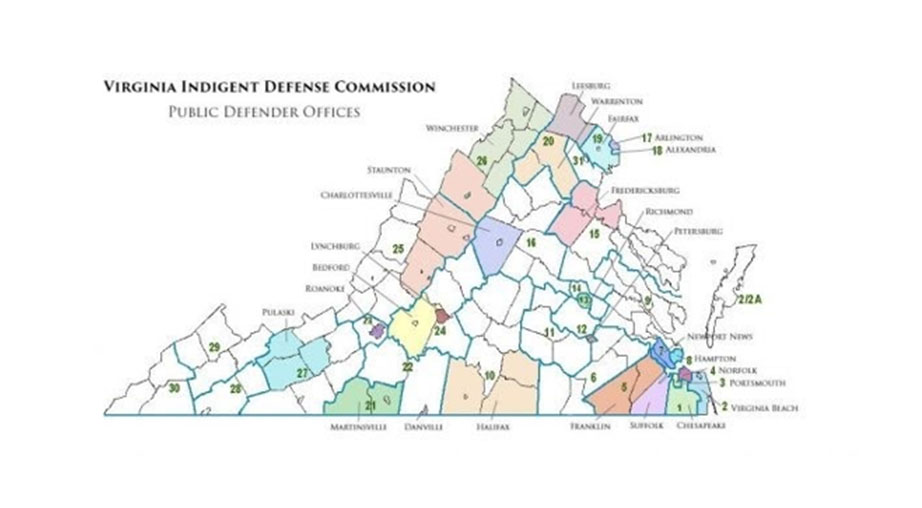
Not every jurisdiction in Virginia has a Public Defender’s Office. The Virginia Indigent Defense Commission has published the following map to show which jurisdiction is served by a Public Defender. 


jurisdictions map, public defenders in virginia


However, the map incorrectly identifies Harrisonburg and Rockingham County as a jurisdiction served by a Public Defender.  Harrisonburg and Rockingham County does not yet have a Public Defender’s Office, but efforts are underway to establish an office in this jurisdiction. Currently, there is a list of more than 15 private lawyers in Harrisonburg who accept way-below-market wages from the court to represent the poor in our community. If a defendant is found guilty, those minimal legal fees are assessed to the defendant as court costs.


REQUESTING A COURT-APPOINTED ATTORNEY IN VIRGINIA


If you believe you need to request a court-appointed attorney, the judge will at your first appearance ask you to complete an affidavit listing your income, your assets, and your liabilities.  

The General Assembly of Virginia has promulgated a table that the judge will consult to determine whether you qualify as “indigent” and, therefore, in need of a court-appointed attorney. 

It is very acceptable and happens on many occasions that a person initially obtains a court-appointed attorney but after meeting with him contacts Cook Attorneys or another private lawyer to inquire about retaining counsel for his case. 

If you are in this situation and choose to hire Cook Attorneys, we can contact your court-appointed attorney to let him know that we will be taking over the case and that he does not need to perform any additional work on the case. 

We will also contact the court to let the clerk and the judge know that we are now representing you and that further correspondence or notifications from the court should be sent to you through us at Cook Attorneys.  


LET US HOST YOU FOR A FREE CRIMINAL DEFENSE CONSULTATION


Whether you have requested a court-appointed attorney or not, our Harrisonburg VA criminal attorneys offer free initial consultations for most criminal defense clients. 

You can learn more about what to expect from our free criminal defense consultations. When you’re looking for the best criminal lawyers in Virginia, it is a good idea to ask around and to shop around prior to hiring an attorney.  

While self-representation is an option, it is often ill-advised because of the complexity of the legal system. It’s just not possible to duplicate the expertise that a criminal defense attorney can bring to your case.


Our team at Cook Attorneys in Harrisonburg hopes to have the opportunity to support you in ensuring the best possible outcome for your case. Please contact us to schedule an appointment today.


Fill out the form below to request more information about how we can serve you. Se habla español. We look forward to hearing from you!

Can the Police Search Your Car? Know Your Rights

Virginia traffic car search


In our recent blog article, “Can Traffic Stops Lead To More Charges?” we discussed the minimal legal standard of “reasonable suspicion” which gives a police officer the authority to require you to stop your motor vehicle for additional investigation of a suspected crime or traffic violation.  

Upon making contact with the occupants of the vehicle, the officer might request permission to search the vehicle or containers within the vehicle.


When can the cops search your car? Should you say yes to this request? What happens if you don’t? Can police search a car that’s not yours? In this article, our lawyers in Harrisonburg, VA will explain more about warrantless vehicle searches and whether you should give the police consent to search your car.


POLICE CAN SEARCH A CAR WITH NO WARRANT IF THEY HAVE PROBABLE CAUSE


Probable cause exists when a person has reasonable grounds to believe certain alleged facts.  One court has defined probable cause this way: “An apparent state of facts found to exist upon reasonable inquiry which would induce a reasonably intelligent and prudent person to believe that the accused has committed the crime charged.”


In United States criminal law, probable cause is the standard by which police authorities have reason to obtain a warrant for the arrest of a suspected criminal or the issuing of a search warrant. It is also the standard by which grand juries issue criminal indictments. 


In the case of a stop of a motor vehicle, police are permitted to search the vehicle for an item of contraband or evidence of a crime—without a warrant—if an officer has probable cause to believe that the item of contraband or evidence is in the vehicle.  

Certainly, if the item is in plain view, the officer can seize the item if he has probable cause to believe the item is contraband. If the item is not in plain view, the officer must be able to articulate probable cause based on facts then known to him before removing occupants and entering the vehicle to search for and seize the item.


The Fourth Amendment of the United States Constitution states: 

“The right of the people to be secure in their persons, houses, papers, and effects, against unreasonable searches and seizures, shall not be violated, and no Warrants shall issue, but upon probable cause, supported by Oath or affirmation, and particularly describing the place to be searched, and the persons or things to be searched.”


A plain reading of the Fourth Amendment seems to require that officers must obtain a warrant before searching a motor vehicle, but the Supreme Court’s expansive Carroll Doctrine permits warrantless searches of motor vehicles (even immobilized vehicles) because the vehicle and its contents could be moved during the time it takes for the officer to obtain a search warrant from a magistrate or a judge.


can police search my car


POLICE CAN SEARCH A CAR WITH NO WARRANT WHEN MAKING AN ARREST


In addition to the Carroll Doctrine permitting officers to search a motor vehicle without a warrant where they possess probable cause that certain items are in the vehicle, they can also search a car when a person is arrested in, near, or having just exited the vehicle.  


At the time of an arrest, an officer can search locations within the arrested person’s “wingspan”; but in the case of a vehicle, that has been interpreted to include the entire interior of the vehicle. It normally does not, however, extend to detached spaces such as the trunk of the car.


POLICE CAN SEARCH A CAR WITH NO WARRANT WHEN CONSENT IS GIVEN


Another situation where police can search a motor vehicle without probable cause is where the owner or driver (or sometimes a passenger) of the vehicle gives consent to search the car.

Should you ever give a police officer permission, also called consent, to search your car? The short answer is NO, but we’ll explain in more detail.

Most individuals mistakenly think that the outcome will be better for them if they cooperate with the officer who is asking to search their vehicle. 


Police officers are trained to request consent to search a car if they have a mere hunch that criminal activity is afoot. Sometimes they just ask to see if consent is granted. The request is just that: a request. 

If you wonder if you can refuse a car search then yes, you can. As discussed previously, without probable cause (which is more than just a hunch or even a reasonable suspicion) they cannot search your car without your consent.


Although officers will never say it directly, they are trained to ask for consent in a way that makes you feel like you must permit them to search. Our clients often tell us that sitting along the side of the road, they felt that if they had refused to consent to a search of their car, that would be tantamount to an admission of some sort of guilt, an admission that the officer could then use to proceed with a search or even an arrest.

However, a refusal to consent to a search—that is, the assertion of your Fourth Amendment rights—does not justify a subsequent search by an officer.


By saying yes to the police officer’s request to search your car, you will have just officially given consent, and therefore given up your 4th Amendment right against unreasonable searches and seizures. 


If you consent to a police officer’s request to search you or your car, then the resulting search is, by default, legal in the eyes of the law. 


Always refuse the request to search your vehicle. 


Think of it this way: if you have no contraband, then to allow the officer to search would be a waste of his time. And if there might be contraband in the car (left there by a friend, for example), then you will be charged with possessing it.


You may think, “If I give consent to search, then I can argue later that my giving consent is evidence that I didn’t know the contraband was present.” It is counterintuitive, but people in knowing possession of contraband regularly give consent to search. It happens all the time.

So, if an officer asks to search your vehicle, be polite and cooperative but refuse the request.


can the police search your car in Virginia


CAN POLICE SEARCH A CAR THAT’S NOT YOURS?

Yes, the police can search the car you are driving, whether or not it belongs to you. They are unlikely to impound it if it belongs to someone else, but they can search it. 


Be careful, though. If the officer finds drugs or other illegal contraband in the car that you are driving, you can still be liable for the charges—even if they are not yours, and even if you did not know they were there. 


If you are in a situation where you are driving someone else’s car, and you are ticketed or arrested for illegal contraband, Cook Attorneys can help. Call us right away if this has happened to you or a loved one.


CAN THE POLICE STILL SEARCH MY CAR IF I SAY NO?

If the police have probable cause as described above, they can proceed with a search of your car notwithstanding your refusal to consent.

However, if you give consent to the police search request, then the question of whether they actually had probable cause is no longer an issue. 

Always exercise your Fourth Amendment right to refuse unreasonable searches and seizures. If you’ve refused consent, your lawyer may be able to argue that the subsequent search and seizure violated the Constitution. Where an officer searches your car without a warrant, the burden to prove that the search was justified is on the prosecution, not the defendant.  


WE CAN DEFEND YOUR RIGHTS

If you or someone you love needs help from a local criminal attorney, contact our attorneys in Harrisonburg, VA for a free criminal defense consultation. 


Fill out the form below to request more information about how we can serve you. We look forward to hearing from you!

Virginia Window Tint Law – What You Need to Know

Window tint in Virginia


Virginia’s law regarding the darkness of tinting on the windows of an automobile is very specific and can result in a traffic ticket and a fine, but more importantly an officer’s suspicion of “excessive window tinting” can justify a traffic stop to allow him to pry further in search of other criminal offenses.  We have seen many clients pulled over so that the officer can check the degree of window tinting who end up charged with felony offenses for drug possession and distribution, firearms offenses, and driving under the influence of drugs or alcohol. 


At Cook Attorneys, our attorneys in Harrisonburg VA bring their extensive experience as criminal defense and traffic defense lawyers to our clients who have received moving violations in Virginia, including defending clients who have been ticketed in VA for tinted automobile windows. 


CAN YOU GET PULLED OVER FOR TINTED WINDOWS IN VIRGINIA?


If a police officer in Virginia suspects that an automobile’s windows are tinted more darkly than permitted by law, then they can use this for grounds to pull you over and issue a ticket.  The law against darkly tinted windows is supposedly to ensure that the driver can safely see out, but it’s more likely a law enacted so that police officers can see into a vehicle.


WHAT IS THE LAW REGARDING TINTED WINDOWS IN VIRGINIA?


The Virginia General Assembly enacted the “Virginia Tint Law” in the year 1999 which sets limits on the degree to which various windows on an automobile can be darkened through tinting. 

This degree is measured by the percentage of light that can shine through the film and therefore the window. This measurement of the darkness of tint is measured by VLT%: Visible Light Transmission Percentage.


In Virginia, there are different rules for the allowable window tinting on multi-passenger vehicles (such as SUV cars and vans) versus standard automobiles. 


WHAT ARE THE ALLOWABLE PERCENTAGE LEVELS OF TINTED WINDOWS? 


Tinted car window example


  • Allowable VLT% for Standard Automobiles:
    • Windshield Tint: Virginia does not allow for any tint on the front windshield except for above the manufacturer’s AS-1 line. Above the AS-1 line, there is no restriction on tinting levels: any percentage is allowed.
    • Front Side Windows Tint: Maximum allowable tint is 50%.
    • Back Side Windows Tint: Maximum allowable tint is 35%.
    • Rear Window Tint: Maximum allowable tint is 35%.


Traffic defense for tinted window violation


  • Allowable VLT% for Multi-Passenger Vehicles:
    • Windshield Tint: Virginia does not allow for any tint on the front windshield except for above the manufacturer’s AS-1 line. Above the AS-1 line, there is no restriction on tinting levels: any percentage is allowed. 
    • Front Side Windows Tint: Maximum allowable tint is 35%.
    • Back Side Windows Tint: There are no restrictions on how dark you can make the tint on the back windows of multi-passenger vehicles
    • Rear Window Tint: There are no restrictions on how dark you can make the tint on the back windows of multi-passenger vehicles

HOW REFLECTIVE CAN THE TINT BE IN VIRGINIA?


The “Virginia Tint Law” also limits the amount of tint reflection allowed on automobile windows.  Here are the limits:

  • Allowable Tint Reflection for Standard Automobiles: 
    • Front Side Windows: Not allowed to be more than 20% reflective. 
    • Back Side Windows: Not allowed to be more than 20% reflective.
  • Allowable Tint Reflection for Multi-Passenger Vehicles:
    • Front Side windows: Not allowed to be more than 20% reflective. 
    • Back Side windows: Not allowed to be more than 20% reflective.


ARE THERE OTHER LAWS RELATED TO WINDOW TINTING?


In addition to adhering to the law by knowing what is the darkest legal tint in Virginia, you should also be aware of the following additional rules and regulations related to window tinting: 

  • In cases where tinted windows are needed for medical reasons, the State of Virginia can make an exemption when a medical waiver is obtained from a doctor.
  • If a vehicle’s back window is tinted, then dual side mirrors are required.
  • Window tints in the following colors are not allowed:
    • Amber
    • Red
    • Yellow
  • Unlike in some states where window film manufacturers are required to certify the film they sell, this is not required in Virginia.


REASONS FOR TINTING WINDOWS?


Given the many restrictions on tinted windows in the State of Virginia, why go to the trouble? There are many reasons and even many benefits: 

  • Reduce Glare
    Window tinting can reduce or stop glare, thereby improving driver vision and safety, especially for individuals with sensitive eyes.
  • Protect Vehicle Interior
    Window tinting can prevent damaging UV light from entering your vehicle and fading or drying out your interior and upholstery.
  • Hide Valuables
    Tinted windows prevent would-be thieves from identifying items of value within your car and thereby preventing break-ins
  • Style
    Darkened windows can enhance the sophistication and luxury feel of a car.
  • Skin Protection
    Window tint can block up to 99% of damaging UV rays which would otherwise have direct contact with your skin.
  • Climate Control & Energy Efficiency
    Tinted window film can reduce your vehicle’s interior temperature by as much as 60%. This thereby reduces your need to use the air conditioning as frequently, which will save on fuel efficiency.


SCHEDULE A FREE TRAFFIC DEFENSE CONSULTATION WITH COOK ATTORNEYS


We can help you to achieve the best possible outcome for your case. If you received a ticket for tinted windows in Virginia, you are in need of local lawyers that handle traffic tickets. 


We invite you to contact us to schedule a free traffic defense consultation. Most consultations only require fifteen minutes, so what do you have to lose? Se habla español. Fill out the form below to request more information about how we can serve you. We look forward to hearing from you!

Experienced Attorneys for College and University Students

Find a student defense attorney


A criminal arrest before graduation can wreak havoc on a student’s future if not represented by  the right lawyer. So what should you do if you are a college-aged student and are arrested in Harrisonburg, VA or the surrounding area? What should you do if your son or daughter is a student away from home and needs the help of an experienced attorney for students in Harrisonburg?  We have helped many young people who have been accused of drug crimes, alcohol violations and other criminal offenses to minimize the consequences of mistakes they might have made.


Criminal charges against young adults create an extremely stressful experience for the entire family. We have extensive experience representing students from James Madison University, Bridgewater College, Eastern Mennonite University, Blue Ridge Community College other local schools. We can help you to achieve the best possible outcome when facing a criminal charge. 


HOW ARE LEGAL CONSEQUENCES DIFFERENT FOR STUDENTS?

Legal consequences for students can be more serious than for non-students. In addition to the fines, probation conditions and potential jail time that anyone facing a criminal charge will face, college and university students have to further worry about the penalties they may face from their academic institution, financial aid or scholarship providers as well as future employers. 


Students who have been arrested, whether on or off campus, may additionally be held accountable not only for their criminal violation, but for violations of their college or university’s student code of conduct rules. In these cases, students must appear before their school’s judicial board such. An example is the James Madison University’s Office of Student Accountability & Restorative Practices.


SUSPENSION OR EXPULSION FROM COLLEGE OR UNIVERSITY


Alt tag: local student defense lawyers


If a student is found guilty of violating their school’s code of conduct rules, potential penalties can include disciplinary probation, suspension or even expulsion depending on the severity of the infraction. The school may also require the student to undergo mandatory counseling or to provide community service. Again, this is regardless of whether the incident took place on or off the college or university’s campus. And how does the school learn of the arrest? Local police will often inform campus police when a student is arrested, and schools often monitor the local court dockets for charges against their students.


POTENTIAL LOSS OF SCHOLARSHIPS OR FEDERAL AID 


Students who are convicted of criminal charges while attending college or university, or who have violated their school’s code of conduct in other significant ways, can lose their eligibility for federal aid, financial aid and scholarship programs.


If you’re currently receiving federal aid and are given a federal or state drug conviction during the academic school year, not only can the aid be suspended, but you may be liable for refunding any federal aid you already received during the current loan period during which the conviction occurred.


Students convicted of drug charges who have had their financial aid suspended can sometimes become re-eligible for federal aid by completing an approved drug rehabilitation program and passing a drug test from an approved facility.  


Individuals who have been convicted of certain sexual offenses make them ineligible for a Federal Pell Grant.


CRIMINAL CHARGES AND SUSPENSIONS APPEAR ON YOUR RECORDS


lawyers that defend college students

A criminal arrest, regardless if you were convicted, can remain on your permanent record. Individuals who have been arrested, even for minor crimes such as walking in public with an open beer can while a student, may have a more challenging time finding employment. This is because many employers run background checks when evaluating a candidate for potential employment, and the results of the candidate’s criminal record might be discovered.  In a job market that’s already over-saturated, having a criminal arrest on your record can impact your immediate and long-term future.


Also, if you are consequently suspended from your college or university following a criminal charge, your school suspension will remain on your academic record, which can make it more difficult to be admitted to other schools in the future.


EXPUNGEMENT OF YOUR PERMANENT RECORD


It’s sometimes possible to have an arrest record cleared, which is a process called expungement. 


Unlike many other US states where a criminal record may be able to be expunged even in cases where the defendant was found guilty, the official policy here in Virginia is that expungement is available only to persons are found to be innocent of a crime or granted an absolute pardon. However, depending on how the court paperwork was processed, even if you were not totally innocent, our experienced expungement attorneys in Virginia at Cook Attorneys may be in a position to help.  It is good to have knowledgeable and experienced lawyers to represent you in the first place so that we may be able to set the case up properly for the possibility of expungement.   


WE CAN  HELP YOU GET BACK ON TRACK


Here at Cook Attorneys, we’re in the business of helping good people overcome bad situations. We understand how isolated incidents can have a devastating impact on a student’s future. We can help you get back on track with effective local representation from our experienced Harrisonburg lawyers for students. And if you’re an out-of-state parent of a student enrolled in a college or university in the Harrisonburg area, don’t worry. We are here to support you and your son or daughter. 


Contact us for a free criminal defense consultation for college students or fill out the form below to request more information about how we can serve you. We look forward to hearing from you!

What to Expect During the Process of a Trial?

criminal defense lawyers Virginia


As criminal defense lawyers in Harrisonburg, VA, our team at Cook Attorneys tries cases for those in our community who need legal defense. However, until the time comes when someone needs lawyers that handle traffic tickets, DUI lawyers in Harrisonburg, VA, or other legal representation, most individuals are unaware of what happens during a trial.


THE KEY PLAYERS IN A TRIAL

criminal defense attorneys


In our legal system, a trial between adversaries is believed to be the path to truth and justice. In a criminal case, a trial determines whether the accused is guilty or not guilty. Every defendant is presumed to be innocent until he is proven guilty. 


Criminal cases are officially brought to court by the government. The lawyer who represents the government in the trial is known as a prosecutor. The role of the prosecutor is to present evidence sufficient to prove the guilt of the person or business accused of the crime. The prosecutor holds the responsibility of proving the defendant’s guilt beyond a reasonable doubt. Conversely, the defendant is not required to prove his innocence. If the prosecutor is unable to prove the guilt of the defendant beyond a reasonable doubt, the accused will be found not guilty.


The attorney who represents the accused is the defense attorney. While those who cannot afford an attorney are assigned a defense attorney by the court, many defendants choose to retain (hire) an attorney to defend them against the charges brought by the prosecutor.


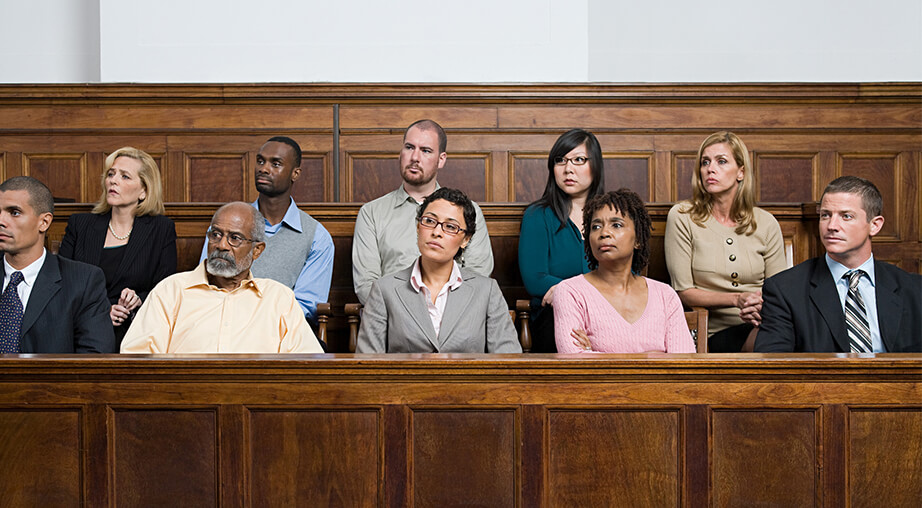
Criminal trials in the General District Court and the Juvenile and Domestic Relations Court are bench trials; that is, the case is decided by a judge. In the Circuit Court, the case may be tried as a bench trial or as a jury trial. In a jury trial members of the community decide whether the accused is guilty. Virginia is one of the few states where the jury also makes a recommendation regarding the sentence. In most states and in federal court, the judge, not the jury, determines the sentence. 


THE TRIAL

Opening statements are given by one or both sides by the prosecution and/or defense. These statements sometimes provide an overview of the case and summarize the evidence and sometimes alert the judge or the jury to the important issues they need to watch for during the trial.


Because the burden of proof rests on the prosecution, they are given the first opportunity to present evidence, usually the testimony of witnesses and the presentation of physical evidence. The defense is given the opportunity to present evidence, but in a criminal case, there is no requirement that evidence is presented, and that the defendant did not present evidence cannot be held against the defendant.


After the presentation of closing statements by both the prosecution and the defense, the judge or the jury will be given the opportunity to consider all the evidence and the law of the case before rendering a verdict.


If the defendant is found guilty of the charges, the judge or the jury will consider additional evidence — such as the defendant’s prior record, evidence of the defendant’s character, or victim impact evidence — before announcing the sentence. Of course, if the person is found not guilty, then he is free to go.


Do you need a lawyer Harrisonburg VA? We offer free criminal case consultations and provide traffic defense consultations by phone. Se habla español.

If you’re ready to get started, please fill out the form below to request more information about how we can serve you. We look forward to hearing from you!