Hearsay – Can it be used in court?


“Objection! Hearsay!” is a common phrase in court cases. You have probably seen on TV shows or heard on televised criminal cases that a lawyer can object based on “hearsay.” 


But what does that mean? Can a witness never say what they overheard? Are there hearsay exceptions? How does that apply to documents or other physical evidence? We have those answers and more in this blog post!


Can hearsay be used in court?

In court, the judge, jury, and attorneys follow the rules of evidence. These rules outline what can and cannot be considered admissible evidence in court. 

Generally speaking, hearsay should not be admitted as evidence.  But the first thing to understand is this: if a witness testifies to hearsay and no one objects, it comes in and can be considered.  So, if a witness is testifying to hearsay, someone needs to object!
 

Hearsay used in court


What is considered hearsay?

In Virginia, hearsay is an out-of-court statement offered in evidence to prove the truth of the matter asserted.  Hearsay is a statement that cannot be cross-examined. However, there are many exceptions to the hearsay rule, allowing out of court statements that tend to be reliable.  For example, business records created in the ordinary course of running a business or excited utterances made in the heat of a stressful situation.


It is important to note that hearsay is, however, a good enough reason to call the police. If your neighbor told you that they committed a crime or that a crime was committed against them, you are allowed to call the police to investigate. The hearsay rule only applies once the case is in court before a judge; only reliable, direct evidence should be considered in determining the facts of a case.


Are there exceptions to the hearsay rule?

Hearsay is a tricky matter, especially when it involves family law or physical evidence. As with almost anything, there are exceptions. Here are a few of them:


Business or legal documents

Documents (tax returns, receipts, legal forms, etc.) that can be produced are not considered hearsay, even if the witness on the stand says, “I read it on a tax return” or something similar.


The statement of a defendant

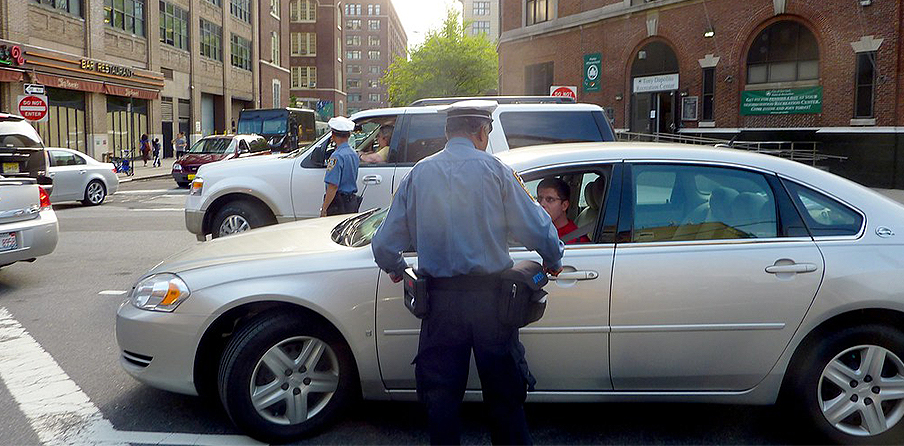
If a cop pulls you over, and you say, “Oh man, I didn’t even see that stop sign until it was too late,” the cop can testify in court that you admitted to your own guilt. (The scenario does not have to be a cop witnessing your admission of guilt; the principle applies no matter who the other party is.)


There are other exceptions, and an experienced attorney can help you navigate all the nuances and legal loopholes. If you have questions about whether or not your testimony would be hearsay, call Cook Attorneys today.


What is the difference between hearsay and eyewitness testimony?

Eyewitness testimony is when you witness a crime being committed. For instance, if you see your neighbor entering your house without permission and running out with your laptop, that is eyewitness testimony.


But if your friend says, “Oh, I saw your neighbor go into your house and come out with your laptop,” that is hearsay from you—even if your laptop is actually missing. 


One interesting fact is that police reports are considered hearsay, not eyewitness testimony, because usually the police report documents everything that everyone else said. However, a police officer may be called to testify if he witnessed the crime or heard someone confess to the crime. 


When should I call an attorney?

Because hearsay can be convoluted, we recommend calling an attorney for a free consultation. Cook Attorneys offers free consultations on most criminal cases, and we can sit down with you—in person or over the phone—to talk about whether hearsay is a significant factor in your case, and how to proceed. 


Contact us today to discuss the details of your case, or the case of your loved one.

Process for becoming a naturalized citizen


Naturalization is the process by which a person not born in the United States can become a citizen. It can be confusing and emotionally-charged for the people—and their loved ones—who are going through the process. 


Cook Attorneys has decades of experience with immigration and naturalization. In this post, we walk you step by step through the process of how to become a naturalized citizen. We’ll also answer some frequently asked questions.


Application process:

File the paperwork

The application for naturalization is called the N-400. It is extensive and detailed. You can file it via paper or via the United States immigration website. 


If your application is not approved, you may have to start over—including paying the fees all over again. It is a good idea to get an experienced attorney to help you from the beginning, to make sure every question is answered correctly.


If your application has already been denied, please do not hesitate to call Cook Attorneys and set up an immigration consultation. Cook Attorneys are experienced in immigration and can help you or your loved one through this complicated process.


Get your fingerprints taken

After you file your application, you will need to get your fingerprints taken at a the USCIS office in Northern Virginia. Some people, such as individuals over 75 years old and some military personnel, can skip this step.


Do the Interview

When your paperwork is approved, you will receive a date, time, and location for your immigration interview. They will ask you questions about things like how long you have lived here, why you moved here, and who you know in the United States.  They will also ask questions to make sure you have a basic understanding of our government and how it works.


For more information about what to expect and how to prepare for the interview, see this blog post.


Take the Oath of Allegiance

After the interview, you will find out if you have been approved to take the Oath of Allegiance. This means you have been approved, and the only remaining step is to show up to the ceremony. You will find out by mail when and where the ceremony will be held. Once it is complete, you will receive a certificate showing that you are a United States citizen!


naturalized citizen


How much does naturalization cost?

Naturalization and all immigration services cost money. The application is $640, the fingerprints (if applicable) are $85, and there may be legal fees in addition to that.


Contact Cook Attorneys today to ask about the reasonable, competitive attorney fees. Spending some money up front on an attorney could save you thousands in re-filing, appealing, traveling between countries to comply with guidelines, etc.


How long does it take to become a naturalized citizen?

Generally speaking, from start to finish, the process takes 6-12 months. This is if there are no denials, appeals, or rescheduled interviews, etc. A lawyer can help you make sure it will take only that long, and not be dragged out unnecessarily because of paperwork that was not filed correctly.


How can I appeal a decision?

If you receive a denial letter, either after your application or after your interview, there will be appeal instructions on the letter. It is very important to read it closely, as most appeals must be completed within 30 days. 


Denial letters can be scary, but sometimes they are not as complicated as they look at first glance. Cook Attorneys can schedule you for an immigration consultation right away, so your appeal will be handled quickly and smoothly. Sometimes re-filing is more appropriate than appealing; a lawyer can help you determine which would be better.


What are the benefits of naturalization?

Once you become a naturalized citizen, you will enjoy the following privileges:

  • Voting rights
  • Ability to sponsor family members
  • Automatic citizenship for your children born later (even if they are not born in the United States)
  • No more possibility of deportation
  • Ability to run for public office
  • And—probably best of all—no more immigration forms or fees!


Additionally, you will be able to get a U.S. Passport, which allows you into almost 200 countries visa-free. It also allows you to go to any U.S. Embassy or Consulate when you are abroad, to seek asylum or passport assistance.


How can an attorney help?

An experienced attorney is crucial to a smooth naturalization process. Our attorneys and staff at Cook Attorneys have many years of experience helping people immigrate to the United States and become citizens. They can help every step of the way—from initial consultation, to application filing, to understanding letters you receive from the United States government. 

An attorney can save you time, money, and headache by getting everything right the first time. Call Cook Attorneys today to schedule your immigration consultation.

Public Intoxication laws VA


Can you drink in public? Yes, you can drink in places like restaurants that serve alcohol. But the Commonwealth of Virginia, like most states, has public Intoxication laws, placing restrictions on being drunk or high in public. 


“Intoxicated” means that your actions are inhibited by alcohol or drugs. If you are intoxicated in public, you could be arrested and taken to jail until you sober up.. 


Keep reading because in this post, we will break down the law for you and explain what defenses can be used if you or a loved one face this charge.


What is the law on public intoxication?

Virginia law states that if you are arrested for public drunkenness, you can be charged with a Class 4 Misdemeanor. A Class 4 Misdemeanor means that you can be fined up to $250, and you cannot be sentenced to jail for this charge.


With a public intoxication charge, the burden of proof is on the police officer who arrests or cites you. In other words, it is up to him or her to prove two things: 

  1. You were drunk/intoxicated.
  2. You were in public.


The officer can prove the first point (intoxication) in two ways:

  1. Witnessing you behaving drunkenly (slurred speech, loss of control of movement, etc.)
  2. Administering a field sobriety test—keep reading to find out more about this.
  3. Recounting your admission that you are intoxicated or have had too much to drink.


As far as proving the second point (in public), the officer just has to prove that you could be witnessed by other people publicly. So you could be on private property (such as your own front yard)—and if you are drunk, then you can be charged. Other places considered public are restaurants, businesses, and streets/sidewalks. 


There is some gray area as to whether some places are considered “public”—for instance, hotel hallways, college dorms, and parked cars. Cook Attorneys can help you navigate the specifics of this, as well as fight charges on your behalf.

What is Public Intoxication

What Else Should I Know?

Detoxification Center

According to Virginia law, the officer who arrests you can opt to have you taken to a detox center instead of the police station. However, you cannot be detained at such a facility against your will. You can still be charged with a misdemeanor.


Disorderly Conduct

In addition to public intoxication, you can be charged with disorderly conduct. Disorderly conduct is a Class 1 Misdemeanor, which means you could be fined up to $2,500 and/or placed in jail for up to 1 year. You do not have to be drunk to be charged with disorderly conduct. Many times, the charges go together, so be sure to contact Cook Attorneys if you have any questions about this or any other charge.


Field Sobriety Test

If the officer suspects you of being intoxicated by drugs or alcohol, he or she may have you perform a field sobriety test. Here are a couple of common questions about field sobriety tests:

What is a sobriety test? This may include asking you to stand on one leg, walk a straight line, follow a moving object with your eyes, etc. It does not have to be a “breathalyzer” test.


Can you refuse a field sobriety test? Yes, you are free to decline these tests and cannot be charged for refusing to do them. However, you can still be arrested and taken into the station where you would have to submit to a breath test.


Once you are arrested and transported to the jail or police station, the officer may ask you to take a breath test. This test can be used to prove that you were intoxicated; there is no penalty for refusing this test if you haven’t been driving. 

How Can an Attorney Help?

An attorney can help you challenge the charge of public intoxication by requiring the police officer to prove that you were a) intoxicated and b) in public. If no sobriety test was performed, and the officer simply observed erratic behavior, the charge may not stick. 


Similarly, if your attorney can make the case that you were not in public, that may end up being a good defense.


If you believe that you or a loved one have been wrongfully charged with public intoxication or disorderly conduct, contact Cook Attorneys today. Cook Attorneys are experienced in the best defenses against these charges, and we can save you time, money, headache, and hassle by helping you fight them in court.


Schedule a free consultation with a lawyer who will be on your team from start to finish.

Out-Of-State Traffic Tickets


Can a Virginia Traffic Ticket Affect A License In Another State?

The consequences of traffic violations vary state-by-state in the US, but that doesn’t mean the states aren’t coordinated in their effort to monitor traffic tickets. If you’re issued a traffic ticket in Virginia and your driver’s license is from another state, you may be subject to penalties from both states. Therefore, it’s essential that if you’re ticketed, you familiarize yourself with the policies in your home state as well as in the state where you’ve received a traffic citation. The consequences of reckless driving in VA are particularly serious and are best handled by lawyers who handle traffic tickets. This article will help to provide you with more information about Virginia speeding tickets out of state. 

Reckless Driving misdemeanor


How states share driver information

More than 50 years ago in the 1960s, the Driver’s License Compact was formed to enable and encourage states to share driver information. Today, all states keep information on your license and vehicle in nationally-linked databases such as the National Driver Register and the Driver License Compact.

Once the state of Virginia reports your VA traffic violation to your home state, it will depend on your home state’s policies whether it gets added to your home state driving record. Immediately following receipt of a VA traffic ticket, we recommend you consult with a traffic attorney in your home state who is familiar with your local DMV’s procedures and can advise you on the pros and cons of fighting the ticket in Virginia versus prepaying the ticket.


Virginia speeding tickets VS other states’ laws

Since every state has its laws, you should be familiar with your own state’s rules and regulations about traffic violations, speeding tickets, and “point systems” (whether or not they have demerits and safe driving points like Virginia does).

Most states do not have as strict speeding laws as the Commonwealth of Virginia. If you live in some states, you may be used to driving 15+ miles over the speed limit, or you may be used to an 85 mph speed limit on highways. Now, is reckless driving a misdemeanor? Yes, it can be, and in Virginia, going 85 mph on the highway is considered reckless driving. While in other states it would still just be a speeding ticket.

To find out your state’s traffic rules and regulations, check out this helpful article on State Traffic Laws written by FindLaw.


WHAT IF YOU RECEIVE AN OUT-OF-STATE TRAFFIC TICKET IN VA?

Many out-of-state drivers are alarmed to learn that on the interstate in Virginia (which has some of the strictest traffic laws in the country), a speeding violation for traveling a mere 20 miles per hour over the speed limit (or above 85 mph) can result in a reckless driving charge and a license suspension in your home state. 

In VA, reckless driving and driving on a suspended license are both classified as misdemeanor crimes. We strongly advise you to talk to an attorney about contesting these charges.


CAN A LAWYER IN VIRGINIA GO TO COURT ON YOUR BEHALF FOR YOUR OUT-OF-STATE TRAFFIC TICKET?

The short answer is, yes. If you are not able or willing to come back to Virginia for your court date, you are allowed to hire a lawyer to do so. This option can save you time and money! Some exceptions apply, so consult a lawyer for details.

This would only be necessary if you plan to contest the ticket. Another option is to pay for the ticket online. A Virginia lawyer would be aware of other options available to you, so it would be worth talking to a lawyer if you believe you can get the ticket off your record.

Virginia Traffic Ticket


POINTS ON DRIVER’S LICENSE AND CAR INSURANCE FOR OUT-OF-STATE SPEEDING TICKET

As we said earlier, Virginia does report traffic and moving violations to the national database. It is up to your state whether or not that violation goes on your record in your home state. 

However, if you do not pay for your ticket, or if you accrue too many tickets in Virginia in a short amount of time, your right to drive in Virginia may be revoked (even if it is not revoked in other states). 


OUR HARRISONBURG, VIRGINIA TRAFFIC TICKET LAWYERS CAN HELP YOUR CASE 

If you live out of the area and have been issued a moving violation on Interstate 81 in the Shenandoah Valley, our Harrisonburg VA traffic attorneys at Cook Attorneys can offer you a free traffic defense consultation by telephone. It may be able to appear in your place on the court date. In most situations, you will not need to return to Virginia to contest your ticket. Most initial consultations regarding traffic cases take less than twenty minutes. Let us reduce your worry and free up your time. 

Open Container Law in VA- Most Updated


What is the open container law in the Commonwealth of Virginia? What are the potential penalties for an open container violation? What should you do if you get an open container violation on your record? In this blog post, we will be covering the most-updated information regarding Virginia’s open container law. Read along for more information. 


Open Container Law Virginia

In the state of Virginia, there is not an open container law; technically, there is no law or code directly prohibiting open containers in motor vehicles in the Commonwealth of Virginia. With that said, there are still serious considerations one must make in regards to the open alcoholic containers inside a motor vehicle. 


According to Virginia law code, it is illegal to consume alcohol while driving a motor vehicle on any public road. In that, a violation of this law can be assessed if a “rebuttable presumption” can be made that the driver was consuming an alcoholic beverage. This presumption can be made if an open container is found in the passenger area of the vehicle, if the alcohol in the open container is partially removed, and the driver exhibits signs that he or she may have been drinking. If you have questions or are found in violation of this law, contact us immediately for a free consultation, and we can help you.


Under this definition, the passenger area includes any area in reach of the driver and any area designated for passengers to sit, including an unlocked glove compartment. It does not include the trunk or the area behind the last upright seat in any motor vehicle. So, if a passenger in your car has an open container, although it is not technically illegal, a police officer can make a rebuttable presumption that you were driving a motor vehicle while consuming alcohol if you are exhibiting any signs of drunkenness. If you are unsure what constitutes consuming alcohol while driving a motor vehicle, see this blog post. 


What is considered an open container?

According to Virginia law code, an open container “means any vessel containing an alcoholic beverage, except the originally sealed manufacturer’s container”. If the original seal is broken in any way on an alcoholic beverage, it is to be considered an open container. 

open container law va

Is Open Container a Criminal Offense?


If a police officer pulls you over with an open container in your car, what criminal charges could you be facing? 

In short, having an open container of alcohol in and of itself in your car is not a criminal offense; it is when an open container is in the passenger area of the motor vehicle, the alcohol in the open container is partially removed, and the driver is found to be exhibiting symptoms of consuming alcohol that having an open container in a motor vehicle becomes a criminal offense. 

In this instance, the criminal offense is driving while operating a motor vehicle. Drinking while operating a motor vehicle is a class IV misdemeanor, which constitutes a maximum fine of $250 and no jail time. If you are found to be driving under the influence (DUI)  in addition to drinking while operating a motor vehicle, the penalties can vary depending on your DUI history; if it is your first offense, it is regarded as a Class I misdemeanor, which carries a mandatory minimum fine of $250 and a maximum fine of $2,500. 

If you or a loved one is facing criminal charges for drinking while operating a motor vehicle – or if you simply have questions about the law—call Cook Attorneys today. We’d love to speak with you!

how to get open container off record

What Does It Mean to Yield the Right of Way and More!


What are traffic yielding laws in Virginia? What does it mean to yield the right of way, and what are the potential penalties for failing to yield? If you have received a failed to yield ticket, you may have questions and need an attorney to look at your ticket with you. The term, “yield the right of way,” simply means to allow other vehicles, pedestrians, or bicycles to move or pass in front of you. Violations and punishments may vary, and Cook Attorneys are here to help if you have received a ticket for failing to yield.

What does it mean to yield the right of way?

What does it mean to yield the right of way?

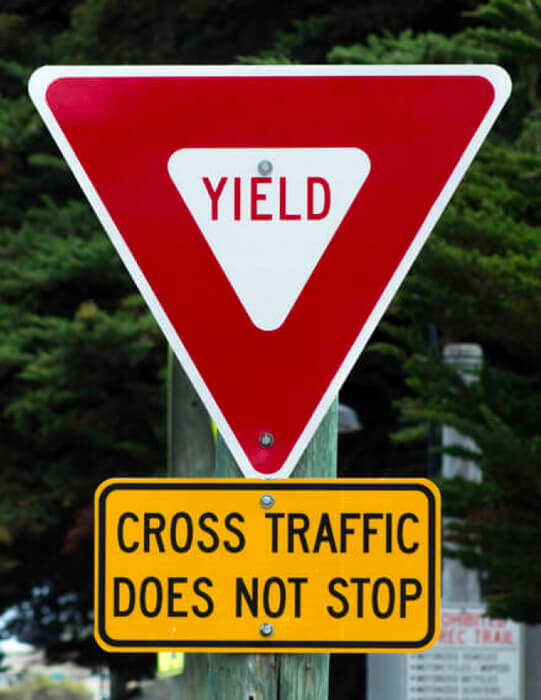
In the Commonwealth of Virginia and all other US states, to yield the right of way is to allow another vehicle, pedestrian, bike, or other transportation means to pass before you. Yielding the right of way applies mostly at intersections or highway entrance ramps and will often be clearly marked with a yield sign. 

A failure to yield is a form of reckless driving and is thus a Class 1 Misdemeanor. According to Virginia law code, failure to yield violations can occur when someone fails to:

1. Does not bring his/her vehicle to a stop before entering the highway where there is traffic approaching on highway within 500 feet of the entrance

Or 
2. When a yield right-of-way sign is posted, a person fails to yield the right-of-way to a vehicle approaching on the highway from either direction.

In order to charge an individual with reckless driving for failure to yield, the state must prove one of these above situations. Oftentimes, reckless driving charges will be assessed for a failure to yield resulting in an accident and can become a point of great dispute if civil action is taken. If you receive a reckless driving charge for a failure to yield resulting in an accident, we highly recommend hiring an experienced legal counsel to assist in potential litigation. 


How much is a failed-to-yield ticket? 

Because a failure to yield is a form of reckless driving, it is considered a Class 1 misdemeanor in the state of Virginia. In Virginia, the potential penalties for this infraction are confinement in jail for up to 12 months and a fine of up to $2500. Moreover, reckless driving is a crime and will remain on your permanent criminal record and can result in up to 4 DMV demerit points. 

Often, you can take drivers training courses to get the demerit points off your record. For more on demerit points, see our blog post about driving record and point assessment in Virginia.

If you are concerned that the charge is inaccurate, you want to avoid points on your license, or you simply need a lawyer’s set of eyes on the ticket, feel free to contact Cook Attorneys at any time for quick and helpful lawyer advice. We offer free consultations on traffic cases.


The Bottom Line

If your ticket requires that you appear in court, or if you decide to challenge it in court, Cook Attorneys can appear for you so that you may not have to take off work. We may also be able to keep you from having to return to Virginia if you live out of state. 

We will talk to you ahead of time about what we will ask the judge for, and then we will let you know right away what the judge said—as well as what (if anything) you owe for your ticket or court fees. 

If this sounds appealing to you, don’t hesitate to call today for a free consultation! Cook Attorneys has been serving Harrisonburg and all surrounding counties in Virginia for over two decades, and we would love to help you.

Illegal Street Racing – What You Need to Know 2022


Street racing is illegal in the Commonwealth of Virginia. But where is it illegal? What are the penalties? Can you go to jail for street racing? And what do you do if you have been charged with this moving violation? That is what we’re covering in this blog post, so read along for all the answers.


Virginia Street Racing Rules

Virginia law § 46.2-865 states that “Any person who engages in a race between two or more motor vehicles on the highways in the Commonwealth or on any driveway or premises of a church, school, recreational facility, or business property open to the public in the Commonwealth shall be guilty of reckless driving, unless authorized by the owner of the property or his agent.”


In Virginia, “highway” means any road you can drive on that is open to public use. The law is basically stating that street racing (or drag racing) is considered reckless driving. The exception is if the road is on private property, and you have permission of the owner to race there.


Reckless driving is one of the most serious moving violations you can get in Virginia, and street racing has the added penalty of license suspension on top of that. You could also potentially lose your vehicle, but more on that later in this post.

is street racing a felony


Is Street Racing a Felony?

Street racing by itself is not a felony; it is a Class 1 Misdemeanor. However, if you are endangering people or property, or if you injure someone, it can be prosecuted as a Class 6 Felony. 


Additionally, if you end up killing an innocent bystander as a result of street racing, the charge could be vehicular manslaughter, which is a Class 5 Felony in the Commonwealth of Virginia. 


Penalties for Street Racing

Let’s break down the things that happen when you are charged with street racing. First, you will be charged with reckless driving. That charge comes with up to $2,500 in fines and up to 12 months in jail. You will also get 6 demerit points on your license for 11 years. 

For more on demerit point assessment in Virginia, see our blog post here.


Second, you will have your license suspended for 6 to 24 months. The judge decides how long the suspension is, and there is no way out of this if you are convicted. The Commonwealth of Virginia takes street racing very seriously.


Additionally, if someone was injured or if you were driving in a manner that could have injured someone, you could end up with a Class 6 Felony, which is punished by up to 5 years in prison. You could also have your license suspended for 12 to 36 months.  If the injured party dies, that prison sentence moves to a maximum of 20 years with a mandatory minimum of one year.


Finally, your car could be confiscated. If you arranged for your car to be in an illegal street race, were in the car at the time of the street race, or are convicted of street racing that is “so gross, wanton and culpable as to show a reckless disregard for human life,” (see § 46.2-865.1) then your car could be seized. The state will dispose of your car at auction, and you will not get the money for it.

what happens if you get caught street racing


What Happens if You Get Caught Street Racing

Cook Attorneys defends drivers charged with illegal street racing. Contact us immediately for a free consultation, and we can help you.


To be convicted for street racing, the police officer who gave you the ticket must prove beyond a reasonable doubt that you were street racing. If you admitted to it when you got the ticket, that is admission of guilt. Many officers will say, “Why are you street racing?” or something like that to get you to admit to it. 


While it is true that racing can include a spontaneous unplanned dash between two cars from a stop light – not just an organized drag race, two cars driving side by side fast may be guilty of speeding, not racing.  Cook Attorneys can help you decide whether it is worth fighting the charge in court.


Whether or not you decide to fight the ticket, it is a good idea to have an attorney present with you in court. A good attorney can make the case for why you should not be convicted, but in the event you are convicted, your attorney can negotiate the lowest possible consequences. 


If you or a loved one have been charged with street racing—or if you simply have questions about the law—call Cook Attorneys today. We’d love to speak with you!

How Much is a Ticket for Following Too Closely in VA – And Other FAQs


Can you get a ticket for “following too closely”? How do the police determine how close you were following? Can you pay the ticket, or do you have to show up in court? Is following too closely a moving violation? How do you fight a following too closely ticket?

Read along to find out all you need to know about the following too closely Virginia law.

va code following too closely


The Basic of the “Following Too Closely” Law Virginia

Following too closely is considered a moving violation, and you can get a ticket for it in the Commonwealth of Virginia. The VA code “Following too closely” states, 


The driver of a motor vehicle shall not follow another vehicle, trailer, or semitrailer more closely than is reasonable and prudent, having due regard to the speed of both vehicles and the traffic on, and conditions of, the highway at the time.


Most commonly, this ticket is issued after an accident to the car who has rear-ended another vehicle. The police may or may not have witnessed the accident; the officer simply issues it based on what he or she can see of the aftermath.


How much is a ticket for following too closely? 

Usually, it is $30, and you can pay it online. You will get 4 demerit points on your license, and paying it is an admission of guilt. But if you are not concerned about either of those things, you can certainly pay the $30 online and be done with it.


However, it is possible that you cannot afford the demerit points, or you are wary of admitting guilt if you consider yourself to be innocent. (For more on DMV demerit points in Virginia, see our blog post here.)


If you have a Commercial Driver’s License (CDL), this particular violation is considered a Serious Violation. If you get two or more Serious Violations in a 3-year period, your license will be suspended for 60 days, regardless of whether you were driving a commercial vehicle or not. If you get three or more Serious Violations in a 3-year period, your license will be suspended for 90 days.


Should you choose to fight the following too closely ticket in court (more on how to do that later), you could end up having the charges dismissed. Or, on the other hand, you could end up with the judge finding you guilty and fining you more than the $30; judges are allowed to assess a fine of up to $250 (or $500 if you were in a safety corridor when you were cited). 


Should you choose to pay the ticket up-front, you should know that you are admitting guilt. If the other party chooses to file civil charges against you, it will then be difficult to say, “But it wasn’t my fault.”


For these reasons, it is very important to talk with an attorney before you decide whether to pay the ticket or fight it in court. Cook Attorneys offers free consultations for traffic defense cases, so contact us today to set up a time to chat.

following too closely virginia


Traffic Accident Cases and Defenses for Following Too Closely

In most cases, the police officer shows up to the scene of an accident after the fact and issues citations that he or she believes were appropriate. However, just rear-ending someone is not proof that you were following too closely.

If you do choose to fight the ticket in court, the police officer must prove beyond a reasonable doubt that you were the one in error. If he or she cannot, you cannot be liable for the ticket or the demerit points. 

In these instances, dashcam footage and eyewitness testimony go a long way to making or breaking your case. When you talk with your attorney, they will ask if there is dashcam footage or any witnesses.


How to Fight a Following Too Closely Ticket

If you have received this kind of ticket, an experienced traffic defense attorney, like the ones at Cook Attorneys, can seriously help your case. In the free consultation, they can explain your case, your options, and your path moving forward.

A lawyer can also represent you in court and speak to the judge and the prosecuting attorney about your case. He can argue on your behalf and work to get you an acquittal. If you are found guilty anyway, your lawyer will argue for you to receive the lowest possible fines or penalties.

Even if your case has already been heard, and you are not happy with the outcome, it may not be too late to contact a lawyer. Lawyers can file a Motion to Rehear the case and accompany you to the rehearing to get the best possible outcome for you. They can also help you appeal, if that is a better option for your case.

Failure to Observe Traffic Control Device – What’s Next?


If you have received a ticket for “failure to observe traffic control device,” you may have questions and need an attorney to look at your ticket with you. The term, “failure to observe traffic control device,” simply means that you did not follow a sign or light on the road, but it is sometimes possible for you to get the charges reduced or dropped if there was any confusion about the sign or rules.


A good lawyer will be able to help you with terminology, confusion of signage, and reduction of charges, if possible.

failure to observe traffic control device

The basics

As a driver, you are legally responsible to follow all the posted traffic signs and traffic lights—also known as “traffic control devices.” In the Commonwealth of Virginia, you can be cited for not following the signs. This charge comes with three demerit points on your record.

Often, you can take drivers training courses to get the demerit points off your record. For more on demerit points, see our blog post about driving record and point assessment in Virginia.

Most of the time, if you are cited for “fail to obey traffic control device” it simply means that you did not come to a full stop at a stop sign. It could also mean that you failed to yield at a yield sign or something similar.

If you are concerned that the charge is inaccurate, you want to avoid points on your license, or you simply need a lawyer’s set of eyes on the ticket, feel free to contact Cook Attorneys at any time for quick and helpful lawyer advice. We offer free consultations on traffic cases.


The law

The law of Virginia, of course, requires your obedience to traffic control devices. This means that you must follow all posted signs on “highways” (which, for the purposes of the law, is any road open to the public anywhere in the state).

There is a sentence at the end of the statute that states you are off the hook if the sign is not posted, has fallen down, or is otherwise obscured. It states,

“No provision of this section relating to the prohibition of disobeying traffic control devices or violating local traffic control devices shall be enforced against an alleged violator if, at the time and place of the alleged violation, any such traffic control device is not in proper position and sufficiently legible to be seen by an ordinarily observant person.”

For the full text of this law, see § 46.2-830.


An exception

Sometimes, where it is applicable, a lawyer can make a case that you were sleeping or resting on the side of the road, and that is why you were not complying with the law. If the judge or prosecutor accepts this explanation, you could still be convicted of a traffic infraction, but you would get no demerit points on your driving record.

Cook Attorneys would be happy to look at your case, hear your story, and let you know if you are likely to have this outcome. Check out our website today and contact us to get started.

For the full text of the “Sleeping violation” clause, see the Virginia Code.

obedience to traffic control devices

The fine print

There is one section of the law (§ 46.2-833.1.) that says you cannot evade any signs by driving off the road to get around them. So you cannot drive up on your neighbor’s grass, through the parking lot of a corner gas station, or onto the beach (for instance) just to get out of obeying traffic signs. Doing so is the same as failure to obey the signs, and you can be ticketed.


The court case

If your ticket requires that you appear in court, or if you decide to challenge it in court, Cook Attorneys can appear for you so that you may not have to take off work. We may also be able to keep you from having to return to Virginia if you live out of state. 

We will talk to you ahead of time about what we will ask the judge for, and then we will let you know right away what the judge said—as well as what (if anything) you owe for your ticket or court fees.

If this sounds appealing to you, don’t hesitate to call today for a free consultation! Cook Attorneys has been serving Harrisonburg and all surrounding counties in Virginia for over two decades, and we would love to help you.

Can You Reschedule a Court Date If You Miss It? Here is What to Do


What happens if you fail to appear in court for a criminal or traffic charge? You could face further penalties, have a warrant issued for your arrest, or be sentenced in your absence. Read along to find out what to do if you miss a court date and whom to contact. 


What happens if you fail to appear in court for a criminal or traffic charge? You could face further penalties, have a warrant issued for your arrest, or be sentenced in your absence. Read along to find out what to do if you miss a court date and whom to contact. 


Common Causes of Missing a Court Date

People give all kinds of reasons for missing their court dates. Here are some of the common ones:

  • Family emergency
  • Work schedules
  • Had the wrong date written down
  • Never got the notice of the court hearing
  • Traffic delays or car problems

Depending on the circumstances, the court might not care why you missed a court date. You could be going into labor at your mother’s funeral, and the court could still issue a warrant for your arrest because you failed to appear.


The best thing to do is to hire an attorney who can be there with you and present a good case on your behalf of why you are not there. As soon as you realize you will be missing the court date, call your attorney and let them petition the court for you.

If you realize that you already missed a court date (like if you thought it was today, but it was yesterday), call an attorney immediately to find out what your next steps are; they will know what to do. They may be able to simply reschedule the hearing or you may need to turn yourself in on a “failure to appear” charge.

can you reschedule a court date if you miss it

What Happens If You Miss a Court Date

If you are supposed to appear as a witness, you will be subpoenaed.  A subpoena is a court order to appear at a certain date and time, and failure to obey the subpoena can result in a criminal charge.  

It will also affect the case if you are not there because at least one party believes you hold information critical to the case.


If you are the defendant, and you do not appear, the judge can issue a “Failed to Appear” (FTA). This is also known as a capias or a bench warrant, which means the judge issues a warrant for your arrest from the judge’s bench.  Failing to appear is a separate and additional criminal offense.

If you fail to appear in court for a simple traffic ticket, you will most likely be found guilty in your absence and will receive a bill in the mail ordering you to pay the fine.

That is what happens if you miss a court date. Let’s turn now to what to do if you miss it.

What to Do if You Miss a Court Date

The first thing you should do when you realize you have missed your court date (or when you realize you will miss it due to traffic or another circumstance beyond your control) is call your attorney. If you do not have an attorney for the charge, get one!

Cook Attorneys can advocate for you with the court, to get your hearing rescheduled or to ask the judge to remove the warrant so that you can show up in court on another date. Cook Attorneys can also direct you on the next steps. Contact us today if you are still trying to figure out where to go from here. We can help!

If you choose to call the court without the assistance of an attorney, ask for another date and see if they can accommodate you.  If the court has already issued a warrant for your arrest, the clerk will direct you to turn yourself in to the sheriff’s department.  

Can You Reschedule a Court Date if You Miss It?

If you know ahead of time that you will not be able to make it to court on the date you have been ordered to appear, you or your attorney can petition to move the hearing to a different date. Depending on the nature of the charge, the court is usually accommodating for a first request to postpone a case.  Subsequent requests may be viewed with suspicion.  

However, if you missed the court date altogether, you are at the mercy of the court for rescheduling, and they do not have to grant your request for a rehearing or a second chance.

If you missed your court date, call a lawyer immediately and get them to advocate for you. Cook Attorneys has decades of experience in Virginia courts, and we will be happy to help you.