Revoked License – What You Need to Know in 2022


So your license was revoked. What do you do now? Is it as simple as reapplying for a new license? Is it more complicated than that? We answer these questions about revoked licenses (and even a few about suspended licenses while we’re at it). 


What does “revoked license” mean?

It means basically what it says—that your license has been revoked, or taken away. You are no longer allowed to legally drive a motor vehicle.


In the Commonwealth of Virginia, there are many reasons someone could have their license revoked:

  • Pretending you are someone else on a driver’s license test (or taking it for them, basically)
  • Trying to renew someone else’s license
  • Lying on the driver’s license application
  • Making bomb threats anywhere (not just the DMV)
  • Getting 3 demerit points on one’s record before one is 18 years of age
  • Drug convictions, whether or not they are related to driving/using a motor vehicle
  • Certain traffic violations, including but not limited to:
    • DWI/DUI
    • Driving with a suspended license (more on that later)
    • Killing someone (on purpose or on accident) while driving a motor vehicle
    • Committing a “hit and run”
    • Committing a felony violation with a motor vehicle

what does revoked license mean

Can I drive with a revoked license in Virginia?

No, you may not. You do not have a valid license. However, you can be convicted of the crime of driving on a revoked license if the officer can prove that:

  • You were driving a motor vehicle (not just sitting behind the wheel in a parked car, for instance).
  • Your driver’s license was indeed revoked.
  • You actually knew your license was revoked. (There are certain ways in court to prove that you knew that your license was revoked; one of these is verbal admission that you knew, so never admit anything like that before talking to your lawyer.)


If you have been cited or arrested for driving with a revoked license in Virginia, call an attorney immediately. Cook Attorneys will personally review your case and make specialized recommendations. 

We will walk with you from the time you call to the time you go to court, on your side each step of the way.


What’s the difference between revoked and suspended licenses?

A suspended license is one that has been temporarily taken until such a date as the courts determine. Usually, there is a clear date that your license will be reinstated as long as you file the right paperwork, meet the qualifications set by the court or DMV, and pay the fees.


A revoked license is one that has been canceled entirely. To get a new license, you must start the application process over from the beginning after you have met the criteria for reinstatement.


Other FAQ’s:

  • When can my license be canceled or revoked? 

Your license can be canceled if you do illegal things to get it canceled, such as the things on the list at the beginning of this post. “Canceled” for legal purposes is the same thing as suspended or revoked. There is no separate category for canceled licenses.

  • When is your driver license considered void and terminated? 

If your license has been revoked, it is considered void, and your driving privileges have been terminated. This is not always a bad thing; for instance, if you have epilepsy or blindness, your license may be revoked and your driving privileges terminated. It does not always mean you have done something wrong.  But if your license is revoked it is a good idea to obtain a Virginia ID card from DMV.

  • Can a revoked license be reinstated?

In some instances, yes. The court may place certain criteria on getting it reinstated. For instance, if your license was revoked for multiple DUI offenses, the court may require evidence of rehabilitation before granting limited driving privileges.


What is the penalty for driving with a suspended or revoked license?

The first time you are caught driving with a revoked license, you will be charged with a Class 1 Misdemeanor. 

This means that you could be fined up to $2,500 and/or sentenced to up to 12 months in jail. You will also get 6 DMV demerit points on your records for 11 years.


The second time you are caught, your vehicle may be impounded if your original revocation was due to:

  • An alcohol-related offense
  • Habitually committing this same offense.

The third time, you will spend at least 10 days in jail. This can be mandatory.


For more details about driving with a revoked license, see Virginia Code §46.2-301.


How can I get help with these charges?

Call Cook Attorneys to get help if you have been arrested for driving on a revoked license. Our attorneys are very experienced in this charge, and we can help you get the best possible outcome for your case. 

Don’t hesitate; set up a free consultation today! Contact us at cookattornedev.wpenginepowered.com/#contact to get started.


Is Stealing Alcohol a Felony – And Other Related Crimes


Is stealing alcohol a felony? What counts as stealing? What if I am underage and am caught with alcohol? How long does shoplifting alcohol stay on my record? We answer these questions and more, so read along and find out!

criminal violations of alcohol related law

CATEGORIES OF ALCOHOL LAWS

Generally speaking, there are three broad categories of laws in Virginia involving alcohol, with a fourth (bonus!) category.


Consuming Alcohol

  • You must be 21 to consume alcohol in the Commonwealth of Virginia.
  • You cannot drive if you are intoxicated or your Blood Alcohol Content (BAC) is 0.08% or higher.
  • You cannot consume alcohol in a public place not licensed by the state to serve alcohol.

Buying Alcohol

  • You may buy alcohol in restaurants and stores licensed by the state to sell it. 
  • To purchase anything in Virginia other than beer or wine such as spirits or liquor, you must buy it from a state-owned liquor store.

Serving/Selling Alcohol

  • You cannot sell, serve or otherwise provide alcohol to minors (under 21) with certain exceptions.
  • You cannot serve alcohol at a public event unless you qualify for and have purchased a special license from the state.
  • Only a state-owned liquor store can sell spirits (alcoholic beverages stronger than beer or wine).

BONUS: Stealing Alcohol

  • If you steal alcohol valued up to $999, you can be charged with a Class 1 Misdemeanor (which comes with up to a $2,500 fine and up to 12 months in jail).
  • If you steal alcohol and the value is $1,000 or more, you can be charged with Grand Larceny, a felony (which comes with a sentence of 1 to 20 years in jail and/or a fine of up to $2,500). 
  • If you steal alcohol as a minor, you can be charged and brought before a Juvenile and Domestic Relations Court judge.  In addition to being ordered to pay restitution, you may be placed on probation, ordered to perform community service, sent to an alcohol education program, and, in the case of repeat offenders, sent to the juvenile detention center for a few weeks. 


LONG-TERM CONSEQUENCES OF ALCOHOL CRIMES

How long do alcohol related charges stay on a driving record? What about your criminal record? In the Commonwealth of Virginia, misdemeanors and felonies will stay on your record forever. Additionally, there may be other consequences to alcohol-related crimes.


Stealing/Shoplifting Alcohol

If you are convicted of theft of alcohol, you may encounter consequences beyond jail and/or a fine. You may be subject to court fees, be required to pay back what you stole (provide restitution), be banned from the place you stole from, lose out on certain job opportunities, not be permitted to apply to certain schools, and/or be prohibited from joining the military.  If you are not a U.S. Citizen, there may be additional and drastic immigration consequences depending on your immigration status.


DUI/DWI

How long does a DUI stay on your record in VA? It takes years for the legal consequences of a DUI/DWI conviction to go away, but they will go away–eventually. 

For a first offense, you will be on probation and lose your license for at least a year, you will be required to attend alcohol education classes, you will get demerit points on your driving record, and your car insurance premiums will be higher. For second or subsequent offenses, the consequences, of course, are steeper.  A DUI also can have serious consequences for some immigrants, especially those issued work permits under DACA.


Underage Drinking

Since this is a Class 1 Misdemeanor, you could face jail time, a fine of at least $500, and also community service, probation, and losing your driver’s license.  If this is your first charge, the judge may give you ‘first offender status’ which can result in a dismissal if you complete an alcohol education program, community service, and probation. 

how long do alcohol related charges stay on a driving record

OTHER ALCOHOL CRIMES: FACTS AND FIGURES

We certainly have not covered every alcohol-related crime, but we have hit the most common ones. Here are some more links, facts, and tips about alcohol-related crimes.

Things to Know about Being under 21 and Possessing Alcohol

You are allowed to drink under 21 if your parents are home and approve. You also are allowed to deliver alcohol if it is part of your job–as a waiter, for example. If you are a police officer under 21, you can handle alcohol as part of your job. 

To learn more about underage drinking in Virginia, see our blog post.


DUI/DWI allowed BAC

If you are 21 or over, you can get a DUI if you are caught driving with a BAC of 0.08% or higher. If you are under 21, that amount goes down to 0.02% or higher. 

To learn more about the impact of a DUI conviction, see our blog post.


DUI/DWI on a boat what is worse: DUI or DWI

The same laws that apply to the road and alcohol consumption also apply to boating. You are also not allowed to drink and operate a boat and can be pulled over by water police for doing so. You may face reckless boating charges in addition to drinking charges.


GET HELP FROM AN ATTORNEY


The lawyers at Cook Attorneys have decades of experience helping people with criminal violations of alcohol-related law. We would love to talk to you about your case during a free consultation. Contact us today to get started getting the best possible outcome!


Frequent Questions in Immigrant Interviews – Plus 5 Tips


You have done all the paperwork (sometimes more than once!), paid all the fees, and stayed up late at night worrying. You finally have your appointment to go in for your “Green Card Interview.” What should you expect? How should you dress? What are the chances you won’t pass? 


It can be nerve-wracking at this stage, but Cook Attorneys is here to help and walk you through the process. Keep reading for tips for immigration interview success.

questions to ask immigrants

FREQUENT QUESTIONS TO ASK IMMIGRANTS

Interviewers at the United States Citizenship and Immigration Services (USCIS) office do not all ask the same questions, so you have to be prepared for anything. 


Below are examples of some immigrant interview questions and answers. They might ask these questions or different ones, but these will help you think about what to expect. 

If your spouse is also being interviewed, they should think about the questions as well.

  • Personal information—Where do you live? What is your full name? Where were you born? Do you speak any language other than English?
  • Physical information—How tall are you? What color are your eyes?
  • Family history—What is your mother’s maiden name? Are your parents U.S. citizens? Do you have any children? Are they U.S. citizens?
  • Relationship history—Where did you get married? How long have you lived together? What do your parents think of your spouse?
  • Military history—Have you ever been in the military? Where and for how long?
  • Immigration—Are you a citizen of any other country? Do you plan to be a dual citizen? Have you ever worked illegally in the U.S.?
  • Foreign Travel—When was the last time you traveled outside the U.S.? What other countries have you been to in the last 5 years? 10 years?
  • Education/Employment—Where do you work? How much did you make at your last job? What degrees do you have? Where did you go to school?
  • Income tax—Can we see your income tax returns? Have you ever failed to pay taxes?
  • Ethics/law—Have you ever been arrested? Have you ever been charged with a crime? Do you have any outstanding driving tickets?
  • Organizational membership—Have you ever been a member of any organization (including things like Boy Scouts)? Have you ever been a member of the Nazi party or Communist party?
  • Other—Did you speak English before you came to the U.S.? What did you bring with you to the U.S.? What did you leave behind? What made you decide to come to the U.S.? How do you keep in touch with your family and friends?


They can ask about anything, and if they are also interviewing your spouse, they will ask you the same things separately—things like when your wedding date was and if/where you celebrated Christmas last year.  Your answers should match your spouse’s to demonstrate that you are actually a couple.


So that’s what they can ask about, which is pretty intimidating. But what are some ways to better ensure success for your interview? 

At Cook Attorneys, we have 5 tips and tricks for you on how to prepare for an immigration interview.

how to prepare for an immigration interview


5 TIPS AND TRICKS FOR PASSING YOUR IMMIGRATION INTERVIEW

  1. Bring all your paperwork. Bring the originals of everything you submitted during the application process.
  2. Bring an interpreter if you need one. We can even help you find an interpreter.
  3. Look presentable. Many people ask what to wear for immigration interview day. You don’t need to dress in a million-dollar suit, but be sure to wear clean, presentable, professional clothes.
  4. Be honest in all your answers. It’s okay to say “I don’t know.” It’s also okay, with your attorney’s help, to answer questions that may not put you in a favorable light. For instance, if you used to work illegally in the country, your attorney can help you answer that question in a way that doesn’t get you in trouble. But don’t say “No” if the answer is “Yes.” 
  5. Offer only information that is requested. Don’t tell a bunch of stories that the interviewer didn’t ask about. And answer only the questions that they ask. 

Cook Attorneys can help. We offer immigration consultations, and we will walk with you every step of the way, from filing the first piece of paperwork to preparing for a successful green card interview. Contact us today to get started!

Illegal Car Mods – VA Car Modification Laws


If you own your car, you might think you can make any changes to it that you like—after all, it’s your car! But did you know that car modifications must fall within the laws? 


If there were no laws regarding vehicle modifications, some cars would end up with dangerous features that would pose a hazard to their drivers or others on the road. Illegal car mods are no laughing matter in Virginia.

So, what can and can’t you do with your vehicle modifications? Are train horns legal on cars? Can your tail lights be blue? Read along and find out!

illegal car mods

What are Some Illegal Car Mods in Virginia?

The following is an incomplete list of car mods that are illegal in the Commonwealth of Virginia. These are commonly seen, but check with the police department or DMV for a complete list. 


Bumper height limits (frame and suspension)

If you plan to lift your car, the lower edge of the bumper must be 14-22 inches above the ground. Vehicles with a higher GVWR (like trucks) have higher limits. 

You are also not allowed to make the frame/body touch the ground or windows, and you cannot expose the fuel tank to damage from a crash. 

For more information, see the Virginia code.


Window tints

According to Virginia window tint law, tinting is legal as long as you allow at least 50% of light into the front windows and 35% of light into the back windows. Reflective tint also has regulations, and some non-regulation window tint is allowed with a physician waiver. 


Sirens and whistles

You are allowed to make your vehicle make any sound you like, as long as it is in “Park.” If you are planning to use unusual sounds on your car while it is in motion, they must be authorized by the State Superintendent.

For more information, see the Virginia code.


Mufflers

You are not allowed to make your car exhaust louder on purpose. Cars in Virginia are required to have interior baffle plates, gutted mufflers, muffler cutouts, or a straight exhaust. Keep in mind that there are noise restrictions in certain places in Virginia, too.


Tires

Tires must be in accordance with regulations established by the Society of Automotive Engineers, the American National Standards Institute, Inc., or the federal Department of Transportation. Any other tires, and you could end up with a Class 1 Misdemeanor.


Lights

Front fog lights are only allowed in amber or clear; rear lights are only allowed in red. You may not add any other color of lights, flashing lights, or rotating lights. Red and blue flashing lights are reserved for emergency vehicles.


Unapproved equipment

Unlike what you see in some spy shows and James Bond movies, you are not allowed to add flamethrowers, radar detectors, smoke projectors, or a list of other things to your car. Other equipment like safety glass requires approval from the government first.


Engine

Any engine modifications should follow the Virginia emissions standards. See the Virginia DMV website for more information.


Hood scoops

Hood scoops should be equal to or less than 38 inches wide by 50.5 inches long by 1.125 inches tall. For more information, see the Virginia laws about hood scoops.


Antique/classic car

You can use antique or vintage plating on vehicles that are over 25 years old, as long as you use them for shows, parades, etc. only. You are allowed to drive with those plates up to 250 miles from your home, as long as you do not use the car for daily driving. 

If you go to a show or parade farther than 250 miles from your home with that vehicle, you need to find a different way to transport it.


What are the Penalties for Breaking Virginia Car Modification Laws?

car mod that breaks virginia car modification laws

In most illegal car accessories cases, it is most likely that you will get a “fix-it ticket” wherein you will have to prove that you unmodified the car or adjusted it to be within standard parameters. You may also be required to pay a fine, depending on the modification and what the judge determines at your court hearing.


Certain tire violations will be cause for a Class 1 Misdemeanor, meaning you could pay a fine of up to $2,500 or serve up to 1 year in jail. Other violations could cause your car to be immediately impounded by highway police. 


What do I do if I’ve Been Cited for an Illegal Car Mod?

If you have received a ticket for an illegal car modification in Harrisonburg or in the Shenandoah Valley, and you feel that the ticket was not warranted, or you would like a lawyer on your side throughout the process, contact Cook Attorneys. Our traffic attorneys have been working with drivers like you for years and would love to lend our expertise to your case.


Fill out the form below to request more information about how we can serve you. We look forward to hearing from you!

All Explained: Driving on a Suspended License – VA Code 46.2 301


There are many reasons in the Commonwealth of Virginia that you might find yourself with a suspended license. If you do, you should not drive until you get it sorted out and get your license reinstated. 

No matter what reason you were caught, the penalty for driving with a suspended license could include jail time, a fine, car impoundment, and/or a longer license suspension. Let’s look at the answers to some common questions about driving with a suspended license.

driving on a suspended license in va


What is a Suspended License?

A suspended license means that you cannot drive a car or other motor vehicle for a certain amount of time. (This is in contrast to a revoked license, which means you cannot drive for the foreseeable future, maybe forever.)


To find out if your license is suspended in VA, visit the Virginia DMV’s official “DMV Now” website. It is a good idea to do this regularly since there are many reasons your license can be suspended. Common ones include:

  • Reckless driving on your record
  • Too many demerit points 
  • Other convictions like failure to pay child support, failure to pay jail fees, or at-fault in a motor vehicle crash
  • Lapsed insurance or not proper insurance
  • A health condition that impairs your ability to drive.


What happens if you drive on a suspended license?

Driving on a suspended license in VA is a Class 1 Misdemeanor, which means you could end up with 

  • Up to $2,500 fine
  • Up to 1 year in jail
  • All the fees to get your car free from the impound lot
  • All the fees to get your license reinstated after the allotted time. 


That is for driving with a suspended license first offense or second offense. For a third offense within a 10-year period, in addition to the above, it is mandatory that you spend 10 days (minimum) in jail. 

For the full text of the VA law, see § 46.2-301.


Are there ever mitigating circumstances?

The short answer is yes. It is possible to get the charges dismissed if:

  • You did not know your license was suspended.
  • There is an emergency situation (such as a medical emergency) where you had no option but to drive, and no one else was there who could drive in your place.
  • There was a clerical error (for instance, you filed the paperwork to get your license suspension resolved, but it wasn’t processed timely).

In any of these scenarios, it is imperative to contact a good traffic defense lawyer. Cook Attorneys can help with that or any other defense against your charge.


What does the prosecutor need to prove to convict you of driving on a suspended license?

driving with a suspended license


If you get a ticket for driving with a suspended license, the police officer is alleging that you:

  • Were driving the vehicle in question.
  • Had a suspended license at the time.
  • Knew your license was suspended.


A good attorney can help you challenge any one of those elements:

  • The first one only applies if YOU were driving. If someone else hands your suspended license to the police officer even though they were driving, or if you were driving a moped, the charge shouldn’t stick.
  • The second one applies if all the clerical data is up to date and accurate at the time of the charge. If the DMV made a mistake, if you had already rectified the suspended license, or if you can prove other paperwork inaccuracy, then you should get the charge dismissed.
  • The hardest one to dispute is the third one. It is hard, but not impossible to prove that you did not know your license was suspended—for instance, if you were notified at an old address.


How do you get “driving with suspended license” dismissed?

As we said above, one way to get the charge dismissed is to show that you actually didn’t know about the license suspension. Another way is to show that the police had no just cause for pulling you over in the first place.

There are other defenses against the charge, and many cases like this are thrown out for various reasons. That is why a traffic defense lawyer can make all the difference.


Who do I contact for help?

Cook Attorneys has been helping clients with traffic defense for decades, and we have seen it all. Call us any time to get a free consultation on your case.


Fill out the form below to request more information about how we can serve you. We look forward to hearing from you!

Illegal U-turns in Virginia and Intersection Traffic Rules


U-turn laws are different everywhere you go. If you drive in Virginia, it will be helpful for you to know where you are and are not allowed to do a U-turn. 

Read along to learn all you need to know about legal and illegal U-turns, Virginia right of way laws, and intersection traffic rules.


ARE U-TURNS LEGAL IN VIRGINIA?

are u turns legal in virginia?

Yes, U-turns are legal at intersections where you are visible for 500 ft, and there are no signs prohibiting U-turns.

U-turns are illegal where there are signs posted that they are illegal (this is usually in high traffic areas or other places where U-turns would be unsafe). They are also illegal in the middle of the street where you are not at an intersection.

The illegal U-turn ticket cost in Virginia is $81 but could be more or less, depending on what you are charged with, or what the judge decides if you go to court. 


For the full text of the law about U-turns, see the
Virginia U-turns Law.


CAN YOU TURN RIGHT ON RED IN VIRGINIA?

Yes, you can turn right on red if:

  • There are no signs prohibiting you from doing so.
  • The light is a red circle, not a red arrow.
  • You have come to a full stop at the light before proceeding.
  • You can do so safely (no oncoming automobile or foot traffic).

can you turn right on red in virginia?

How much is a ticket for turning right on red when it is unsafe? $101, but it could be more or less, depending on what you are charged with, or what the judge decides if you go to court. 

For the full text of the law about right turns, see the Virginia Right Turn On Red Light Law.


WHAT ARE INTERSECTION RIGHT OF WAY RULES IN VIRGINIA?

Right-of-way rules come into play when two or more vehicles enter an intersection. Most of the laws are common sense, but read along in case there’s something you didn’t know before!


Right of way at a stop sign

If you are at a 2-way stop, cross-traffic has the right of way. Once there is no cross traffic, the driver who stopped first has the right of way. 


If you are at an all-way stop, the driver who stopped first has the right of way. Should two or more drivers stop at the same time, the driver who is on the right has the right of way. 


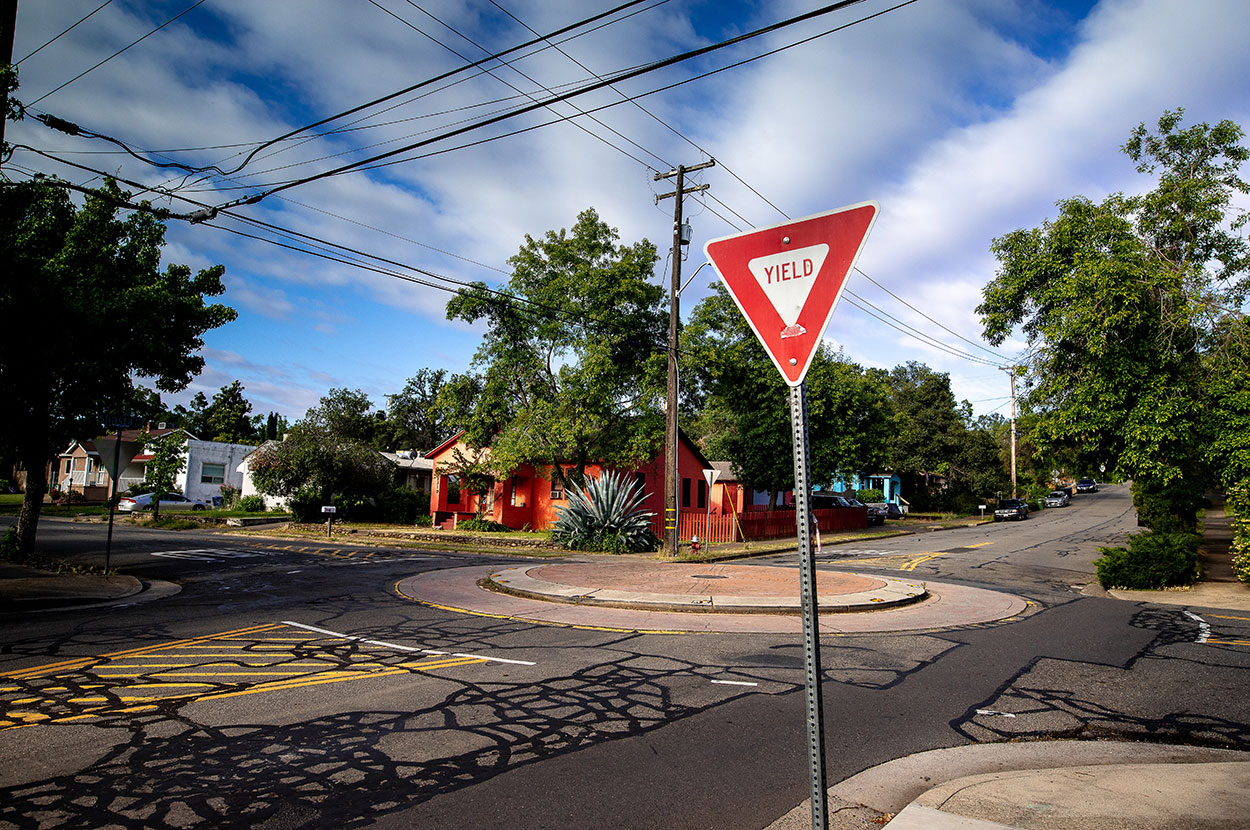
Right of way at a yield sign

If you approach an intersection with a yield sign, you must yield until you can safely traverse the intersection. 

Sometimes, this means slowing down and continuing on your way. Other times, this means coming to a complete stop to allow the traffic with the right of way to pass safely.

virginia right of way laws

Right of way at an uncontrolled intersection or highway on-ramp

Whenever traffic merges or crosses without any signs, such as in parking lots, on highways, and in neighborhoods, the driver who arrives first has the right of way. Everyone else must yield until it is safe to move forward. 


Other yield situations

Virginia law states that if you are driving at an unlawful speed, you forfeit your right of way. It also states that you must yield when it is most safe to do so. 

So let’s say you think it’s your turn to go at a stop sign, but the other driver goes anyway; if you go just to prove that you had the right of way and end up in an accident, you could still get ticketed. It’s your job as a driver to make a safe decision at all times.

The failure to yield right of way in Virginia ticket cost is $81 but could be more or less, depending on what you are charged with, or what the judge decides if you go to court. 


For the full text of the law about yielding (or taking) right of way, see the Virginia Right of Way law.


CAN A TRAFFIC ATTORNEY HELP ME IN VIRGINIA?

Yes! If you think you have been wrongfully ticketed, if you are wondering how to fight an illegal U-turn ticket, or if you have been summoned to court but need someone else to attend on your behalf, you can call a traffic attorney.

At Cook Attorneys, we have decades of experience in traffic court, and we know all the best defenses to help you get the best possible outcome for your case. If you’re not sure how we can help, please feel free to schedule a free consultation today!


Fill out the form below to request more information about how we can serve you. We look forward to hearing from you!


46.2 862 Code – Virginia Exceeding Speed Limit


The Commonwealth of Virginia is home to some of the strictest speeding laws in the country. Most people who move here are surprised by the laws, and many learn the hard way that Virginia police officers take speeding very seriously. 

One very important question to answer is, how many miles over the speed limit is reckless driving? 


Read along to find out what speed is considered reckless driving, how you can avoid a ticket or criminal charges, and what to do if you find yourself summoned to court due to a speeding violation.


SPEEDING LAWS EXPLAINED

If you are caught exceeding the Virginia speed limit, you can expect to be fined a minimum of $6 per mph you were going over the limit. You will also earn demerit points that will go on your Virginia driving record. 

You can learn more about speeding ticket fines and demerit points.


We will focus mostly on reckless driving in this post. What is the reckless driving speed in Virginia? Virginia code § 46.2-862 says, 

[seadev_quote id=”reckless-driving-speed-virginia” cite=”https://www.google.com/url?q=https://cookattorneys.com/46.2-862-Code-Virginia-Exceeding-Speed-Limit/?reckless-driving-speed-virginia&sa=D&source=docs&ust=1645786466671384&usg=AOvVaw3lUeQhTDkGKyikXsxsRxad”]A person shall be guilty of reckless driving who drives a motor vehicle on the highways in the Commonwealth 

  • (i) at a speed of 20 miles per hour or more in excess of the applicable maximum speed limit or
  • (ii) in excess of 85 miles per hour regardless of the applicable maximum speed limit.[/seadev_quote]


How fast is reckless driving in Virginia?


RECKLESS DRIVING VS GENERAL SPEEDING

Is all speeding considered reckless driving? No. Reckless driving is driving in a manner that endangers life or property, and speeding alone can be charged as reckless driving if the speed is excessive.


The traffic infraction we call “speeding” is typically charged if you are going 84 mph or less, or 1 to 19 miles over the posted speed limit.  If you are caught going any number of miles over the speed limit in any zone on any street or highway, you could be pulled over and ticketed. The best way to avoid a ticket is to drive the speed limit or under; if you are caught speeding, be polite and cooperate with the officer. 


However, if you are caught going 20 miles per hour (or more) over the speed limit or over 85 miles per hour, you may get a summons to court for reckless driving, which is a Class 1 misdemeanor. 

If you feel you have received the ticket or summons in error and should not have to pay it or show up in court, call the experienced Virginia traffic attorneys at Cook Attorneys and talk to us about your defense options.


PENALTIES FOR RECKLESS DRIVING

Because reckless driving is a misdemeanor, you cannot prepay a reckless driving ticket; you (or your lawyer) have to show up in court. If the judge finds you guilty, you will face some or all of the following:

  • A fine—up to $2,500
  • Jail time—up to 12 months
  • Driver’s license suspension—10 days to 6 months
  • Demerit points—6 points


Additionally, being convicted of a misdemeanor gives you a criminal record. This can make it harder to pass background checks for work, school, the military, or rental applications. 


CAN YOU GO TO JAIL FOR SPEEDING?

chances of going to jail for reckless driving in virginia


Can you get arrested for speeding? No police officer will arrest you for simply violating Virginia speeding laws. They will issue you a ticket and expect you to pay it in due course or appear in court.  If you are pulled over for speeding, and it turns out that you are driving under the influence or have outstanding warrants for your arrest, you could end up being arrested on the spot. But you won’t be arrested or do jail time for a simple speeding ticket.


If you are pulled over for reckless or aggressive driving, however, you could end up serving jail time. In some counties in Virginia, you get “automatic” jail time for going over 90 mph, period. 


The chances of going to jail for reckless driving in Virginia are slim for a first offense, but you shouldn’t risk going to court without a lawyer. If this is not your first reckless driving offense, there is a higher chance of doing jail time.


The best way to avoid jail time is to abide by the speed limit. But if you are pulled over, be polite to the police officer.  If you are summoned for reckless driving, call Cook Attorneys as soon as you can so we can advocate for you.


WHEN TO GET A LAWYER INVOLVED IN A SPEEDING CASE

You should call the seasoned traffic defense lawyers at Cook Attorneys in Harrisonburg, VA whenever you think you’ve been wrongly ticketed or summoned. And you should especially call whenever you are facing reckless driving charges. 


In order for charges to stick, the prosecutor must prove beyond a reasonable doubt that you broke the law. Our experienced lawyers know the defenses you can use against reckless driving charges, and can help you come up with the most effective defense plan. 

We can work to get your sentence reduced or waived, and we will be on your team when you go to court.


Fill out the form below to request more information about how we can serve you. We look forward to hearing from you!

How to Find Out if Charges Were Filed Against You


You may find yourself in a situation where you think charges have been filed against you. 

Who should you call? What should you know? 

Where should you go for help? At what point should you get a lawyer involved? 

Read on to find all the answers to these questions and more, including how to know if someone pressed charges against you.

How to find out if charges were filed against you

PRE-CHARGE PROCESS

Many people aren’t caught in the act of committing a crime. Our clients are often charged after an investigation. What usually happens is, 

  1. A crime is reported to the police.
  2. The police investigate the report, collecting evidence and witness statements.
  3. The police identify a suspect(s).
  4. The police sometimes consult with a prosecutor who will determine what charges will be brought and against whom.
  5. The police obtain the appropriate warrants and make an arrest.
  6. The arresting officer takes the accused before a magistrate who makes an initial bail determination.


If you think or know that you may be a suspect in an investigation or are in danger of being charged with a crime, contact your local criminal defense attorneys immediately, even if you haven’t been arrested or charged. 

The value of getting an excellent defense lawyer, even early in the process, cannot be overstated. People with lawyers are more likely to make better decisions that can make an enormous difference in the case’s ultimate outcome.

If you are called into the station to answer questions, or if the police show up at your door to ask questions about an investigation, politely inform the police that you would like to speak to them only when a lawyer is present. The police will not find this offensive; in fact, they would inform any of their family members to do the same. 

Innocent people believe that if they just talk to police things will get straightened out. That is usually not the case. Innocent people especially need to invoke their right to counsel. The legal system is designed to convict people and that too often includes the innocent.

Call a lawyer right away, and your lawyer can accompany you to the interrogation. An experienced lawyer will know what you should and should not say and will help you to avoid making the situation worse.

If you are in Virginia and you think you may be a suspect in a case, call Cook Attorneys. The earlier you get us involved, the better your outcome will be—and the more informed you will be along the way. 


HOW TO TELL IF THE POLICE ARE INVESTIGATING YOU

A police car that is stopped in the street with it's light on.

Let’s say you do think you may be a suspect in a crime. Do you know how to tell if the police are investigating you? There are probably clues around you. You might be a suspect if:


  • a police officer shows up at your house to question you
  • a police officer starts questioning your family
  • a police car (marked or unmarked) starts hanging around your house or the place(s) you frequent
  • you have a new strange follower on social media


Again, this is an excellent opportunity to call a criminal defense lawyer. They can call the appropriate department, talk to the right people, and attempt to find out the status of the investigation or whether criminal charges have been filed against you.

Remember, if the police are asking you questions, you have the right to remain silent. 

This does not mean that you shouldn’t speak at all. If you choose to exercise your right to remain silent, you should inform the police officer or detective who is arresting or questioning you. Simply say, “I want my lawyer.”  Many officers will try to get you to answer questions even after invoking your right to counsel.  Stand strong.

A lawyer can call the police and the potential prosecutor and speak with them professionally. Sometimes, they can even convince them not to file charges.

But if you call the police before you are charged, you can be tricked into giving up information, coming into the station without a lawyer, or saying things that can be used against you.

It is important to note that police officers and detectives are not required to tell you the truth about your case; they will intentionally mislead you to get the information they want/need to build a case against you. 

A lawyer can help you avoid that. As the best criminal lawyers in Virginia, Cook Attorneys is standing by to offer a free initial criminal defense consultation.


HOW CAN I FIND CHARGES FILED AGAINST ME?

You might be thinking, “How do I know if I have been charged with a crime?” You will know that charges were filed against you when you are formally arrested or handed a summons that lists the charges against you. Until you are formally notified, there is no way for the general public to learn of the charges. Police officers, however, have access to a database that can advise them of pending charges not yet served.

While you could present yourself to local law enforcement to inquire about pending charges with the expectation that you could be arrested on the spot, it is better to work with a local criminal defense attorney who can make the appropriate inquiries and offer legal advice along the way.

WHY SHOULD I CALL A LAWYER?


a lawyer helps check for charges against you


If you think charges may have been filed or are coming, you shouldn’t call the police yourself to find out about the charges. Police officers will likely tell you to come into the station where they will arrest you and then interrogate you to try to get you to make incriminating statements.  

Lawyers know how to find out if criminal charges are filed. So what happens if someone presses charges on you? If it turns out that you are being charged with a crime, a good defense lawyer will stand up for you and your rights. He or she can help you know what to say and not say to the police and in court. A good local criminal defense attorney will help you make good decisions right from the beginning.

Cook Attorneys in Harrisonburg, VA have extensive experience helping people like you navigate the legal system. With our decades of experience and our passion for helping clients like you, we are the best choice for you, regardless of where you are in the process. 

For a free consultation with the best criminal defense lawyers around, contact Cook Attorneys today. 


Fill out the form below to request more information about how we can serve you. We look forward to hearing from you!

Can You Get A DUI on a Bike? Bicycle Laws in Virginia


Can you get a DUI on a bicycle in Virginia?

[seadev_quote id="can-you-get-a-dui-on-a-bike" cite="https://cookattorneys.com/can-you-get-a-dui-on-a-bike-bicycle-laws-in-virginia/?can-you-get-a-dui-on-a-bike%22]The answer is no. Bikes are not considered motor vehicles, so you can’t get a DUI for biking under the influence of drugs or alcohol. 

However, you can still be ticketed for certain behaviors on a bicycle, and some of those behaviors are more likely to occur if you are drunk or drugged.[/seadev_quote]


Is it illegal to wear headphones while riding a bike? 

Who is required to wear a bicycle helmet? 

We answer these questions and more, so read on to learn the basics about Virginia bike laws.

can you get a dui on a bike in virginia?

Is “Reckless biking” a charge in Virginia?

While bicycles are not “motor vehicles,” they are “vehicles” subject to most of the rules of the road, including the prohibition on reckless driving.  And since being under the influence of drugs or alcohol makes you more likely to violate the law, it is a good idea to consider locking up your bike and catching a ride home with a sober driver.


Reckless driving a bike charges may include:

  • Endangering life, limb, or property of yourself or someone else.
  • Losing control of the bike because of faulty brakes.
  • Failing to follow proper passing laws at railroad crossings.
  • Passing a stopped school bus.
  • Forgetting to give proper signals.


Can you get a ticket for not wearing a helmet in Virginia?

If you are 14 years old or younger and riding a bicycle—or if you are any age and riding a class 3 electric power-assisted device on any street, sidewalk, or public bike path—Virginia cities and counties can require you to wear a helmet. 


In places where helmets are required, if you are caught without a helmet you can be ticketed $25. For your first offense, that fee usually gets waived. And if you purchase a legal helmet between the time you get the ticket and the time you have to pay it, the fee is usually waived as well. 


For more on helmet laws in Virginia, see the Virginia bike helmet law.


What to do after a bike accident or bike crash in Virginia?

If you are in an accident where property is damaged or another person is injured or killed, you are required to stop. The police will take down your name and address and provide it to the other parties involved or the property owner. 


If the accident isn’t bad enough for police to be called, and you have damaged someone’s property, you must leave a note for the property owner and/or make a reasonable effort to find the owner. 


Some other good ideas for if you are involved in a bike crash or accident:

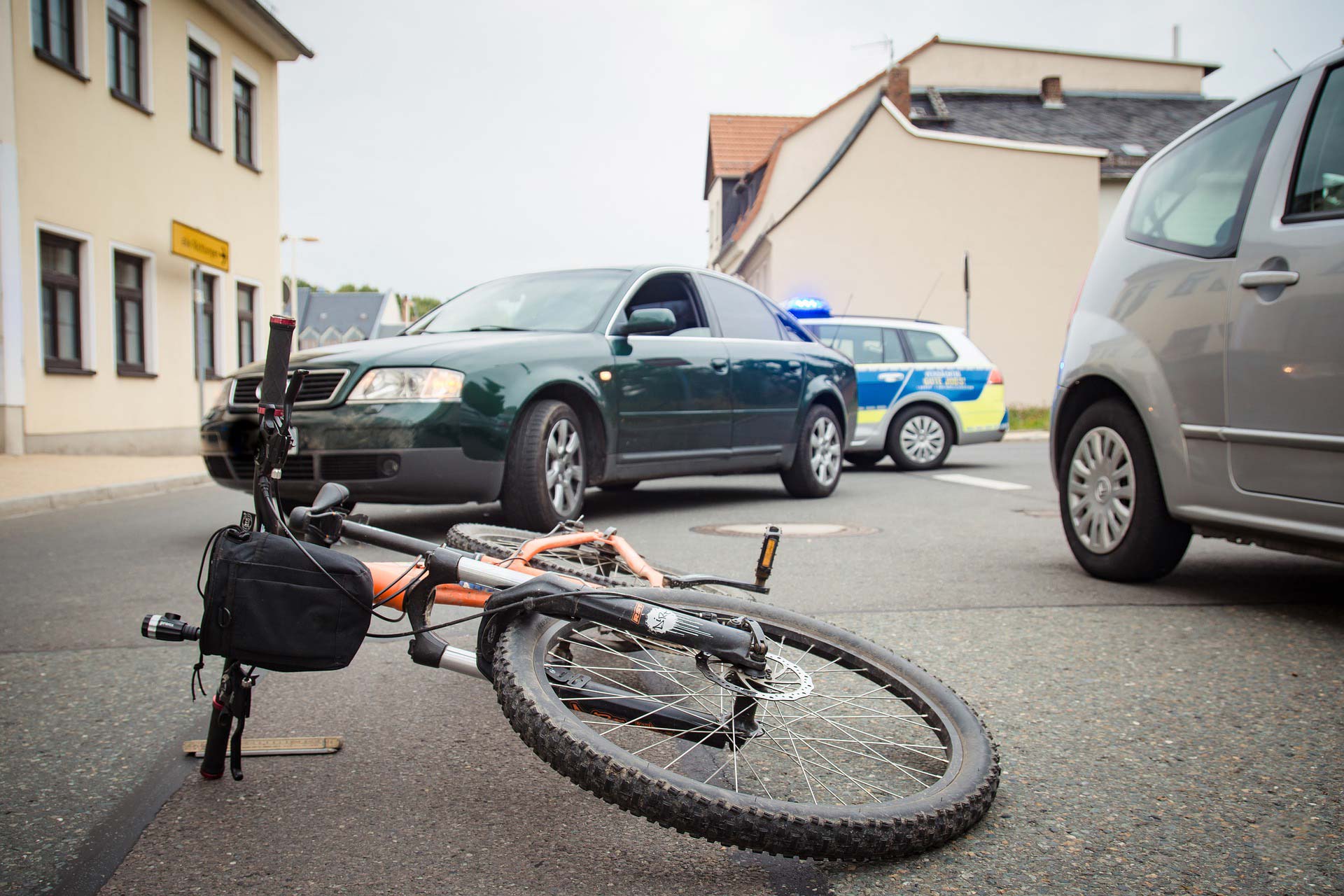
  • Leave your bike in the same state it crashed in; if the police come, it will be best if the scene isn’t disturbed.
  • Take pictures of the bike and any damaged property or injuries.
  • Obtain contact information of any witnesses, and provide your contact information.
  • If necessary, seek immediate medical attention.
  • If a car or other vehicle is involved, do not negotiate with the driver; just get their information and provide to your insurance.
  • Do not make any statement to insurance without first consulting a lawyer.

If you have been in a bike accident or bike crash in Virginia, please do not hesitate to contact Cook Attorneys. We can obtain the best possible outcome for you and help you know how to talk to your insurance company.

bike accident

What are the Virginia bicycle laws regarding safety?

If you are cycling anywhere in Virginia, you must follow these safety rules:

  • Do not carry anything that prevents you from keeping at least one hand on the handlebars. 
  • Do not carry more people than there are seats on the bicycle. The exception is if you have a child (5 years old or younger) securely attached in a special child’s bicycle seat or trailer.
  • Do not attach yourself or your bike to any other vehicle on the roadway while you are on it. 
  • Do not wear earphones in both ears while riding a bicycle.


What is the Virginia Bicycling Safety Act?

As of July 1, 2021, the following things are true:

  • Drivers of cars and other vehicles must change lanes to pass bicycles where there is not 3 feet of space between the car and the cyclist.
  • Cyclists are allowed to ride two abreast (rather than in single file, like before).
  • The government created a workgroup to look into the possibility of having cyclists treat stop signs as yield signs.


Conclusion

If you have been pulled over on a bicycle, or if you have been involved in an accident resulting in injury or property damage, our trained traffic lawyers are standing by to help you navigate the legal process. 

Call Cook Attorneys any time to schedule a free consultation.


Fill out the form below to request more information about how we can serve you. We look forward to hearing from you!

Driving Without License in Virginia – VA Code 46.2-300 & More


What happens if you drive without a license, drive alone with a permit, drive with a suspended license, get a DUI with a revoked license, etc.? All of these things are illegal, but they all have different definitions and various consequences. We look at each here.


Driving Without a License in Virginia

It’s illegal in all states to drive without having obtained a valid driver’s license, and the Commonwealth of Virginia is no exception. 

In Virginia, you have to apply for a license, pass the test, and obtain a valid Virginia license before driving legally. The consequences of driving without a license are serious.


Exceptions to this rule apply if you are:

  • driving tractors or certain other farm equipment on the road.
  • in the military, driving an official military vehicle.
  • active duty military (or the spouse or dependent of an active duty military person), and you have a valid, up-to-date license from your home state or country.
  • temporarily visiting from another state or country, and you have a valid up-to-date license from there.


If you have recently moved to Virginia, you have 60 days by law to obtain a valid VA driver’s license. If you are pulled over after the 60th day of living in VA, then you may end up ticketed for driving without a license.

driving without a license in virginia

The penalty for driving without a license in Virginia the first time is a Class 2 Misdemeanor; you may end up with a fine up to $1,000 or a jail sentence of up to 6 months. 

However, most judges do not impose the full penalty of the law for first-time violators. You will also end up with demerit points on your driving record.


The second time you are caught violating this law, it is considered a Class 1 Misdemeanor; you may end up with a fine up to $2,500 and jail time up to 12 months. You will also end up with demerit points on your driving record.


But what happens if you forget your license and get pulled over? You will be ticketed for $10 and will have to go to court to prove you had a valid license at the time. You may also be responsible for some court fees.


Some readers ask, “Can you go to jail for driving without a license?” While the answer is technically yes, it’s more likely that you will pay a fine unless you repeatedly violate the law within a short time frame.


For more information about driving without a license in Virginia, read the law §46.2-300.


Driving With a Suspended/Revoked License in Virginia

A “suspended” license means that your driving privileges have been suspended for a certain length of time. Once that time has passed, assuming your license has not expired, you may resume driving as usual. 

Licenses are usually suspended for legal reasons (such as too many driving infractions in a certain amount of time).


A “revoked” license means that your driving privileges have been removed, and you are not eligible to drive until they have been reinstated. You must wait the required amount of time, meet the qualifications of a safe driver, re-apply for a license, and pass the driver’s test again. 

Licenses can be revoked for legal or medical reasons. 


Driving with a suspended or revoked license is a Class 1 Misdemeanor. If you are caught a second time, your vehicle could be impounded. 

If you have a 3rd offense driving on a suspended license in Virginia or driving on revoked license within 10 years, you will serve at least 10 days in jail, but it could be up to a year. 


However, getting a DUI on a suspended license is a whole other case; read the section later in this blog about DUIs and suspended licenses.


Driving With an Expired License in Virginia

Licenses expire after a certain number of years, so be sure to keep an eye on your expiration date and go to the DMV with all the necessary paperwork to renew your license well in advance of its expiration date. 


What happens if I drive with an expired license? The penalty for an expired license while driving is the same as driving without a license:


  • The first time you are caught violating this law, it is considered a Class 2 Misdemeanor; you may end up with a fine up to $1,000 or a jail sentence of up to 6 months. 
  • The second time you are caught violating this law, it is considered a Class 1 Misdemeanor; you may end up with a fine up to $2,500 and jail time up to 12 months. 


Driving Alone With a Learner’s Permit in Virginia

Let’s answer some questions we frequently get asked about learner’s permits:

  • What happens if you get pulled over with a permit over 18?
  • What is the penalty for driving without a license under 18?
  • Can you drive alone with a permit in VA?


Virginia learners permit restrictions to govern your ability to drive when you have a learner’s permit. We won’t go into all the laws here, but the main one is that you must have a licensed driver with you whenever you are driving with a permit. 

Driving with a learner’s permit alone is illegal. It does not matter how old you are; you could be 16, 18, 35, or 60, and you would still need a licensed driver with you.

what happens if you get pulled over with a permit over 18?

There is one exception to this law: if you are between the ages of 16.25 years and 18 years old, you are driving to or from school, you have had your permit for at least nine months, AND you have parental and driving school permission to drive alone. Only then can you drive alone with a permit.


Generally speaking, if you get pulled over with a learner’s permit, you should treat it like any other traffic stop: be cordial, keep your hands where the cop can see them, and provide your permit when they ask for your license. 

It can be scary to be pulled over as a new driver, and you may get a ticket (if you were speeding, for instance). But there is no reason for it to escalate as long as you are following all other traffic and driving laws.


The penalty for “driving with permit alone” is a driving suspension for up to 6 months, and you may be subject to other penalties.


DUI Without a License in Virginia

If your license has been suspended or revoked due to a DUI, the charges will be added to your DUI charge, and the judge will hear both charges together. 

The judge may or may not decide to treat them as separate offenses; in most cases, they get combined together for a combined sentence. 

If you commit a DUI while your license is suspended for a prior DUI, you will likely end up with jail time. 


Whenever a DUI is involved, you should hire a lawyer immediately. Cook Attorneys has traffic defense lawyers standing by to help you obtain the best outcome for your case.


Fighting Driving Charges in Virginia

While you could look up standard driving defenses, it is always smarter and safer to at least consult with a lawyer if you have been charged with any of the offenses above. Cook Attorneys can help you with avoiding things like jail time, suspended licenses, car impoundment, etc. 


Contact Cook Attorneys today to set up a free consultation about your case.


Fill out the form below to request more information about how we can serve you. We look forward to hearing from you!