What Happens If I Just Prepay My Traffic Ticket?


If you’ve been issued a traffic ticket, unless it was a traffic accident or for a very serious offense such as a DUI, reckless driving, or other type of criminal misdemeanor, you’ll likely be given the option to pre-pay your ticket and avoid appearing in court. But what happens if you simply prepay a traffic ticket? 


IF YOU PAY NOW, YOU MIGHT ALSO HAVE TO PAY LATER


When considering whether to prepay a ticket, in addition to the fee for the ticket itself, you need to factor into the equation the potential points you may accrue on your license and auto insurance as a result. These points can lead to auto insurance rate increases and possibly even the loss of your driver’s license. Even a modest increase to your annual car insurance premium can total thousands of dollars when multiplied by the 3-5 years that a ticket-related increase can stick around.


By prepaying a traffic violation, you’re by default admitting guilt to the violation and you will be found guilty by the court. Depending on the following factors and more, the consequences that follow the prepayment of a ticket could be more trouble than challenging the ticket yourself or hiring lawyers that handle traffic tickets:


  • Severity of the traffic violation
  • The number of and recency of other tickets on your driving record
  • Your immigration status
  • If you have a Commercial Drivers License or drive for your profession
  • If you are on probation


WHAT ARE DRIVERS LICENSE POINTS VS INSURANCE POINTS?


Most DMVs in the United States (the State of Virginia being among them) use a point system to track your driving record. You are awarded safe driving points when time elapses without any infractions on your record, but you are penalized with demerit points when you are caught driving unsafely or in a manner that’s illegal in your state. You can read about the Virginia DMV’s point system here.


Insurance companies also keep track of your driving record using a points system, however every insurance company’s points system is unique to their business and none are directly related to your DMV points. These systems weigh aspects of your MVR (Motor Vehicle Record) to determine whether you should be considered a high-risk driver, and if so, to what degree. The points they associate with your MVR are the penalty you pay for the risk you present to your insurance agency.

Reckless driving ticket - license and insurance points in Harrisonburg VA

WHAT IS A MOTOR VEHICLE RECORD (MVR)?


Every person in possession of a legal driver’s license in the U.S. is in a national database which keeps a record of individual citizens’ driving history. This is record is your Motor Vehicle Record (MVR) and includes all of your personal details such as social security number, all information published on your driver’s license, and the details of your traffic accidents, ticket citations, any DUI convictions as well as the current number of points on your driver’s license.  


Typically, your insurance company will take into consideration the most recent five year history of your MVR when calculating your insurance premium rate. But potential employers may also consult your MVR to evaluate your suitability for a job. Particularly if you will need to operate a commercial vehicle or even just a company car for your position.


SHOULD I FIGHT MY TRAFFIC TICKET INSTEAD OF PREPAYING?


Because insurance companies’ point systems are not made transparent to the public, there’s no way to calculate with exact certainty how your recent traffic ticket will affect your insurance. But, it’s safe to predict that the greater the severity of your ticket or citation, the greater the number of points your insurance company will penalize you with. The result of which will be higher increases to your annual insurance premiums.


The cumulative expense of non-misdemeanor traffic citations on your insurance rates can be more expensive than your cost to hire a traffic attorney. Further, if you are ticketed for reckless driving, driving without a license, Driving Under the Influence (DUI), or other misdemeanor traffic violation you will not be able to prepay the ticket and you should talk to an attorney about contesting the ticket or working to mitigate the consequences. 

Hire a traffic attorney that handle traffic tickets


We can help you to learn what happens when you fight a traffic ticket, and save you time and money by appearing on your behalf in court to negotiate to have your charges dropped, dismissed or reduced.


Contact us our team of lawyers in Harrisonburg VA to learn more about how we can help you.
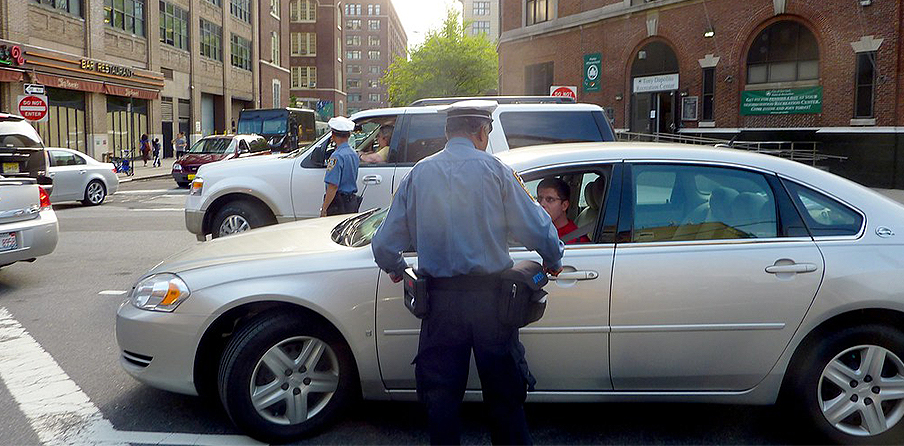
Can a Traffic Ticket From Driving in Virginia Affect My License in Another State?

CAN A VIRGINIA TRAFFIC TICKET AFFECT A LICENSE IN ANOTHER STATE?

The consequences of traffic violations vary state-by-state in the US, but that doesn’t mean the states aren’t coordinated in their effort to monitor traffic tickets. If you’re issued a traffic ticket in Virginia and your driver’s license is from another state, you may be subject to penalties from both states. Therefore, it’s important that if you’re ticketed, you familiarize yourself with the policies in your home state as well as in the state where you’ve received a traffic citation. The consequences for reckless driving in VA are particularly serious and are best handled by lawyers that handle traffic tickets.

Traffic tickets in VA


HOW STATES SHARE DRIVER INFORMATION 

More than 50 years ago in the 1960s, the Driver’s License Compact was formed to enable and encourage states to share driver information with each other. Today, all states keep information on your license and vehicle in nationally-linked databases such as the National Driver Register and the Driver License Compact. 

Once the state of Virginia reports your VA traffic violation to your home state, it will depend on your home state’s policies whether it gets added to your home state driving record. Immediately following receipt of a VA traffic ticket, we recommend that you consult with a traffic attorney in your home state familiar with your local DMV’s procedures who can advise you the pros and cons of fighting the ticket in Virginia versus prepaying the ticket. 

WHAT IF YOU RECEIVE A CRIMINAL MISDEMEANOR TRAFFIC CHARGE IN VA?

Many out of state drivers are alarmed to learn that on the interstate in Virginia (which has some of the strictest traffic laws in the country) a speeding violation for travelling a mere 11 miles over the speed limit can result in a reckless driving charge and a license suspension in your home state. In VA, reckless driving as well as driving on a suspended license are both classified as misdemeanor crimes. We strongly advise you to talk to an attorney about contesting these types of charges. 

Criminal misdemeanor charge in VA - Traffic attorneys to fight back


OUR HARRISONBURG VIRGINIA TRAFFIC LAWYERS CAN HELP YOUR CASE 

If you live out of the area and have been issued a moving violation on Interstate 81 in the Shenandoah Valley, our Harrisonburg VA traffic attorneys at Cook Attorneys can offer you a free traffic defense consultation by telephone and may be able to appear in your place on the court date. In most situations you will not need to return to Virginia to contest your ticket.


Most initial consultations regarding traffic cass take less than twenty minutes. Let us reduce your worry and free up your time. Se habla español. We look forward to speaking with you.

Felony Charges in Virginia: What to Expect?

Understanding the difference between a misdemeanor and a felony

The most serious crimes are classified as felonies, which carry significantly greater potential consequences to the accused than misdemeanors. A misdemeanor is a crime for which a person can be sentenced to no more than 12 months in jail; a felony is a crime for which a person can be sentenced to more than a year.  In most cases in Virginia, a person sentenced to a misdemeanor jail sentence must serve 50% of the length of his sentence while a person serving a felony sentence will serve about 85% of the sentence.

If you or a loved one needs a criminal defense attorney in Harrisonburg VA, we invite you to learn more about our free criminal defense consultations.

Virginia’s process for felony charges


Remain Silent
If you’re being investigated for a criminal offense, you have the right to remain silent – USE IT!  Talking to law enforcement without first consulting a criminal defense attorney is almost always a bad idea that you will later regret.  Police are trained to make you feel that talking to them without consulting an attorney is your best option – perhaps your only option – but that is just not true.  You will have plenty of time to talk later if you and your lawyer think it would be beneficial, but many defendants destroy their shot at a favorable outcome by talking to the police without the benefit of counsel.

When you need a Harrisonburg criminal defense attorney, our team at Cook Attorneys has the experience you and your family needs to ensure the best possible outcome for your case.  If, after consulting with us, you decide to speak to law enforcement, we can be present with you during your questioning.


Arrest
If you’re arrested on felony charges, you will be taken before a magistrate.  The magistrate will determine whether you can be immediately released on bail or held over for an initial court appearance.  While the magistrate cannot testify against you later, what you tell the magistrate that is overheard by others present, including a police officer, may be used against you later.  You should answer the magistrate’s questions about your identity and your background, but it is usually a bad idea to talk to the magistrate about the facts leading up to your arrest.


Bond hearing
If you are not released on bail, you will be taken to either a General District Court or Juvenile and Domestic Relations District Court on the next day that court is open.  The judge at that time will ask if you want a court-appointed attorney and will schedule a preliminary hearing.  He may also conduct a bail hearing to determine if you can be released on bond or be held until trial. You can read more about the bail bond process in Virginia here. When you choose our firm to represent you, we will advise you whether you are eligible for bail and, if so, will advocate on your behalf for your release.


Preliminary hearing

The next significant hearing in the felony process is the preliminary hearing where the District Court judge will hear the prosecutor’s evidence to determine whether there is probable cause that the charged felony offense was committed.  This is an important hearing because it is your lawyer’s opportunity to cross examine the witnesses presented by the government and in some cases the charge will be reduced to a misdemeanor.  While it is possible to waive (or give up) your right to a preliminary hearing, it is almost never advisable unless you already have a plea agreement with the prosecutor to favorably conclude the case in Circuit Court.


Trial

After the preliminary hearing, the case is sent to the Circuit Court for trial.  Virginia’s Speedy Trial statute requires the Circuit Court to schedule felony trials within five months of the preliminary hearing for individuals who have been incarcerated (imprisoned) and within nine months for those not in custody.  Trials can be heard by juries or by judges (bench trial). Your criminal defense lawyer will help you to choose the most advantageous option for your case.

During the trial, evidence is presented and the jury and/or judge will decide whether the prosecutor has presented evidence that proves your guilt beyond a reasonable doubt. You will have 30 days to file an appeal if you are found guilty.


Sentencing

If you are found not guilty, the case is over.  However, if you are found guilty of any charge, the next step is a sentencing hearing. It is during this process that the judge and/or jury will determine the appropriate punishment for your crime(s).


Let our experienced team support you during this difficult process

An investment in our experienced team of criminal lawyers is an investment in your and your family’s future.

Contact us for a free criminal defense consultation so that we can explain your options and show you how we can help you. 


What Rights Do Legal Immigrants Have In The US?

Our team of attorneys in Harrisonburg VA are frequently sought out for our expertise in representing immigrants in the Rockingham County Virginia area. One of the questions we’re often asked is “What rights do legal immigrants have in the US?” Here, we’ll inform you not only of immigrants’ rights in America, but also clarify the various types of legal immigration statuses which are recognized by the United States.


WHAT DEFINES A LEGAL IMMIGRANT IN THE US?

In the United States in particular, the difference between legal and illegal immigrants are unfortunately frequently misunderstood. This has resulted in many legal immigrants being perceived in the same derogatory way as illegal immigrants. This misperception urgently needs to change.

By definition, an immigrant is a person who comes to live permanently in a foreign country. In America, individuals and families wishing to live permanently in the United States must first apply for an Immigrant Visa. If their visa application is approved, they’re now temporarily in the first stage category of legal immigrants pursuing a permanent residence card (AKA, a “green card”). Progressive legal immigrant statuses include Resident Alien, Legal Permanent Resident and Conditional Resident. Legal immigrants can eventually become “naturalized” into citizens of the United States of America. You can learn more about the US citizenship process for legal immigrants at https://www.usa.gov/become-us-citizen.

legal immigrants in America

WHO QUALIFIES FOR LEGAL IMMIGRANT STATUS IN AMERICA?

The US annually provides hundreds of thousands of immigration visas to individuals and families who meet the necessary qualifications, including, but not limited to:

  • They have family members such as a parent or spouse who are citizens of the United States
  • They have a specific employment qualification such as being an investor, unskilled worker or religious worker
  • They require humanitarian support as in the case of refugees and others seeking asylum

Qualifications for legal immigrants in America

WHAT RIGHTS DO LEGAL IMMIGRANTS HAVE IN THE US?

The United States of America’s Constitution and Bill of Rights apply to every individual within the country, no matter their current immigration status. Everyone, regardless of status, has the right to due process and equal protection under the law. In exchange, there are also responsibilities to uphold.

Rights exclusively for US Citizens:

  • The right to vote
  • The right to run for elected office
  • The right to hold a Federal job

Rights to which everyone in the United States is entitled:

  • Freedom to express yourself
  • Freedom to worship as you wish
  • Right to a prompt, fair trial by jury
  • Freedom to pursue “life, liberty, and the pursuit of happiness.”

Responsibilities:

  • Support and defend the Constitution.
  • Stay informed of the issues affecting your community.
  • Participate in the democratic process.
  • Respect and obey federal, state, and local laws.
  • Respect the rights, beliefs, and opinions of others.
  • Participate in your local community.
  • Pay income and other taxes honestly, and on time, to federal, state, and local authorities.
  • Serve on a jury when called upon.
  • Defend the country if the need should arise.

Immigrants’ rights in America

YOUR IMMIGRATION ATTORNEYS IN HARRISONBURG VIRGINIA

Whether you’re in process towards becoming a legal US citizen or have already received your status, if you need an immigration lawyer in Harrisonburg VA, our mulit-lingual team at Cook Attorneys are here to support you.

Many of our clients begin looking for immigration lawyers near Harrisonburg VA only after their DIY application has been denied. You can read our article “Reasons Why You Shouldn’t DIY Your Immigration Process (Without the Help of an Immigration Attorney)” here.

Contact us to learn more about how we can help you and your family with immigration matters. We can arrange for a translator to join the consultation to provide you with English as a second language support. Se habla Espanol.

What Rights Do Immigrants Have In The US?


Our team of attorneys in Harrisonburg VA are frequently sought out for our expertise in representing immigrants in the Rockingham County Virginia area. One of the questions we’re often asked is “What rights do legal immigrants have in the US?”. Here, we’ll inform you not only of immigrants’ rights in America, but also clarify the various types of legal immigration statuses which are recognized by the United States.


WHAT DEFINES A LEGAL IMMIGRANT IN THE US?

In the United States in particular, the difference between legal and illegal immigrants are unfortunately frequently misunderstood. This has resulted in many legal immigrants being perceived in the same derogatory way as illegal immigrants. This misperception urgently needs to change.

By definition, an immigrant is a person who comes to live permanently in a foreign country. In America, individuals and families wishing to live permanently in the United States must first apply for an Immigrant Visa.
If their visa application is approved, they’re now temporarily in the first stage category of legal immigrants pursuing a permanent residence card (AKA, a “green card”). 

Progressive legal immigrant statuses include Resident Alien, Legal Permanent Resident and Conditional Resident. Legal immigrants can eventually become “naturalized” into citizens of the United States of America. 

You can learn more about the US citizenship process for legal immigrants at https://www.usa.gov/become-us-citizen.


legal immigrants in America


WHO QUALIFIES FOR LEGAL IMMIGRANT STATUS IN AMERICA?

The US annually provides hundreds of thousands of immigration visas to individuals and families who meet the necessary qualifications, including, but not limited to:

  • They have family members such as a parent or spouse who are citizens of the United States
  • They have a specific employment qualification such as being an investor, unskilled worker or religious worker
  • They require humanitarian support as in the case of refugees and others seeking asylum

Qualifications for legal immigrants in America


WHAT RIGHTS DO LEGAL IMMIGRANTS HAVE IN THE US?

The United States of America’s Constitution and Bill of Rights apply to every individual within the country, no matter their current immigration status. Everyone, regardless of status, has the right to due process and equal protection under the law. In exchange, there are also responsibilities to uphold

Rights exclusively for US Citizens:

  • The right to vote
  • The right to run for elected office
  • The right to hold a Federal job

Rights to which everyone in the United States is entitled:

  • Freedom to express yourself
  • Freedom to worship as you wish
  • Right to a prompt, fair trial by jury
  • Freedom to pursue “life, liberty, and the pursuit of happiness.”

Responsibilities:

  • Support and defend the Constitution.
  • Stay informed of the issues affecting your community.
  • Participate in the democratic process.
  • Respect and obey federal, state, and local laws.
  • Respect the rights, beliefs, and opinions of others.
  • Participate in your local community.
  • Pay income and other taxes honestly, and on time, to federal, state, and local authorities.
  • Serve on a jury when called upon.
  • Defend the country if the need should arise.


Immigrants’ rights in America


UNDOCUMENTED/ ILLEGAL IMMIGRANT RIGHTS

So those are legal immigrant rights, but what about illegal immigrant rights? You may be wondering, what rights do illegal immigrants have in the USA?

Undocumented immigrants have the following rights:

  • Trial by jury
  • Miranda warning
  • Defense against charges and deportation
  • Protection against unlawful search and seizure
  • Protection against self-incrimination
  • Filing of civil lawsuits
  • Wages for work performed
  • A healthy and safe work environment
  • A free K-12 education


YOUR IMMIGRATION ATTORNEYS IN HARRISONBURG VIRGINIA

Whether you’re in process towards becoming a legal US citizen or have already received your status, if you need an immigration lawyer in Harrisonburg VA, our multilingual team at Cook Attorneys is here to support you. 

Many of our clients begin looking for immigration lawyers near Harrisonburg VA only after their DIY application has been denied. You can read our article “Reasons Why You Shouldn’t DIY Your Immigration Process (Without the Help of an Immigration Attorney)” here.

Contact us to learn more about how we can help you and your family with immigration matters. We can arrange for a translator to join the consultation to provide you with English as a second language support. Se habla Espanol.


What Do I Do if I Lost a Traffic Ticket?


If you’ve received a traffic ticket in the State of Virginia, you may find yourself subject to fines or even be required to appear in court. Your penalty will depend on the type of ticket you’ve received. 


TYPES OF TRAFFIC TICKETS

Traffic tickets are typically categorized as moving or non-moving violations. The latter are usually considered more serious offenses for which you may need to seek the help of lawyers that handle traffic tickets or if it was a DUI or DWI charge, a Harrisonburg DUI attorney.

Examples of Common Moving Violations:

  • Speeding
  • Distracted driving
  • Illegal lane changes
  • Failure to follow the right-of-way 
  • Failure to signal when changing lanes or making a turn
  • Seatbelt violations
  • Driving without a valid driver’s license
  • Driving without valid auto insurance
  • Driving past a school bus when passengers are loading or unloading
  • Running (failure to stop at) a red light or stop sign
  • Reckless driving (such as racing or trying to escape the police)
  • Leaving the scene of an accident
  • Driving While Intoxicated (DWI)
  • Driving Under the Influence (DUI)


Examples of Common Non-Moving Violations: 

  • Parking violations (such as parking in a no-parking zone, in front of a fire hydrant or in front of a driveway, expired meter, or parking in a handicapped spot without a valid permit).
  • Expired State inspection tags
  • Damage/problems to the vehicle (such as a broken tail light or obscured vehicle plates or tags)


WHAT HAPPENS IF YOU LOSE A TRAFFIC TICKET?

If you’ve lost your Virginia-issued traffic ticket you can use the State of Virginia’s Online Case Information System to access the details of your lost paperwork. You’ll need to be prepared with the name of the County in which you received your ticket. Since you likely won’t have the Citation Number of your lost ticket, you can also search by name. An alternative to using the online system is to directly contact the Traffic Court in the Virginia County where you received your citation. This online map is a useful reference for the names of Counties in Virginia.

Be sure to confirm the details of your required deadline to respond to your ticket so as not to miss the deadline and face more severe penalties.


What happens if you lose a traffic ticket in VA

AFTER YOU HAVE THE DETAILS OF YOUR TICKET, WHAT HAPPENS NEXT?

The consequences of traffic tickets can range from merely annoying (the fee for the ticket) to life changing (the loss of your driver’s license or jail time). The cost to hire DUI lawyers in Harrisonburg VA or a traffic lawyer in Harrisonburg VA may be expensive in the long run compared to the potential cost of higher insurance rates or opportunity costs than can follow severe traffic citations. You’ll need to keep this in mind when deciding whether you simply want to plead “guilty” by directly paying your Virginia traffic fine, or if you should plead “not guilty” and challenge your ticket in the court system.


HOW TO DECIDE IF YOU SHOULD FIGHT A TRAFFIC TICKET?

Many reputable law firms will offer free consultations. For example, our lawyers in Harrisonburg VA offer free traffic defense consultations by telephone to make the process as quick and convenient for you as possible. Receiving expert advice from a traffic lawyer near you will help you to make this important decision. 

If you’ve received a traffic ticket and believe you’ve been ticketed incorrectly or unfairly, then undoubtedly you should seek to fight the ticket. For example, if you have a witness who will verify that you did not violate the law or if the equipment that recorded your violation was faulty (such as a red light camera), these are grounds on which to win a traffic ticket fight.

However, even if you were ticketed for a less arguable infraction, you may still want to challenge your ticket in court to try to reduce or eliminate the penalties of your ticket. In addition to the immediacy of a high ticket fee, you may be at risk for long term increased expenses through elevated insurance premiums. Worse still, you may be facing the suspension or loss of your driver’s license which can have huge negative consequences for your job and your family’s life.


Fight a traffic ticket in VA

FIGHTING A TRAFFIC TICKET IN COURT

In Virginia, police officers are usually assigned a court date and time each month and write all of their summonses to be in court on their assigned date. The date of your court date should be clearly marked on your ticket as well as the address of the court where you need to appear. On the summons just below your signature is a box that, if checked, indicates that you can avoid appearing in court by admitting guilt and prepaying a fine.

If the court date is not convenient for you, most court clerks will allow you to call the court before your court date and easily postpone the case to the officer’s next court date on one occasion.  

When your court date arrives, you’ll need to be prepared to present your traffic defense. When the judge calls on you to do so, keep your defense short and to the point. When it’s the officer’s time to present their case against you, do not interrupt or argue with them, as this will cause the court to look unfavorably on you. However, after the officer has finished their testimony, it is okay for you (or better still, for your hired traffic ticket attorney) to ask the officer questions that will serve to establish doubt in the judge’s mind. 

If the judge rules for you, congratulations! But if they don’t, you have the right to appeal. You should seek out the court clerk for more information on the local jurisdiction’s appeals process.

In some Virginia courts, the judges regularly allow drivers with good records to enroll in a defensive driving program in order to reduce or even dismiss the ticket. The Virginia Department of Motor Vehicles can provide you more information on “Driver Improvement Clinics”.


Traffic lawyer in Harrisonburg VA


HIRING AN ATTORNEY TO FIGHT A TRAFFIC TICKET

You may worry that hiring an attorney to fight a traffic ticket could be prohibitively expensive. Therefore it might surprise you to know that lawyers that handle traffic tickets can potentially save you money in the long run by preventing you from having to pay increased insurance rates and ticket fee penalties. 

The majority of traffic tickets in Virginia and in the US are categorized as infractions, but the more serious such as DUI (Driving Under the Influence AKA Driving While Intoxicated), vehicular homicide, hit and run, and extreme cases of reckless driving can be charged as misdemeanors or even felonies. In these cases, we recommend hiring legal representation to ensure the best possible outcome for your case. If you need a traffic lawyer in Harrisonburg VA or DUI lawyers in Harrisonburg VA, our team of experienced professionals at Cook Attorneys can support you. You can read more about our traffic defense services.

Another reason to consider hiring lawyers in Harrisonburg VA is if you are ticketed as an out of State driver. For example, our firm can represent you in court so that you don’t need to suffer the expense and inconvenience of returning to Virginia for your court hearing. You can learn more about our traffic defense consultations which we make available by telephone, here.

We can save you time and money by appearing on your behalf in court and negotiate to have your charges dropped, dismissed or reduced.

Contact us to learn more about how we can help you.

 

“What Do I Do if I Lost a Traffic Ticket?”


If you’ve received a traffic ticket in the State of Virginia, you may find yourself subject to fines or even be required to appear in court. Your penalty will depend on the type of ticket you’ve received.


TYPES OF TRAFFIC TICKETS

Traffic tickets are typically categorized as moving or non-moving violations. The latter are usually considered more serious offenses for which you may need to seek the help of lawyers that handle traffic tickets or if it was a DUI or DWI charge, a Harrisonburg DUI attorney.

Examples of Common Moving Violations:

  • Speeding
  • Distracted driving
  • Illegal lane changes
  • Failure to follow the right-of-way
  • Failure to signal when changing lanes or making a turn
  • Seatbelt violations
  • Driving without a valid driver’s license
  • Driving without valid auto insurance
  • Driving past a school bus when passengers are loading or unloading
  • Running (failure to stop at) a red light or stop sign
  • Reckless driving (such as racing or trying to escape the police)
  • Leaving the scene of an accident
  • Driving While Intoxicated (DWI)
  • Driving Under the Influence (DUI)


Examples of Common Non-Moving Violations:

  • Parking violations (such as parking in a no-parking zone, in front of a fire hydrant or in front of a driveway, expired meter, or parking in a handicapped spot without a valid permit).
  • Expired State inspection tags
  • Damage/problems to the vehicle (such as a broken tail light or obscured vehicle plates or tags)


WHAT HAPPENS IF YOU LOSE A TRAFFIC TICKET?

If you’ve lost your Virginia-issued traffic ticket you can use the State of Virginia’s Online Case Information System to access the details of your lost paperwork. You’ll need to be prepared with the name of the County in which you received your ticket. Since you likely won’t have the Citation Number of your lost ticket, you can also search by name. An alternative to using the online system is to directly contact the Traffic Court in the Virginia County where you received your citation. This online map is a useful reference for the names of Counties in Virginia.

Be sure to confirm the details of your required deadline to respond to your ticket so as not to miss the deadline and face more severe penalties.

What happens if you lose a traffic ticket in VA

AFTER YOU HAVE THE DETAILS OF YOUR TICKET, WHAT HAPPENS NEXT?

The consequences of traffic tickets can range from merely annoying (the fee for the ticket) to life changing (the loss of your driver’s license or jail time). The cost to hire DUI lawyers in Harrisonburg VA or a traffic lawyer in Harrisonburg VA may be expensive in the long run compared to the potential cost of higher insurance rates or opportunity costs than can follow severe traffic citations. You’ll need to keep this in mind when deciding whether you simply want to plead “guilty” by directly paying your Virginia traffic fine, or if you should plead “not guilty” and challenge your ticket in the court system.


HOW TO DECIDE IF YOU SHOULD FIGHT A TRAFFIC TICKET?

Many reputable law firms will offer free consultations. For example, our lawyers in Harrisonburg VA offer free traffic defense consultations by telephone to make the process as quick and convenient for you as possible. Receiving expert advice from a traffic lawyer near you will help you to make this important decision. To learn more about what happens when you fight a traffic ticket, you can read our blog article here.

Fight a traffic ticket in VA

WE CAN HELP YOU TO ACHIEVE THE BEST POSSIBLE OUTCOME

If you received a traffic violation in the Harrisonburg VA are we e invite you to contact us to schedule a free telephone consultation. Most consultations only require fifteen minutes, so what do you have to lose? Se habla español. We look forward to working with you.

The Intake Process for Jail and Prison

The intake process for prison

Inmate processing, formally known as the prison intake process involves many steps. These will vary in each prison however generally, the following process to serve a prison sentence can be expected in some shape or form throughout Federal prisons.


Arrest and sentencing

If you’ve been arrested and jailed for a crime, you will first stay in a local jail during your court process until a jury and/or judge rules on your sentence. 


Determining your prison destination

Once you’ve received your court sentence, you will be evaluated to determine your prison destination based on your classification into one of six security levels which for the State of Virginia, are described in this link. The factors and steps involved in your classification will likely include:

  • Length of your sentence
  • Medical examination
  • Psychological examination
  • Drug test
  • Interview(s)


You may spend time in multiple facilities prior to your final prison destination including your local jail and the Federal Bureau of Prisons’ primary processing center in Oklahoma. A full list of the BOP’s locations can be viewed here.


The intake process

Once at your final prison destination, the personal property you’ve brought with you will be evaluated for its eligibility to remain with you versus put into prison storage or shipped to your home address (at your own expense). “Civilian clothing” which is any clothing not issued by the prison, is usually not allowed to remain with an inmate, nor is jewelry. If you’re preparing to go to prison, you can read our article “What Can You Bring to Jail or Prison?” here. 

You’ll receive an orientation to your prison facility’s rules, services, and procedures including the commissary where you can purchase basic items not otherwise provided by the prison, visitation rights, and the types of items you can receive from outside sources such as books, letters, etc. 


Treatment plans and programs

At your prison facility, you’ll be assigned to a counselor who will help you in preparing for prison by developing a personalized remediation treatment plan and assign you to recreation programs, health services, and other services as needed. Your cooperative participation in these programs will ensure a smooth transition process through your incarceration and can help you to quality for early or timely release for good behavior. 


We can help you to prevent incarceration

If you or someone you love needs lawyers in Harrisonburg VA with expertise in criminal cases, we invite you to schedule a FREE consultation with our bi-lingual English/Spanish team. We can also help you to hire a translator if you need legal assistance in any other language. Consultations typically require less than one hour during which time we will review your case and advise on next steps. 

Contact us to learn more about how we can help you to achieve the best possible outcome for your case.

What Can You Bring to Jail or Prison?

What is the difference between jail and prison?

Although the terms jail and prison used interchangeably in casual conversation, they’re two different types of institutions. Jails are smaller in scale and usually operated by a local Government or Sheriff’s Office. Their purpose is to hold people for a short period of time. For example: people waiting for trial or individuals who have been sentenced to less than one year of incarceration.

Prisons are run by Federal and State Governments and confine individuals who have been convicted of crimes and who’ve been sentenced to at least one or more years of incarceration.

You can read our article “The Intake Process for Prison” here.


The most frequently asked questions about preparing for prison or jail

A frequently asked question our Harrisonburg VA attorneys receive from potential clients facing jail and/or prison time is how to prepare for incarceration. Specifically, people want to know what they’ll be allowed to bring and keep with them after intake at Rockingham County Regional Jail, Middle River Regional Jail, Virginia Department of Corrections (VA DOC) or Federal Bureau of Prisons (BOP).


If you’re sentenced to time in jail or prison, what can bring with you?

Few jails or prisons publish a list of allowable items as the rules are subject to change and may be at the discretion of the intake team. While every facility will have different restrictions, it’s common (however there’s no guarantee) to be permitted to bring the following:

  • Prescription eyeglasses
  • Necessary prescription medications and/or proof of prescription
    Prescriptions should be current and in an authentic pharmacy-issued container displaying the patient’s name, date of RX, and any dosage instructions.
  • US dollars (less than $200 is recommended)
    Most jails and prisons deposit your money for you into a personal spending account usable for their in-house commissary. Commonly up to $300 USD can be maintained in your account.
  • Piece of paper containing the contact information of your legal team, family, and anyone else you want to be able to contact during your incarceration.
  • Foam earplugs
  • Flip flops made of rubber or foam (cannot contain metal) for showers 


We recommend leaving jewelry (yes, even wedding rings) behind as these, along with any other personal items or clothing that’s deemed non-permissible, may be required to be shipped back to your home address at your own expense.

Middle River Regional Jail also allows select undergarments if they adhere to the Jail’s guidelines, which are detailed here, on their website.


What items can you receive from visitors or acquire from the jail?

Jails and prisons will allow you to purchase personal items from their commissary that are not otherwise provided by the institution. As every institution’s rules differ, the following list is not a guarantee of permissibility, but a list of commonly acceptable items inmates may keep in their cells. 

  • Cards/letters
  • Photographs 
  • Magazines (non pornographic)
  • Newspapers
  • Books
  • Bibles
  • Puzzle or word find books


In what other ways should someone prepare for incarceration?

This article provides helpful recommendations for managing finances, family matters, communications with your employer and bank, and more.


We can help you to prevent prison time

If you or someone you love needs a criminal defense attorney in Harrisonburg VA, we invite you to schedule a FREE criminal consultation with our lawyers in Harrisonburg Virginia. We have Spanish speaking attorneys and can help you to hire a translator if you need legal assistance in any other language. Consultations typically require less than one hour during which time we will review your case and advise on next steps. 


Contact us to learn more about how we can help you to achieve the best possible outcome for your case.

What You Need to Know About Recent Changes in Virginia Regarding Driver’s License Suspensions

traffic court lawyer

PRE-JULY 2019: SUSPENDED LICENSES FOR UNPAID COURT FEES IN VA

Previously, if a Virginia resident who was convicted of a crime or traffic citation was not in a position to immediately pay her fines, she was required to sign a contract with the local court promising to pay the fines in full by a specified date. Anyone who failed to pay by the contract date was punished by having her drivers license suspended.


TIME FOR A CHANGE

However, many of us in the State of Virginia, including Governor Ralph Northam who described the penalty as “counterproductive” and Secretary of Public Safety and Homeland Security Brian Moran, felt that the penalties of drivers license suspension for unpaid court fees were often inequitably levied on the poorest members of our community. 

Effective July 1, 2019, through a new law signed into effect by Governor Northam,

VA residents will no longer be penalized by having their drivers licenses suspended for failing to pay fines, and anyone whose license was previously suspended as a result of unpaid court fees will be granted reinstatement. The more than half million Virginia residents who qualified for reinstatement through this program were sent letters from the VA Department of Motor Vehicles which explained the requirements for returning to legal driving status which includes the fulfilment of any remaining owed court costs and fines.

Following the announcement of the new law, Moran stated, “This is a significant step in the right direction toward getting Virginians back to work and enabling them to support their families.”

Reckless driving attorney


WHAT TO DO IF YOU QUALIFY FOR A LICENSE REINSTATEMENT

For individuals who may qualify for drivers license reinstatement through this program and are looking for additional information, the following news article from WHSV 3 provides a summary of the information issued from the Virginia DMV


ARE YOU IN DANGER OF LOSING YOUR LICENSE FOR OTHER REASONS?

It is important to note that someone whose license has been suspended for reasons other than failing to pay court fines and costs, such as for a DUI, reckless driving, drug offenses, driving on a suspended license, or other charges, will not be eligible for restoration through this program. In these cases, if you need a reckless driving attorney, traffic court attorney, criminal defense lawyer, or DUI lawyer in Harrisonburg Virginia, our English and Spanish speaking lawyers at Cook Attorneys are here to help.


We invite you to contact us for a consultation to discuss how our Harrisonburg lawyers can help you.